AuthorsDen.com   Join | Login    
Where Authors and Readers come together!

SIGNED BOOKS    AUTHORS    BOOKS    SAMPLE CHAPTERS    AUDIOBOOKS    eBOOKS    STORIES    ARTICLES    POETRY    BLOGS    NEWS    VIDEOS    SUCCESS    TESTIMONIALS

Featured Authors:  Miller Caldwell, iValerie Boggess, iRobert Liu, iRobert Wood, iEdie Batstone, iPatricia Hilliard, iJ. Allen Wilson, iBruce Humphrey, iJudy Joy Jones, iFERIAL Haque, i

  Home > Literary Fiction > Stories
Popular: Books, Stories, Articles, Poetry      Authors: A B C D E F G H I J K L M N O P Q R S T U V W X Y Z     

Gene Williamson

 Follow Me  

· Contact Me
· Books
· Articles
· Poetry
· News
· Stories
· Blog
· 302 Titles
· 5,505 Reviews
· Save to My Library
· Share with Friends!
·
Member Since: Before 2003

   newsletter

Subscribe to the Gene Williamson Newsletter. Enter your name and email below and click "sign me up!"
Name:
Email:
Gene Williamson, click here to update your pages on AuthorsDen!

Books by
Gene Williamson


See all Books
by Gene Williamson


Captain Jack
by Gene Williamson
Saturday, July 19, 2008

Rated "G" by the Author.

       
Recent stories by Gene Williamson
· Cliff Introduces Marie to Jane in San Francisco (17)
· All's Well... (32)
· Watertown Book Signing (31)
· Watertown Reunion (30)
· Developments in Kentucky and Watertown (29)
· Jack Shows Up
· Cliff Returns to Watertown (28)
           >> View all 36


     A brief look back at the years of
the Great Depression.


Cliff presses the cold glass to his forehead. He tries again to remove the picture of his father sitting in a rocker watching two mongrels getting to know each other, a tired old man spitting tobacco juice, rocking, spitting tobacco juice into a Maxwell House Coffee can.
 
“Damn dogs.” Captain Jack spits. “Hope that boy got a job.”
 
The old man is rocking on the front porch of a frame house next to Watertown’s Sinclair gas station at the wrong end of Smith Road.
 
“Martha!“ he yells over his shoulder. “Hey, Martha!”
 
His wife pokes her head out the front door. “What’s wrong? Don't you know I'm busy?"
 
“You think Cliff went to work after school?”
 
“Yes,” said Martha, “but--”
 
“Don’t give me no ‘buts’ woman.”
 
She shuts the door.
 
White paint is flaking on the house. In the window there is a card for the iceman who drops off a twenty-cent block twice a week. The porch is slanting toward the shallow front yard, spilling over a brick wall rising two feet above the clay road. In the backyard a clothes line hangs loosely between the trunk of a barren pecan tree and dilapidated woodshed. The yard is overgrown with weeds, wild strawberries,
and vines high enough to hide the running board of a weathered nineteen thirty-one Ford bed truck, abused by too many miles banging along rutted county roads in pursuit of dried-up markets for underfed crops. He grew his puny crops on a poor piece of sandy soil he bought for thirty dollars from a farmer who packed up his family and goods and joined the caravans west. Captain Jack’s Boat Yard is barely visible on the faded sign painted on the truck door.
 
Captain Jack Walker lost the boat yard to bankruptcy in 1936, about ten years after his general store burned to the ground. The owner of a competing store around a bend in the road was suspected of arson. Two years later he failed to make a go of the taxi service he set up to transport freight across the Watertown bay. He was often the victim of uneducated timing.
 
The old man yells, “Hey, Martha, bring me a glass of whisky!”
 
She returns to the front door. “Don’t you think you had enough?”
 
“Do like I say, woman.”
 
The old frame wasn’t much of a house: a coal stove in the kitchen, leaky pipes, linoleum in the parlor, a ragged throw rug on the living room floor, roaches that snap underfoot in the dark and bleed white blood. There was a smokehouse next to the back porch. Cardboard was nailed over the window of the front door. But the house was better than some Captain Jack encountered on his trips through the county.
 
Folks used to say, “Times are hard on everyone, for some more than others.” At least, Captain Jack had his crops and a truck to peddle them in to those who had the few pennies to buy them.
 
Martha hands her husband a glass of whisky. “You shouldn’t drink so much, ‘specially in front of the boys.” He takes the glass, spits out the tobacco.
 
Captain Jack is not a contented man when he sees the rangy boy of twelve trailing the scent of manure drifting from the piece of fallow farm land across the road, second-hand school books strapped to his back. On his right arm a sassing welt still not healed from the switch the old man snapped from the rose bush climbing the back porch trellis.
 
“Boy,” says his father, rocking and spitting into the Maxwell House Coffee can, “why you home so early? I told you not to come home today without no job.” His snarl was hidden in a gray mustache.
 
Cliff, fifth child born when the Captain was fifty three, says, “There are no jobs for boys my age, what with all the men standing around doing nothing but standing.”
 
“Boy, they’s too lazy to look for work.” He takes a drink of whisky.
 
“Besides,” says the son, “the teacher said I got to study more.”
 
“Don’t make sense to me,” growls the old man, corn whisky running down his chin. “Books ain’t gonna put no food in your belly, nor the bellies of the rest of us neither.”
 
“Mama says books is all we got,” says the son, “if we going to be somebody.”
 
"What kind of somebody?"
 
"Mama thinks I can be a good writer."
 
“Boy, women don’t know.”
 

Days tumble over days, culminate in years of substantial change, yet on this summer’s night the past and present are inseparable.
 
The old man rocking and spitting, his truss squeaking and a noticeable remnant of corn whisky in his eyes, is a scene that Cliff recalls often, usually in those hot damp fitful nights when he should be devising ways to undo the failures that linger in his own life: a broken marriage, a daughter who returns his mail unopened, another banknote overdue, his business and his life on the rocks, the realization that in his middle years Cliff is the reincarnation of the father the boy within cannot escape.
 
His boyhood continues to monitor his summer nights, not entirely the missing meals, the empty years, the loneliness, but also the hunger to learn that gladdened his mother’s life, kindled the father’s rage, tied the boy’s stomach in knots.
 
He recalls what his mother said the day before she died in 1942: "Clifford, be the writer I know you want to be. You and Steve watch out for your younger brother Lewis. And don't be too hard on your father. He did the best he could with what he had."
 
"I know," said Cliff. "but we'll never be friends."
 
The last time he saw his father was the summer of 1944, the day Captain Jack cranked up the truck and drove him to the train, Cliff squirming on a loose seat spring, the train going to the big city where he would be sworn into the army. Cliff Walker, just eighteen, was glad to be leaving Watertown, the war his liberation.
 
At the station, Cliff's father, a tall man bent by age and anger, stood and stared at him a minute. Then he slipped his son two dollars, told him to eat something on the train. Before Cliff could say thank you, Captain Jack banged the truck door shut, and drove out of his son’s life, hissing steam through the radiator cap, belching smoke and tobacco juice.
 
                                                     
                                                           end


Want to review or comment on this short story?


Need a FREE Reader Membership?


Reviewed by Jackie (Micke) Jinks 4/8/2009
Well, Gene...I found "Lew's Play...(#25), and got hooked, so I'm now starting at the beginning...and really enjoying.
Blessings and Love - Micke
Reviewed by Melissa Mendelson 1/24/2009
This was a very well-written story, taking us back to the hard times of the past, and a meeting a hard, edged man putting almost the weight of the world on his son's shoulders. And I like the inner conflict that the son later struggles with, not wanting to become like his father but discovering that he still is.

I guess I will have read more about Captain Jack. :)
Reviewed by J'nia Fowler 12/12/2008
I'm glad I've looked back into some of the history of your characters as they have become much more alive than before. I like Cliff a lot, reminds me of myself, wanting to escape, wanting more than was possible where I was existing. I picture the tobacco juice running down an ocher stained beard. I get the sense that he wouldn't bother to shave; he's given up.
"Boy, women don't know NOTHIN" I don't know. What do you think? Perhaps he didn't want to verbalize what he was thinking.
Very interesting scene Gene. J'nia
Reviewed by Kathy Kopp 11/12/2008
Is this the first of the Captain Jack series? I like the realistic tone of your story, Gene. No polly-anna for you, huh? "..bent by age and rage" is poetic writing. Many people are always angry. Is this a narrative? where does Sally come in. Please pardon my confusion. I will read further. --Kathy
Reviewed by John Coppolella 11/12/2008
Gene,
This whole scene is ripped from my boyhood memories of the Deep South, where I grew up, in Georgia in the 1960's, even though this is depression era material. We are still catching up from "Sherman's march to the Sea." Many things from this story I totally knew and it brought back a flood of emotions. This is a picture of a world gone by, and is valuable, to add perspective to us all. Very good local color, although, the women in my family would have been content to answer back with a cast iron skillet, if they ever were disrespected like Jack did to his "fictional(?)" wife. I am looking forward to catching the rest of this story that you have already written. Thanks Gene, I enjoyed it. Rockie Coppolella
Reviewed by Gianetta Ellis 9/15/2008
Your writing is magnetic; you have a real talent for drawing readers "in" to the worlds you create or re-create with your words. Some say that we become that which we most focus upon. Unfortunately, we can focus just as strongly subconsciously as we do consciously thereby becoming the very thing we wish to bury (or at some deeper level wish to resolve). I feel this very strongly in Cliff. The story is a sad testament to unfulfilled potential - in too many ways to itemize here. It is a story of yearning, a story of "settling." All the while, we hope Cliff will ultimately persevere.
Reviewed by Dawn Anderson 9/2/2008
Gene, so...I read the sequel before reading this...and now, I've read this. Although in some ways, history repeated itself...in other ways...the most important ways, Cliff broke free. Beautiful work, Gene...you left this reader with another lump in her throat.
Reviewed by Katie Gabrielle 7/21/2008
I felt there was so much more to Cliff than the way he barked at
everyone in the house. He seemed to want more for his son and perhaps he was living vicariously through his son and wanted a better life for him. You set up a wonderful description of the era, right down to the tobacco spitting and the southern dialect. Captain Jack sounds like quite an influence on Cliff and your characters seem multidimensional and I sat here wanting to know more about these
strange and wonderful characters you create so well!! Bravo! Cool story great description!! Keep up the great writing Gene!!
Reviewed by Rose Rideout 7/20/2008
I believe although the father sounded mean he was just being head of his family as it was way back then. Deep inside he had a big heart but again back then men didn't show that side. Thank you for sharing Gene as always a wonderful write drawing me into every word.

Newfie Hugs, Rose
Reviewed by Karen Lynn Vidra, The Texas Tornado 7/20/2008
Excellent writing, Gene; bravo!

(((HUGS))) and much love, your friend in Tx., Karen Lynn. :D
Reviewed by Lloyd Lofthouse 7/19/2008
Some great lines. The new dialogue adds to the characterization. The father comes alive with his words. He is mean but some of it may be a front. The imagery is powerful and now that there is more dialogue the story carries you along. I was wondering if you could infuse some dialogue for that older Cliff (the son) at the end. Just a line or two that shows the reader that he may feel like a loser like his father was but that he is a better, more sensitive person by the way he talks to others. You see, from the way the father talks, the old man comes across as someone that doesn’t see himself as a loser. The boy does so he is more in touch with who he is. He takes his failure personally but the old man spitting in that can and talking down to women while sipping whiskey doesn’t give a shit about other people. He thinks only of himself. He blames circumstances or other people and drinks his whisky to forget while making everyone else miserable. The lines of dialogue dropped here and there add to the old man’s mean character and he is so real I can smell him. Of course, when the old man slips the two dollars to his son that is going off to the military, it shows a soft spot that has been buried, hidden. I think that plot line should be left exactly like it is. I suggest you tinker with it a bit more and then start submitting it around. The odds should favor you with a hit in a magazine with this one.

Free Book Review Program
Select a book to read and review today!

Celts and Kings by Mel Hathorn

Celts and Kings: The story behind the mystifying disappearance of the Celtic Earls in 1607. The story of a lost love and Celtic Spirituality. The story of a forbidden love going back 400 years. The story steeped in Irish history, Ce  
Member BookAds

Montana Mu (Book 3 of the Mu Series) by Laura Cavanaugh

Part Three in the Mu Series - Sarah Thompson reluctantly abandons her desperate search for her soul mate on Maui and returns to her Montana hometown. Her brother has had a terrible accident...  
Member BookAds

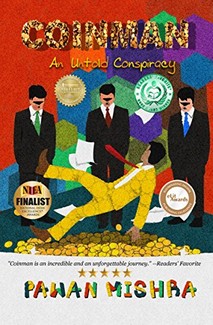
Coinman: An Untold Conspiracy by Pawan Mishra

In this eccentric tale set in a small town in northern India, Pawan Mishra masterfully weaves ingenuity and sarcasm in a manner that’s simultaneously hilarious and tragic.  
Member BookAds