During World War II, Humphrey Bogart made a War Bond trailer entitled “Thank Your Lucky Stars.” In it, he encouraged folks to buy more bonds and support the war effort. Bogey, by the way, served aboard the USS Leviathan during World War I. At times like these, that old film bears thinking about once again.
During World War II, Humphrey Bogart made a War Bond trailer entitled “Thank Your Lucky Stars.” In it, he encouraged folks to buy more bonds and support the war effort. Bogey, by the way, served aboard the USS Leviathan during World War I. At times like these, that old film bears thinking about once again.
Currently, the U-1 unemployment figure is roughly 7.5 percent. The broadest unemployment measurement (U-6) is roughly twice that high. During the Great Depression, the U-1 figure was 25 percent and although the U-6 number was not tracked or reported, it likely hovered at around 50 percent (all things being equal).
As we think of it today, there was no social safety net. Welfare was known as “relief.” There were no school lunch programs, no Medicaid, no housing vouchers, no government-provided transportation, no GI Bill, no WIC programs, no child care deduction, no Pell grants, no subsidized tuition loans, no bicycle giveaways, no Social Security, no winter clothing/toy drives; virtually zero government support for the nearly half of the country that was quite literally starving.
There were no free phones. Folks lacking one used a pay phone, assuming they had a nickel for the three-minute call, and nickels were hard to come by. Poorer families put their children into orphanages or foster care because they could not afford to feed their own kids. Those kids went on to become what Tom Brokaw described as “The Greatest Generation.”
An old Air Corps buddy of my dad’s, Nick Moriel, is a prime example.
After the war, Nick landed a really good job at Bausch & Lomb, making well into five figures. But he had one peculiar habit. After every meal, his wife, Betty, would throw out any food the couple had not consumed. We’re talking perfectly edible food you could heat up the next evening and eat. But not Nick. As a child, I once watched as Nick scraped the uneaten half of a porterhouse steak into the garbage.
Later, I quizzed my mother about this unusual behavior. At my house, that half-steak would have been eaten cold the next day, probably by me, and I’d have enjoyed it thoroughly. Mom replied: “Richie, when he was a boy, Nick’s parents were too poor to feed him. So every day for about six years, Nick was passed to one kind neighbor or another. His dinner consisted of the leftovers and scraps from that family’s supper. It was the only way Nick could get anything to eat. During the war, he told your dad if he survived and ever landed a decent job, he’d never eat leftovers again. That’s why he threw away the steak.”
So the next time you hear someone whining about inadequate government support for the latest social program, you can tell them about Nick Moriel. That, and thank your lucky stars.
Rich Finzer lives in Hannibal, NY.
Thank you for your wonderful story pointing out how really bad the Great Depression was. I was born after, but I saw what it did to my grandparents who never really had two nickels to rub together. I also saw what it did to my father. Once when I remarked something about good cornbread, Dad told me that he, "Never wanted to eat cornbread or cornmeal ever again."
Your story about Nick also sheds light on my father's rather wasteful behavior as he spent almost every nickel made on himself and when he died, left my mother without much for the rest of her life. If my mother hadn't saved the leftovers and managed his rather good pay as a truck driver, he would've died deeply in debt.
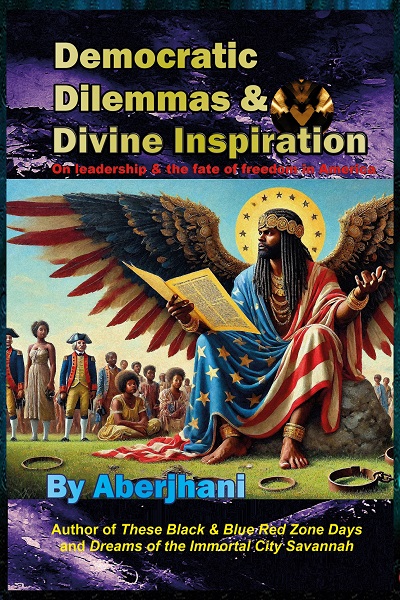
Democratic Dilemmas and Divine Inspiration examines the significance or relevance of the idea that the U.S. Constitution was, as many believe, divinely inspired. How much did that belief matter to founders of the nation and how much does it matter no
Democratic Dilemmas and Divine Inspiration examines the significance or relevance of the idea that the U.S. Constitution was, as many believe, divinely inspired. How much did that belief matter to founders of the nation and how much does it matter no