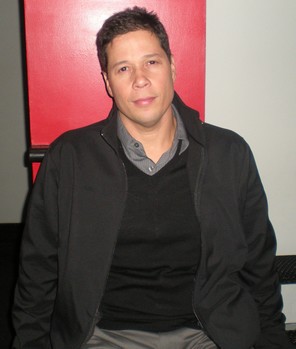
I was eleven years old when this happened, and I was the youngest of five, with Joey a few minutes older, and then it was Anna, Gerard, and Michael being the oldest. Fighting was all I seemed to learn in the ghetto. The idea of having a better life seemed like it was only true in those stories you read in magazines.
My mother prayed for a special place where someday she would free us of all this torment; she hoped to give us a life away from the projects. But that was a hope for a future I couldn’t understand. This upbringing was my normal.
It was the year 1977, when owning a pair of black bell-bottom polyester pants and a pair of white-and-royal-blue, low-profile Pro-Keds sneakers would fit you in with the other kids. But designer clothing wasn’t for Joey and me. Instead, Dad only got us what he could afford and would last the longest, including the second-hand shoes the kids called skippies and always made fun of.
It was a time when the New York City blackout happened and people were breaking into store windows and apartments. A time when Jack LaLanne was a television staple, as was using a 45 adapter with a worn-out disco single to play the Bee Gees or Captain & Tennille. The music echoed through the project hallways.
I recall taking long walks with Michael down to the Pickle Guys, passing my favorite toy store and wishing I had that new G.I. Joe in the window, or watching the neighborhood Pigeon Man feed the birds. Our favorite places to go was Coney Island or the World Trade Center. It was like Disneyland in the ’hood.
Parked Cadillacs rang out to the sound of “Another Star” by Stevie Wonder, and the indistinct noise of tapping heels and snapping thumbs resonated over the neighborhood benches. It was a time when homeboys sat on the benches playing congas and drinking Miller beer buried in brown paper sacks, making catcalls to the Spanish girls who passed by dressed in tight-fitting jeans and revealing shirts.
A time when the seven of us would sit in front of the colorless TV in our two-bedroom apartment to watch Kolchak: The Night Stalker, Welcome Back Kotter, or my favorite, The Six Million Dollar Man, never missing an episode.
In my neighborhood, people thought of the projects as home. I thought of it as a sewer for criminals who lingered in unlit hallways, looking for someone to rob. It was common to catch a junkie shooting up heroin in the stench of his own piss, sitting on the stairwell with no hope for any future. A prostitute, or almost anyone, could be having sex anywhere. But in the midst of all this, for us, the projects were home.
It was a melting pot of people on welfare, including us, and simple existence was based on your survival instincts. Neighborhood winos, prostitutes, and junkies infested every crack of this jungle, and our trusted men in blue would simply drive by, making fun of their misfortune.
The night mornings were the worst. That was when we were asleep, and it was early enough in the morning to still be dark, and gunshots would echo between the buildings. We wouldn’t know if a bullet would go through a wall and hit any of us. I would lie in bed frightened until daylight.
The Hell’s Angels, who lived across the street, would keep that side of the block calm. It was like watching a mafia movie from my fifth-floor window, where the big guys would protect their turf and no one would mess with them, gaining respect by fear alone.
Where we lived at Twenty Avenue D, Apartment 5e, there were Hispanics, blacks, Jews, and even Italians. You might call it the United Nations Building, where everyone was on equal ground and no one had more than the other.
We never knew where our next meal might come from, and our apartment was crammed, but that didn’t stop us from relying on the one trait that kept us together—love.
Reads like a jungle, all right. My experience in the bad part of town was certainly not that bad, although we did have a brush with the police when we were seven, picking up butts and smoking between buildings off an alley where we had a fire to light our cigarettes and it caught some sawdust smoldering and we couldn't put it out… The fire department did. The scare I got by being picked up by the police set me on the path of right after that. I took all the blame for our neighbor's son (a dentist and a hold out from when the neighborhood was better) and my brother, as the instigator.
There were always fights going on and there were a lot of switchblades and other knives, but I generally stayed out of fights by running or avoiding thugs because I was small, wiry and fast, but not strong. My mother had to re-sew many buttons onto my shirts on patches where previous buttons had pulled chunks of my shirt out with the buttons. I always got away from these big guys wanting to put a hurt on me. When I did fight, it was quick and punishing, but I would leave immediately and not kick anyone when they were down. That's the way my dad was, and that's probably where I got that behavior.
Join me as we travel together on the road called "Aging." I will be sharing my personal experiences with you and offer ideas on how we can better navigate the complex byways of our older years. Grief, healing, generations, ancestors, and more.
Inside the Methadone Clinic. Addiction to heroin, methadone, and other opiates. Destruction. The primal addiction" of the child, power and control over your own life, the institutions and the characters, the love between a mother and son. This book i
About the clients and escorts who once were part of Professional Escorts of Marin County, California. The timeframe was from 1974 until 1990.
You will enjoy the easy to read book that gives a glimpse into escorting. Enjoy the read.