The Kite That Would Not Bow
Los Angeles, a city where applause echoed louder than thought, where poets were expected to stay relegated to rhyme like clocks ticking in sync, there was a seldom-visited beach several miles up the coast. There lived a man named Elian. He was not famous, nor was he forgotten. He was something more rare: unyielding.
Elian’s poems were not sweet confections for the masses. They were jagged constellations, forged together from silence and storm, ebbs and tides of his surroundings. He wrote of longing that refused to be quenched, of love that did not wear perfume, of truths that soared like kites but never bowed to the wind.
A local literary club, a parade of polished smiles and predictable verses, invited him to read at their annual festival. “Keep it light,” they said. “People want joy, not riddles.”
He arrived with a single sheet of paper, folded like a secret. The stage lights blinked like impatient eyes. The crowd leaned forward, expecting laughter, rhyme, and the comfort of cliché.
Instead, Elian spoke of illusions and how they glitter like fool’s gold in the sun, how they seduce the impatient into chasing shadows. He spoke of love not as a fever, but as a slow-burning lantern that survives the storm. He spoke of passion colliding with deception, of sorrow flooding the soul, of the fragile hope that rises from the wreckage.
Silence fell like snow—a brightness of light that found fading to a hush was its only recourse. A few scoffed. One yawned. The host forced a smile and clapped politely. But in the back, a girl with ink-stained fingers from a leaky pen and notebook open diary wept quietly. A man with dark glasses to cover his blindness nodded. A boy who had never heard truth spoken aloud before felt something stir in his chest.
Elian left the stage without bowing, not as an insult, but as a humbleness only he knew.
Outside, the wind tugged at his coat. He looked up. A kite, tattered, defiant, danced against the dusk. It did not soar for spectacle. It soared because it must.


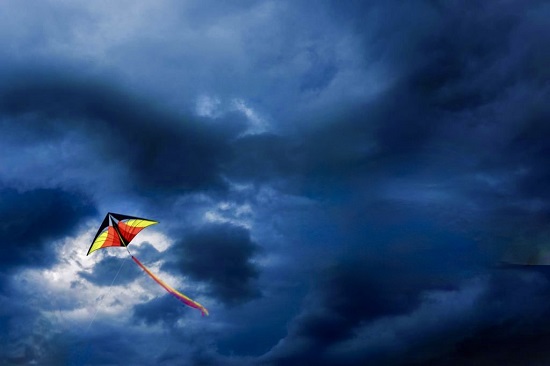 Often sincerity and creative talent find little acknowledgment. Yet, there are other rewards.
My first thought though was from the title. The Kite Runner was a movie depicting a true (fictional?) story of a boy and his kite in Afghanistan circa 1965. His father was all about westernization and even owned a Mustang convertible. The film sadly recounts what fundamentalist religion has done to the country. Taking it backward into chaos and war. Leaving the country and not being able to take his best friend with him.