A few years ago, I attended a workshop in Atlanta on RET(Rational Emotive Therapy)presented by Albert Ellis, famous psychologist. Mr. Ellis believes that many of our thoughts are irrational and that our emotions cloud over rational behavior skies. Some of the irrational beliefs of men and women have over the years caused a lot of problems. Here are some of those beliefs:
1) It is necessary for an adult to be loved or approved by everyone for everything he does.
2) Certain acts are wrong, wicked and that people who perform them should be severely punished instead of recognizing that some acts are not appropriate and that people who perform them are stupid, ignorant, or emotionally disturbed.
4) Unhappiness is externally caused and forced on one by outside people and events instead of seeing that the view one takes determines whether one is happy or not.
5) If something is fearsome or dangerous one should be terribly concerned about it instead of facing it head on.
6) It is easier to avoid than face life difficulties and self responsibilites instead of looking directly at the problem.
7) One needs one stronger than oneself on which to rely instead of standing on one's own two feet.
8) One should be throughly competent, adequate, intelligent, and achieving in all respects instead of looking at oneself as an imperfect being.
9) If something once affected one's life it should always affect it instead of learning from experiences.
10) It is important to our existence what other people do instead of realizing people's deficiences are their own problems.
11) That human happiness can be achieved by inertia and inaction intead of seeing humans are happiest when engaged in worthwhile pursuits.
12) One has no control over his emotions and can not help feeling certain things instead of accepting the control we can have over our lives.
Examples, were used to show us some faulty beliefs. For instance, one lady was very angry because her daughter had been stricken with cancer. Due to the fact that this lady was unable to be with this daughter - she was extremely angry with her son-in-law. She was able to see that the anger she had was not person related but circumstance related. She was angry because life was not fair. Life had dealt her daughter a bad blow. She blamed the son-in-law because he would not let the daughter stay with the mother. Of course this is misplaced blame and anger. This would mean some tremendous hardships on his family. Also this issue was complicated by family business problems that were demanding this lady's atention. Therefore, she could not go and care for this daughter and help resolve some of her guilt about this issue. What must happen here is that this anger must be ventilated. After some work has been done in this area, then accepting this daughter's illiness will become much easier.
The second example used was a young lady who stated she always seemed to be attracted to losers in dating relationships. When this happened she became angry and felt ripped off. These men seemed selfish and self-serving. She stated that she should know better. She felt she needed not to continue to make these mistakes in order to respect herself. It was pointed out to her that she can respect herself even if she makes some bad choices. One myth that she had bought was that men must be honest and treat her nice. Of course, man's nature is not to be this way. She was encouraged to date enough men in order to realize that there are some men who are okay. She was encouraged to imagine that she had met another male who also turned out bad. She again feels the anxiety and anxiousness. She is taught to feel disappointed and sorry that this situation turned out the way it did but not to feel angry at him or herself. She was taught to reward herself if she follows through on the suggestions. For instance, a reward for her would be going to see a movie. However, during a 30 day period of doing the above assignment on herself, if she misses a day thaen she will give herself a consequence. One thing that she hates to do is the dishes. So if she fails her assignment, she will stay up one hour later than usual and do the dishes.
Another young female had overscheduled herself and was frantic because she could not get into her day more than 24 hours. These unrealistic expectations sometimes have to be pointed out to people. She was encouraged to decide on a quitting schedule and not be upset over what she did not accomplish.
If the myths mentioned earlier are strong in one's belief systems then he will tend to become hostile, inhibited defensive, guilty, ineffective, uncontrolled, and unhappy. We can certainly be taught the wrong ideas, which in turn will shape us into having irrational thoughts and ideas. By the same token, Albert Ellis states one can be taught rational behavior. If a person is too confused and severely disturbed, then he might be a poor candicate for RET. However, this is not the case in the biggest percentage of cases.
Attitude then has a tremendous impact. It has a great effect on our mental health. If when we realize some of the things that we have been telling ourselves for years are causing us to be unhappy, depressed, angry, inferior, and helping us to maintain a miserable life in general, then why not discard these myths and replace them with thoughts that will be happier and help us to be more productive human beings.
Life is hard enough without complicating things more than they have to be.
Want to review or comment on this article?
Need a FREE Reader Membership?
Reviewed by Elizabeth Taylor (Reader)
Reviewed on October 8, 2003
So true, so true. Excellent article. Though unfortunately the ones who need to read this and absorb the info, probably won't. Well done.
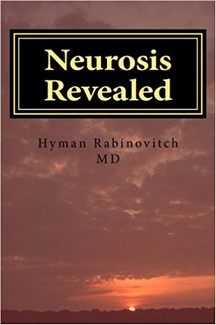
Neurosis, a mental illness, affects everyone to a greater or lesser extent, yet most know little or nothing about it. This book reveals all, including incidence, signs and symptoms, cause, treatment and prevention, in lay language.
Neurosis, a mental illness, affects everyone to a greater or lesser extent, yet most know little or nothing about it. This book reveals all, including incidence, signs and symptoms, cause, treatment and prevention, in lay language.