A very basic challenge we all have to solve in life to be happy and successful is the paradox of how we can have our cake and eat it too--reconciling both halves of life.
SUCCESS DIET: BE A DAY EARLY AND A DOLLAR AHEAD
Ten Unusual Ways To Thread Your Needle With Life’s Rope
By Bill Cottringer
“Not everything that can be counted counts and not everything that counts can be counted”—Albert Einstein.
Being happy, content and successful in life is mostly a matter of not giving up on finding your pot of gold at the end of the rainbow—not ever quitting, always making simple choices with commitment, relentlessly keeping hope alive and perpetually using rubber-band flexibility in the hunt. To reverse the typical losing outcome of being “a day late and dollar short” into being a winning day early and a dollar ahead in this treasure hunt, you have to figure out how to beat a daunting paradox to reconcile both halves of life—How to have your cake and eat it too.
This is NOT an abstract intellectual exercise, but a primary problem-solving experience that takes you from the cellophane sidelines of the game of life directly to the heart of animated, Technicolor living that doubles your return on investment.
In order to do this, there are certain realizations that have to come to mind. And perhaps the biggest secret is how to undo or delete the thinking patterns and many reasons that inhibit the birth of these critical insights. That is where intense, critical self-exploration comes in and only you can do that! At any rate, here are ten such realizations that can have a major impact in closing the gap between where you are and where you really want to be in your treasure hunt for genuine happiness and real success. This is a real Success Diet and these little perturbation point goodies can help you run faster and move the finish line closer, both at the same time in order to get more by doing less. What a deal!
1. BE IMAGINATIVE: You can have your cake and eat it too, but only when you don’t have to.
“We are not retreating; we are advancing in another direction”—Gen. Douglas MacArthur.
Now what in the world does this seemingly nonsensical statement have to do with anything real? The clue is in the two italicized words. Well now as you may have figured it out by now, much of life involves trying to have mutually exclusive things—trying to be happy in an unhappy marriage or be secure in an insecure divorce, trying to make a lot of money without spending too much time, or wanting freedom and equality and justice and mercy at the same time. The trouble is that having one thing usually has to come at expense of not having the other. How can you possibly have both at the same time?
The key to figuring out how to have your cake and eat it too, is in determining the correct order in which to proceed in resolving such paradoxes. For instance, much success and happiness comes about when you focus on fitting into something first (job, community or marriage), and then make what you have already fit into, a little better from the inside-out, as opposed to wanting to hurry up and change things outside-in from the get-go. And, if you want to make a ton of money, you have to be willing to invest the time first. Moreover, if you want to end an unhappy marriage, survive the divorce without fatal scars and be secure and happy alone, you have to be willing to take a chance and go through with the divorce with an open mind, taking one thing at a time and not anticipating or expecting any particular outcome. And as it turns out this is all much easier done than said.
Critical Question: What is the one thing you need to IMAGINE that would have the most positive impact on the quality of your life?
2. BE IMPARTIAL: It is not as much the things in life that get to you as much as the emotional opinion you allow your thinking mind to have about these things
“The truth is more important than the facts”—Frank Lloyd Wright.
The real test of character is how you respond to adversity—your interpretation and reaction to a totally dreadful, tragic, and trying event that is very easy to give into and fold on. However, even with the most negative of events, there is always something positive that can be learned and applied to make life better. It is not always easy to spot, because of an adverse, pessimistic attitude that hides it. You have to learn to view the situation as neutrally as you can, devoid of the addictive negative emotionality.
The biggest mistake you can make is to fear a failure repeat. The best attitude to have during such a trial is that you now have an opportunity to start over again, armed with better information that you learned from a previous failure that will help you avoid going down the same path. The biggest choice we continuously have in life is how to react to something and the reactions—whether positive, neutral or negative—usually produce the same outcomes. You get what you expect and so if you don’t like what you are getting, look at what you are expecting.
Critical Question: What is one PARTIAL opinion you can shed right now to become more IMPARTIAL?
3. BE INDEPENDENT: It is actually smarter to not make connections between similar events from different times in your life than to automatically assume history will repeat itself.
“The best way to predict the future is to invent it”—Alan Kay.
Now this sounds like advice that runs contrary to the traditional wisdom of history. But it isn’t, because it challenges the assumption that we can’t influence the future, which is just a self-imposed, unnecessarily inhibiting limitation. You really can’t step twice in the same river, because the river will never be exactly the same at second later; many things change that actually make it a much different river, just like your whole body changes every single cell every other year. Who is the self that doesn’t change?
The real reality is this: Every moment that occurs offers a new and unique opportunity to make a choice as to how to interpret it and how to react to it. The interpretation and reaction will influence the outcome. Remembering some unfortunate event or circumstance from the past because of some similarities going on now, doesn’t have to predict a certain outcome, unless you let it. In fact it probably will if you do let it. This is why second and third marriages fail at a higher rate than the first one—people let history repeat itself, which it will certainly oblige if given the opportunity.
Critical Question: What one DEPENDENCY can you dump right now to be more INDEPENDENT?
4. BE IDEALISTIC: Even if life at best is a 50-50 deal, it is better to lean towards optimism.
“I find the harder I work, the more luck I seem to have”—Thomas Jefferson.
Stop right now and think about something. Does it even make any sense to try and keep score? Or does it even matter because if you are stuck in a negative event, your whole world is negative at the time (horn effect); and if you are enjoying a fun, positive, enjoyable moment, that is all you know at that time (halo effect). Plus there isn’t enough memory or paper to keep an accurate, complete score, so why bother? Keeping score in anything other than a sporting event, doesn’t make a whole lot of rational, useful sense.
Compelling research by the King of Optimism—Martin Seligman—proves the value of having an optimistic rather than pessimistic explanatory style (you did something to deserve the good thing, it will happen again; bad things are due to external influences, they won’t last): With optimism you end up with fewer physical symptoms, are happier, live a longer life, make more money and have a better marriage. Do you need any other reasons?
Critical Question: What UN-INDEALISTIC anticipation/expectation can you undo to become more IDEALISTIC and get better results?
5. BE IMPASSIONED: Balance is good in most things but it is also important to know the few things you should be committed to with 100% of your head, heart and hands characterized by utter abandonment.
“Never mistake motion with action”—Ernest Hemingway.
I think most of us have this one mixed up—we quickly get addicted with our full attention and behavior to the wrong things and avoid even knowing what the right ones are! We probably run out of time and energy. It is becoming clear to me that all my life has been a hunt to separate the 5% valuable gold from the 95% worthless sand—to identify the truthful and useful principles from the rest of the useless, nonsensical chaos.
Getting older and becoming more mature does have its advantages—your real priorities seem to rise to the surface. It would certainly be even more advantageous to identify these priorities earlier on—knowing the few laws of life that can’t be violated, understanding your purpose in life, learning the few genuine success clues that actually work, realizing how to sustain a healthy relationship through stress, and uncovering the other truths and principles in life that hold their own over time in a variety of different situations (the real stuff behind the other stuff).
Critical Question: What wrong PASSIONS can you exchange for right ones?
6. BE INFORMED: All that you think you know may not necessarily be so (or things are rarely as they appear, especially when you are sure).
“Men have become tools of their tools”—Henry David Thoreau.
Time sure does have a funny way of changing the truth of something. And when you stop to think about it, what information can you be 100% sure of, without a leap of faith? This is true no matter how you acquire the information—from sensory perceptions, intuition, critical thinking, the scientific method of research, reading, listening or a higher authority—all of which can be challenged. The best you can do is to use your time smartly to come as close as you need to be about the tentative and relative truth of something.
And when you stop to learn about how the brain actually works, you discover it is an instrument of efficiency rather that effectiveness. In other words, all that you have taken in is not guaranteed truth and deserves to be questioned. When you just assume your techniques for knowing something to be true are as effective as they need to be, you run the risk of wasting brain space with incorrect and incomplete information that may not be as valuable as you think. For instance consider just a few of these brain “truths:”
• A single first-hand experience is valued more than many more second-hand ones regardless of the evidence; one such local event becomes a universal fiat.
• We ascribe internal motivations to other people’s faults, but external causes to our own.
• We quickly embrace a belief that is packaged in emotionality and resist giving it up with all our might, despite compelling disproof.
• Anything occurring contiguously in space and time gets easily connected in a cause and effect relationship.
• We oversimplify complex realities into this or that categories for easier judgment, storage and retrieval.
• Even the most “certain” memories are faultier that you can ever imagine.
Critical Question: What UNINFORMED belief or bit of information can you replace with an INFORMED one?
7. BE IMPERATIVE: You can waste way too much time trying to figure out how to live your life when the best use of time is to figure out why you are doing what you are doing.
“Do or not. There is no ‘try’”—Yoda.
Here again, you may just be getting caught up in a priority reversal—proceeding to learn and do something in the wrong order. Books to help you figure out what your mission or purpose in life are certainly abundant these days. But they may not be that purposeful, because more than likely you are already accomplishing your purpose but just don’t know the why behind the what. Getting a clearer picture of the details produces a clearer bigger picture.
The real bottom-line to living a good, productive life is that you can carry out a noble purpose of service whether you are the president of a country, a rich and famous entertainer or sports star, a Peace Corp volunteer, a college student, a parent or a check-out clerk at the grocery store. When you know why you are doing what you are doing, you will undoubtedly be doing the right thing in the right way and getting results that help make life a little bit better for yourself and others, one step at a time.
Critical Question: What is the central IMPERATIVE in your life?
8. BE IDEOLOGICAL: How you define something has a lot to do with how much or how little of the thing you have.
“Well done is better than well said”—Benjamin Franklin.
This has been one of my favorite abstract sayings that has so much wide applicability for making life better that I should probably charge a million dollars to explain it. But I won’t, because I am not sure I can explain it in common sense terms. I would just ask that you first write down some of the more important terms that define the quality of your life—such as love, truth, success, goodness, service, charity, generosity, happiness, peace, contentment, etc.—and then define these things as precisely as you can. By the way, consider the normal connotations of the word “diet” in the title of this article as opposed to the standard dictionary definition. The first implies the negative activity of food intake reduction and avoiding certain foods, while the second represents the positive activities of “providing, doing, and enjoying something regularly.” Which is more effective?
Start your definition exercise definition excise with the word “success.” Then compare it with this definition to see who can have more of it: “Success is making your best effort to do what ever you are doing right now to make an improvement in the results you are getting.” Next try “creativity.” If you define creativity as music, poetry, art and literature, is it as abundant as if your were to define it as just “understanding the truth of something ordinary and then communicating that truth effectively to others?” Our definitions of love and subsequent expectations for those things may be contributing to the skyrocketing divorce rate today.
Critical Question: What important IDEAS can you redefine to enjoy more positive consequences?
9. BE INSPIRING: The best relationships focus on the good potential of the two people; the worst ones have lost sight of the potential they started with.
“If a man does his best what else is there?”—Gen. George Patton.
Relationship break-ups have a common denominator: Their focus has shifted from the pleasurable, positive similarities and hopes for unfolding potential, to the annoying, negative differences and fear of a future without potential. Mutual goals that once provided positive motivation and enjoyment have faded and been replaced by destructive negative emotionality that takes things every which way but forward. It is time to get back to a common ground of agreement.
Once again, maybe we need to challenge the order in which we proceed to try and have our cake and eat it too. We typically start by noticing all the “differences” of a new person or situation, when it would be more productive to explore similarities in order to build a stronger foundation to withstand the appearance of inevitable differences later on.
In other words, first things first.
Critical Question: What area of your own life or another’s are you not INSPIRING enough?
10. BE IMMUNE: The hardest thing to do in life is what opens the door to your pot of gold: To put aside wishful thinking about certain expectations for a “fair” outcome in anything you do, especially getting a return on investment from practicing the Golden Rule.
“Silence is argument carried out by other means”—Ernesto Guevara.
Oh boy is this quite a mouthful…It may take a couple readings to sink in. Let me try to break this down into the simplest of terms. The lion’s share of being human is to develop an internal thermometer as to what fairness and unfairness are. And you always know immediately when you have it or don’t have it. The only problem is this human need doesn’t have any satisfaction guarantee in life, because fairness isn’t one of life’s needs or outcomes. Or maybe people and life define fairness much differently.
When you begin to think about the futility of having certain expectations fulfilled as a consequence of your efforts, you are on your way to increasing your chances of happiness. Sure, it is quite normal to have these expectations (mine was that I would make more money by getting an education and working harder; the joy of wisdom turned out to be more valuable than money!), but the more of them you can question and eventually shed, the better. That is growing up in life, no matter how old you are.
Critical Question: What unfairness in your life needs some IMMUNITY?
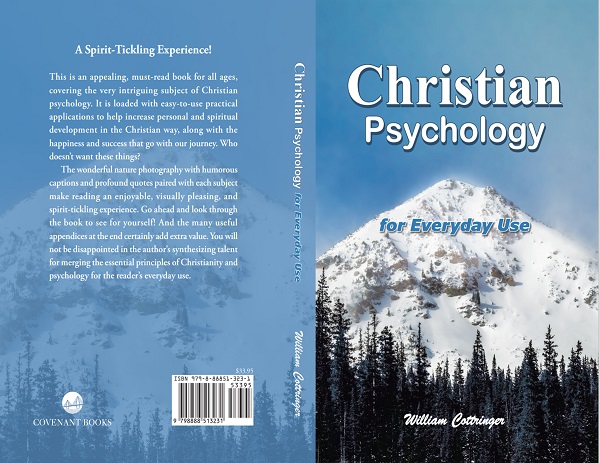
William Cottringer, Ph.D. is President of Puget Soound Security in Bellevue, WA. He is author of You Can Have Your Cheese & Eat It Too and The Bow-Wow Secrets. This article is the start of a new book. The author can be reached at (425) 454-5011 or bcottringer.pssp.net for input and suggestions.
|




















I believe when you lead a good and honest life, opportunities and chances for progress and betterment will appear at strategic times in your life...
Peter