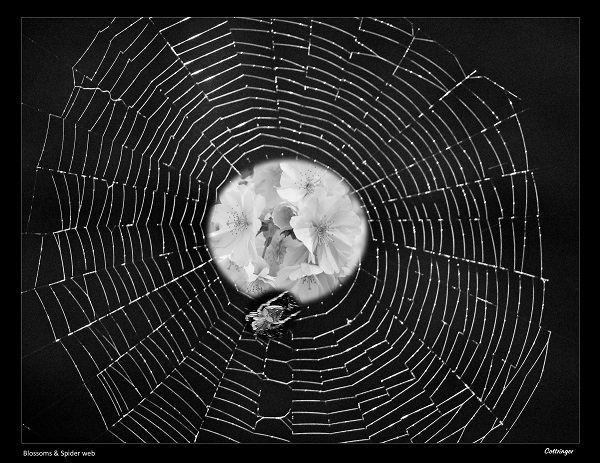
 The strength of feelings about the truth of a belief is what mostly drives behavior.
Beliefs & Behavior
by
William Cottringer, Ph.D.
You never know how much you really believe anything until its truth or falsehood becomes a matter of life and death to you. ~C.S. Lewis.
Beliefs are what drive our behaviors, but not all by themselves. They get much help from two friends—the interaction between our thoughts and emotions, which results in the strength of the feelings we have about what we believe to be either true or false. The stronger the feelings in one direction or another, usually the stronger the action in response will be. Of course there are a litany of other influences including all the experiences that prove or disprove the belief and the various thresholds people have in translating beliefs into actions.
Beliefs are also biological, meaning they forge a neural circuit in the brain from the experiences that created them, compounded with the strength of thinking and feeling which reinforces them. A self-fulfilling prophesy then exists because we learn to expect certain results from past experiences of a similar nature, which in turn influence future results in a full circle return. Of course, we can’t think our way out of a belief that we behaved ourselves into, and only a new opposite experience can rewire the neural circuits in the brain to get different results.
Changing beliefs is an arduous process, even with compelling evidence disproving the belief’s validity, because the brain is actually not hard wired to find the truth, only something satisfying enough. This is where you have to outthink your brain and weaken the strength of the feeling abut the belief being true . Sthe strong evidence of smoking causing throat cancer is a good example of belief changing difficulty.
Although beliefs are like opinions in that we get to believe what we want to and no one has any right to tell us otherwise, it may be a good idea to take the time to understand the likely validity or consequences of what we believe to be or not to be. That way we can be better informed as to what belief benefits us most, which ones have the disadvantages we might want to avoid, those that we can’t reliably predict the consequences, and which ones should probably be taken more seriously than others.
And of course, even if a belief is untrue , unprovable, or even a fantasy (tooth fairy, Easter bunny, Santa Claus), when it serves a positive purpose and is a benefit to your well-being, then maybe that is okay, at least until the disappointment comes with the truth.
Let’s look at a few important beliefs we all have, which seem to have consequences, predictable or not. One way or the other isn’t necessarily bad, but rather just different with effects. The choice is always ours to make. There are two main categories of beliefs that drive behavior. These are philosophical beliefs and psychological beliefs, as briefly discussed below:
Philosophical Beliefs
Philosophical beliefs include those about the existence of God and an afterlife, religious doctrines and scriptures, spiritual philosophies, political issues, the nature of morality, values, the nature of the universe, and other such things we think about, and which often bring about intense and contentious arguments, even wars. The main purpose of this category of beliefs is to provide us with the amount of certainty and security we feel we need to be okay, at least until we realize we really don’t need such temporary security blankets by understanding the wisdom of insecurity.
Philosophical beliefs do not have reliably predictable consequences on our behavior. For example, you can strongly believe in the existence of God and heaven and hell, and then engage in either model, morally responsible behavior or engage in immoral and reckless behavior. And of course, you can be an agnostic or atheist and still live by being kind and following high morally responsible standards.
Or you could believe in some form of reincarnation, which would probably prompt you to question things such as dualistic judgments of good and evil and illusions such as the experience of time and existence of a separate self. And yet you might not even think about such things, feeling there is always plenty of time to get things right. Regarding political beliefs, you may favor one candidate or a certain issue over another and later find out the candidate or agenda has changed radically.
With personal values like love, power, knowledge, loyalty, and compassion, there does not seem to be a correlation between believing in the priority of these values and how much of your life is devoted to actually living them. Finally, there is no agreement of universal morality, besides doing good and avoiding doing harm, because all the parts of this belief mean different things to different people. Philosophical beliefs aren’t really knowable or provable, so debates about them can’t really have any meaningful conclusions.
Psychological Beliefs
Psychological beliefs include personal beliefs about our basic world view, human nature, free will, locus of control, epistemology, and motivation. The most feasible purpose of this category of beliefs is to facilitate the self-actualization process by way of the required learning, growing, and improving into our best self. This category of beliefs is well researched scientifically, to conclude the most likely consequences of the belief, given the direction it leans towards.
|
Belief
|
Possible Direction
|
Likely Consequences
|
|
World View
|
Optimism-Realism-Pessimism
|
Optimism—Being hopeful in taking credit for good things, thinking they can go on without any scarcity; benefits of better health, increased happiness, more satisfying relationships, fewer physical symptoms, longer longevity; reacting assertively to resolve conflicts; always having solid faith for a better day.
Realism—expecting mixed results, always having a plan B in your back pocket in case Murphy’s Law rules; reacting according to the circumstances with flight or fight.
Pessimism—not trusting life or people, being hopeless and helpless, and expecting that bad things are personal, permanent, and pervasive; reacting with aggression or passivity.
|
|
Human Nature
|
Good-Neutral-Bad
|
Good—trusting people, expecting the best, and helping self and others develop assets and avoid liability-exploiting situations.
Neutral—Sensitive to all the good and bad influences; adopting a wait and see stance; taking responsibility for sensible interventions.
Bad—Untrusting and hopeless; expecting and preparing for the worst; overcompensating weaknesses; thinking interventions are absolutely necessary.
|
|
Free Will
|
Yes-Maybe-No
|
Yes—Taking responsibility in making careful choices; being insensitive to a multitude of possible influences; over-estimating personal freedom.
Maybe—Being open to controlling reactions and being aware of destined and conditioning influences; looking for ways to develop more free will.
No—Being a victim of destiny or social conditioning; underestimating possibilities of personal freedom; not being burdened by inhibitions.
|
|
Locus of control
|
Internal-Mixed-External
|
Internal—Realizing the main control is with reactions, higher self-esteem, and confidence.
Both—Awareness of external influences; drawing on inner confidence when needed.
External—Lower level of self-esteem, feeling of being a victim and helpless in even controlling the few controllables.
|
|
Epistemology
|
Fixed-Flexible-Equality
|
Fixed—There is only one way to solve a problem or take advantage of an opportunity; using a competitive stance; lack of teamwork.
Flexible—Other perspectives can deepen our understanding of the best truth, engaging in compromise; using teamwork to get results.
Equal—All perspective and knowledge are equally valuable as smaller puzzle pieces to the bigger picture; being a performing team in actively pursuing cooperation and collaboration.
|
|
Motivation
|
Internal—Mixed--External
|
Internal—Being driven to accomplish something just because doing so is rewarding enough in and by itself, having undeniable satisfaction; learning is stronger and longer lasting.
Mixed—Not being certain about which to use; never being sure about the results.
External—Being motivated to do something for a reward that has been promised; possible disappointment and weaker and shorter duration for learning.
|
We can only judge the benefits of a particular belief after we realize the actual consequences and of course, the degree to which we like or dislike those consequences. And again, changing these equations isn’t a matter of re-believing or re-thinking them as much as seeking different experiences that have different consequences, in re-wiring the brain circuits. What seems to make most sense is that we make an honest effort to behave in ways that usually get the best outcomes and then, with beliefs that don’t have reliably predictable outcomes, we don’t take those quite so seriously and begin to question the benefit that we think we are getting.
“Be sure you put your feet in the right place, then stand firm. ~Abraham Lincoln.
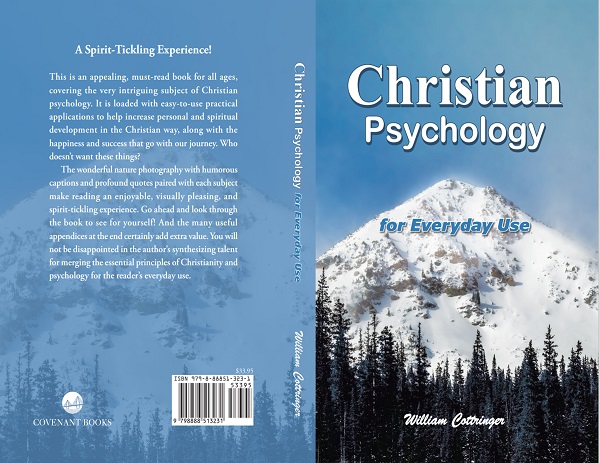
William Cottringer, Ph.D. is retired Executive Vice President of Puget Sound Security in Bellevue, WA, but still teaches criminal justice classes and practices business success coaching and sport psychology. He is also on the Board of Directors of the Because Organization, an intervention program in human trafficking, the King County Sheriff’s Community Advisory Board, and involved with volunteer work in several veteran’s groups and the horse therapy program at NWNHC Family Fund. Bill is author of several business and self-development books, including, Re-Braining for 2000 (MJR Publishing); The Prosperity Zone (Authorlink Press); You Can Have Your Cheese & Eat It Too (Executive Excellence); The Bow-Wow Secrets (Wisdom Tree); Do What Matters Most and “P” Point Management (Atlantic Book Publishers); Reality Repair (Global Vision Press), Reality Repair Rx (Publish America); Critical Thinking (Authorsden); Thoughts on Happiness, Pearls of Wisdom: A Dog’s Tale, and Christian Psychology (Covenant Books, Inc.). Coming soon: Reality Repair Rx + and Dog Logic. Bill can be reached for comments or questions at (206)-914-1863 or ckuretdoc.comcast.net.
|





















I didn't find Attitude, but realized that attitudes are one of the hardest things for us to change. I find that our attitude makes a big difference on whether we can communicate or not.
Ron