The Good, Bad & Ugly of the Brave New World of Technology
By
Bill Cottringer
“The whole idea is not about the choice between using or not using technology. The challenge is to use it right.” ~Anonymous
I think we can safely say the invention of the first computer, then called a “Turning Machine,” was the beginning of our “Brave New World of Technology.” This first computer was invented to break an “enigma” of a communication code used by the Nazi’s in World War II. It was a way to compute a virtually infinite number of possible combinations of letters and numbers representing complex top-secret communication intelligence much quicker than could be manually calculated by a multitude of workers.
I believe it is also fair to say that every benefit that technology brings is accompanied by a troublesome side effect that must be managed to keep progress actually moving forward. The use of technology today is primarily used to speed up work and everything else we are trying to do. Today with live in a world where speed rules, but it is becoming obvious that quality can easily suffer in the process if the speed isn’t managed.
Computers have had an enormous effect on speeding up communication with e-mails, connectivity with the social media, and information access through the internet with its superhighway. We can easily find any kind of information we can possibly want to know about and connect with hundreds and even thousands of other people instantly. At the same time, we can’t help but realize we are drowning in the quantity of information and connections we are making, while the quality of the information and connections is losing out in the process, at least until things are better managed.
Information overload today, is our biggest enemy. For instance, say you wanted to learn how to be the most effective leader. If you just use one of many available search engines on the internet—Google—you end up with over 5 billion references from books, articles, blogs, websites and any other means of web posting. How many lifetimes would it take to check out the quality of this quantity of information. I can’t image any more than comprehending that the amount of information keeps doubling every few years.
All the above is especially true with a growing problem of electronic communication, through e-mails and the social media. Below are a dozen practical tips to manage the important process of electronic communication:
1. Respect other peoples time. Nobody has time to read 100 e-mails a day at work and another 100 at home. Say want you need to say to get your main point across with as few words as you can, leaving out unnecessary details and long drawn out explanations.
2. Practice politeness. There is nothing wrong with addressing the audience formally and signing with your name and any other information that is needed, even with known audiences like friends and family. Think about what you are saying to avoid conveying anything that is unnecessarily offensive.
3. Use proper grammar and spelling and avoid cute abbreviations even if people understand, or acronyms they don’t understand. Always use spell-check and look up the correct spelling or grammar rule, if in doubt.
4. Write an e-mail like you would write a letter. And, if you don’t know what a proper letter should look like, there are plenty of examples on the internet to show you.
5. BCC is a good thing to use if you know someone else has a need to know what you are saying to another person, when the other person may not need to know about the other eyes on the e-mail. So is private messaging vs. public posting on social media.
6. Always be careful of responding to all on long e-mail strings, because there may be something in the e-mail that doesn’t need to be communicated to one or more persons on the list.
7. Use the return receipt function sparingly because it can be annoying. When used properly, it serves a good purpose if you want to make sure your e-mail was received and read.
8. Take time to make sure your information is correct. Spreading misinformation is just worsening the current information overload.
9. Don’t mix work and home e-mails. The workplace is for work and the home is for fun and relaxation. Besides there is a different style of writing appropriate for each.
10. When you have any doubts about what you are writing and how it will be received, always get a second opinion before sending.
11. Always take time to proof-read your e-mails. Well-written e-mails will always be easier to read and have the most impact.
12. Never forget the number one rule of good communication: It is not “what” you are saying that gets heard the loudest, but rather “how” you are saying it, that gets remembered.
“It has become appallingly obvious that our technology has exceeded our humanity.” ~Albert Einstein.
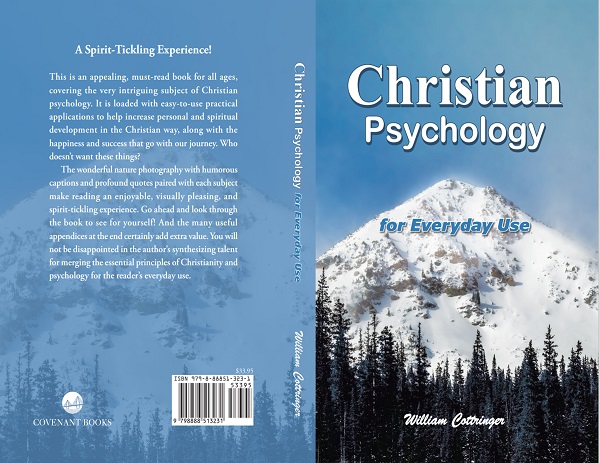
William Cottringer, Ph.D. is Executive Vice President of Puget Sound Security in Bellevue, WA, along with being a Sport Psychologist, Business Success Coach, Photographer and Writer living on the scenic Snoqualmie River and mountains of North Bend. He is author of several business and self-development books, including, Re-Braining for 2000 (MJR Publishing); The Prosperity Zone (Authorlink Press); You Can Have Your Cheese & Eat It Too (Executive Excellence); The Bow-Wow Secrets (Wisdom Tree); Do What Matters Most and “P” Point Management (Atlantic Book Publishers); Reality Repair, (Global Vision Press), Reality Repair Rx (Publish America); Thoughts on Happiness; Pearls of Wisdom: A Dog’s Tale (Covenant Books, Inc.) Coming soon: A Cliché a day will keep the Vet Away (Another Dog’s Tale). Bill can be reached for comments or questions at (425) 652-8067 or ckuretdoc.comcast.net.





















thought provoking article, well said
Never stop writing
m
And, when we were just beginning this information age in the eighties, I used to use Toffler's warnings about the probably overload profusely. He was an superior futurist.
I think my bigger concern is that technological progress needs to be managed to make sure it is meeting its intended purpose and staying in alignment with real "progress." After all, Dolly Parton was right--"You can't have a rainbow without sun and rain." (or something like that!). Thanks, Bill C.
But as I read your good advice, like you always give, I realized you are writing about email etiquette. That's okay, but your title and lead in don't seem to match the article.
Ron