Human Capital Leadership Essentials
By Bill Cottringer
“Before you are a leader, success is all about growing yourself. When you become a leader, success is all about growing others.” ~Jack Welch.
If the dreadful COVID-19 pandemic taught the gamut of private business world, non-profits, and public government organizations anything, it is two critical things: (a) the need to be more people-centered, and (b) the requirement to be more agile and adaptable to change. Today, these two realities are widely acknowledged but unfortunately not so widely applied in actual practice.
Many organizations are just now feeling their way through the new virtual world, especially through the essential elements of human capital leadership—leadership style, organizational development, organizational behavior, crisis management, team building, and ethics Below is a brief discussion of these six essential components of effective human capital leadership in today’s world of constant change, uncertainty, globalization, ambiguity, conflict, and interdependency.
Leadership Style
“Leadership is not a position but an energy that people love, trust and follow.” ~Amit Ray.
There are many different styles of effective leadership to learn and practice. The full general menu includes autocratic, democratic-participative, laissez-faire, bureaucratic, strategic, situational, pacesetting, and coaching approaches. Also there is an array of specific leadership trait, contingency and behavioral theories such authentic, visionary, charismatic, adaptive, servant, transactional. and transformational leadership. Choosing the right leadership style or theory is a challenging process and depends on your own unique personality, personal interests and needs, knowledge and abilities, personal growth and development, and central values.
Warren Bennis summarizes the most important leadership commonalities in being a creative enterprise by creating a compelling vision, trust, inspiration, passion, purpose, meaning, empowerment, well-being, engagement, commitment, flexibility, innovation, and success. There must be buy-in of this process throughout the organization and readily visible benefits for all stakeholders in the perpetual pursuit of learning, growing and improving.
Organizational Development
“If you want to grow an organization then enable its employees to experiment, explore and express their creativity without limiting them to title, department & designation.” ~Aiyaz Uddin.
Organizational development achieves growth and prosperity in delivering triple bottom-line benefits of the established value proposition for all the organization’s stakeholders from employees and customers to suppliers and partners. The main vehicle for this development is a healthy work culture with a clear vision supported with the right values, norms, consistent productive behaviors, innovative thinking, flexibility, shared decision-making, and good communication, all to avoid unguarded, unhealthy toxicity from creeping into the organization’s work culture.
The emerging organizational structure which seems to be most adaptive to today’s workplace is a hybrid blend of traditional hierarchy to preserve needed familiarity and stability, with the self-organizing holacracy model first introduced by Arthur Koestler in The Ghost in the Machine, and later formalized by Brian Robertson in the HolocracyOne System.
Organizational Behavior
“Human behavior flows from three main sources: Desires, emotion, and knowledge. ~Plato.
Today’s organizations must be agile and adaptive to constant change, or they quickly fail and dissolve. This is another context of human capital leadership in which John Kenedy’s words below apply, where embracing change and the opportunities it brings is a more productive approach than trying to avoid the pains of disruption and unfamiliarity that are often anticipated without ample evidence.
The three crucibles of effective organizational behavior are mindfulness (putting aside past memories and future expectations to leave room for more awareness of what is going on right now); emotional intelligence (self-awareness, self-regulation, intrinsic motivation, empathy, and social skills); supportive communication (conveying freedom, equality, acceptance, spontaneity, sensitivity, and tentativeness as opposed to control, superiority, judgment, manipulation, neutrality, and certainty).
Crisis Management
“When written in Chinese, the word ‘crisis’ is composed of two characters. One represents danger and the other represents opportunity. ~John F. Kennedy.
Approaching a crisis or emergency situation with John Kennedy’s interpretation is arguably the best way to get through it with more gains and good results than harm or loss. More than anything else, effective crisis management is achieved with the best communication of facts and absence of blame. Effective crisis communication must be preceded by establishing good communication practices and two-way channels with all stakeholders, before he crisis unfolds.
Although it is better to have a solid crisis plan in place, military leaders know the best laid plans fly out the window once the battle begins, requiring adaptive decision-making and immediate, simple and local communication. One important value of the planning process is to anticipate the unexpected. Another is to become more sensitive to the point of no return before the time for mitigation comes and goes.
Team Building
“Individually, we are one drop of water. Together, we are an ocean.” ~Ryunosuke Satoro.
The Gestalt Principle of early German psychology is what drives successful team building, where the whole is much greater than merely the sum of its parts. Team building in our new virtual world is much more challenging than in a co-location, face-to-face (f2f) environment. It requires taking the time for team members to get to know each other’s strengths and weaknesses, motivations, personal preferences interests, and best ways of communicating. This is necessary for team members to build enough trust to move smoothly through Bruce Tuckman’s four stages of team building and organizational development—forming, storming, norming and performing.
As discussed under organizational development, the most innovative team structure emerging today is the self-organizing model of holacracy. The five main elements of this new team structure are: (a) a constitution spelling out the rules of the game (b) a team charter outlining members’ general skills and special abilities, interests, availability, preferred communication channels and any notable problems (c) redistribution of authority from organizational titles and positions to team roles (d) shared decision-making, and (e) team meeting process.
Ethics
“Aim above morality. Be not simply good; be good for something.” ~Henry David Thoreau.
The one hierarchy still very much alive in today’s organizations involves Kohlberg’s three two-part stages of moral development (a) preconventional reasoning involving obedience and punishment, and individualism and exchange (b) conventional reasoning including good interpersonal relations and maintaining social order, and (c) post-conventional reasoning based on the social contract, individual rights and finally universal principles.
This means that the most effective leaders of human capital must practice high road ethics in demonstrating decisions and actions that are based on virtuous behavior that is driven by universal principles rather than what may be more conventional or popular. Ethical leaders realize that first errors when repeated are not another mistake, but a choice. And given the power of today’s social media there is no forgiveness of any ethical mistakes on or off the job.
"A leader is one who knows the way, goes the way, and shows the way." ~John Maxwell.
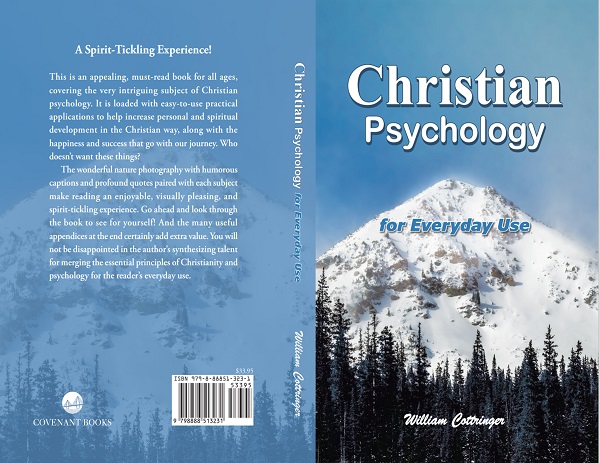
William Cottringer is retired Executive Vice President of Puget Sound Security in Bellevue, WA, along with being a Sport Psychologist, Business Success Coach, Photographer and Writer living on the scenic Snoqualmie River and mountains of North Bend. He is author of several business and self-development books, including, Re-Braining for 2000 (MJR Publishing); The Prosperity Zone (Authorlink Press); You Can Have Your Cheese & Eat It Too (Executive Excellence); The Bow-Wow Secrets (Wisdom Tree); Do What Matters Most and “P” Point Management (Atlantic Book Publishers); Reality Repair, (Global Vision Press), Reality Repair Rx (Publish America); Thoughts on Happiness; Pearls of Wisdom: A Dog’s Tale (Covenant Books, Inc.) Coming soon: A Cliché a day will keep the Vet Away (Another Dog’s Tale). Bill can be reached for comments or questions at (206) 914-1863 or ckuretdoc.comcast.net.



















Almost from birth, I led my twin brother and he became my right hand man for all that I did up until we parted when I was forced to go home from college and paralyzed in surgery. Before the surgery, I was destined to be a leader, perhaps even a CEO, when I compare myself to others around me. But during my period of growing up, I was small, soft-spoken and not noticed until my abilities in small groups showed through.
My mere appearance after my paralysis meant that I was not initially given any leadership roles. I accepted that and became the right hand to many of my mentors who taught me much about how to lead with their power of personality, knowledge and willingness to have others join them in great work always moving forward.
But later in life, when my ability was well-known, I became a threat to some other leaders in the organization I was in, although I didn't consider them a threat to me. I experienced several leaders who became rather short term when they couldn't lead like they should.
My best success in leadership has been away from the structured organizations I worked for a living for.
Ron