A SYSTEM OF THREES FOR WELL BEING
by
Bill Cottringer
“There are three classes of people: those who see, those who see when they are shown, those who do not see.” ~Leonardo da Vinci.
We human beings have a virtually infinite number of individual differences in our collective population. But there are also many common aspects of humanhood that can help unite us to deal with these differences more productively. This article explores a system of three interactive commonalities that can be used to increase well-being and close the gap between where we are and where we want to be. Each new personal prescription for well-being has to be written as we go, but luckily there are a few useful clues left behind to avoid having to reinvent the wheel.
Three Important Things We All Have in Common
The commonality in the human experience is the same. We have the same sorrows, and the same triumphs. Joy is joy is joy. ~Oprah Winfrey.
Over-focusing on the annoying differences we see in others is always a source of irritation in any relationship. It is always better to keep our similarities in front of our minds and the differences at the back. Here are three important ways we are all the same:
1. We all have dualistic brains. It is not certain whether or not the Universe has always been divided between the Yangs and Yins we see, or whether our minds created this dualistic world of opposites. But one thing is for certain and that is our brains have a common primary purpose. This is to seek pleasurable rewards and avoid painful punishments. How we actually live this out is what makes us uniquely different from one another. Ironically what may be pleasurable to one may be painful to another. Unfortunately, we are stuck with our perceptions as to which is which, and they aren’t always accurate or complete. Making them so is a worthy goal.
2. We are all trying to satisfy our essential needs. A common drive we all have is to satisfy our essential needs. These are the needs for physical comfort, security and safety, belonging, meaning, love, self-esteem and self-actualization. Of course, the satisfaction of the particular needs which we are pursuing comes in all sorts of speeds, approaches and results. One important thing to determine here is the difference between what we need and what we want, as they are rarely the same. And be forewarned, our needs change radically at different periods of our life, and one previously successful road map can’t be reused again during the future stages of our growth and development.
3. We are all challenged with three main conflicts. We are all challenged by three categories of conflicts. These conflicts are between us vs. life us vs. each other, and us vs. ourselves. We must learn how to resolve these conflicts successfully to achieve the quality of life we desire. Unresolved conflicts in any of these three areas usually come back with more intensity, difficulty and vengeance. For many years Darwin’s Survival of the Fittest Doctrine ruled with the selfish gene being the winner. But thinking today seems to have changed to now view a cooperation gene moving ahead as being the fittest for survival. This appears to be a better path to wellness.
Three Important Ways of Life
Experience is not what happens to you; it is what you do with what happens to you.” ~Aldous Huxley.
Sometimes we get our priorities reversed. One example is our tendency to want to change things from the outside before we learn to fit in first to change them from the inside. Life existed before we came on the scene so it makes good sense to learn how to fit into life’s important rules from the beginning so we can play our assigned role better, by following rules we can’t do anything about. Here are three important ways of life that are fixed and not open to our efforts to change them:
1. Life is one big behavior modification system. Life gives us virtually endless choices within an outer boundary. There is the choice to do right vs. wrong, to be productive or destructive, to exercise free will or stay trapped inside social conditioning, to accept parts of life or reject them, to live in peace or war, and even live or die. But here is the catch. Since our brains are focusing on seeking pleasure and avoiding pain, we don’t learn to play this behavior modification game when we don’t pay enough attention to what we choose to say or do and what consequences those behaviors bring. Noticing this connection is a big boost to well-being that, unfortunately, is too often overlooked.
2. Life is divided into opposites. Life appears to us as a world of opposites—up and down, inside and outside, night and day, good and evil, male and female, and life and death. But this is only half the picture, because all these different “opposites” are really just different sides of the same coin. Why all the Yang and Yins? The only thing that seems to make sense is that you need one to experience the other. Without night we wouldn’t know what day is without the comparison, and without feeling hot we wouldn’t feel cold. Learning how to reconcile these separate opposites helps shrink the gap between where we are and where we want to be.
3. Life is timeless. Einstein proved this compelling illusion with his Theory of Relativity, but this is an idea many of us don’t really get. We can’t really measure time other than using instruments we invented to show the perceived sequential movement from past to present to future. In reality there is only an ever-expanding now moment after moment. Although there never seems to be enough time to get everything done, that self-imposed limitation is tied to clocks, watches and calendars. So, time is really more psychological than mechanical, and by seeing it that way, we can manage this essential resource much better than we imagine.
Three Doors That Are Always Open
Sometimes we stare so long at a door that is closing that we see too late the one that is already open. ~ Alexander Graham Bell.
Here is another priority reversal. We spend more time trying to stop a door from closing than looking for new ones that are open and waiting for us. Here are three very large doors of opportunity that will always remain open:
1. Opportunity. The greatest gift life gives to us is the abundance of opportunities to get things right in meeting our needs. While experiences, peer and family factors, genetics and social conditioning are all powerful influences on our thoughts, feelings, beliefs and behaviors, we are not ever super-glued to the past. Each new moment is a new opportunity to change a failed past response to a situation that isn’t to our liking. This is where it is easier done than said, because the mind can always invent an excuse for staying with the known, rather than risk changing the unknown. But then again, the happiest people are the ones who take the most risks and happiness is a by-product of our efforts to meet our needs and achieve wellness.
2. Humility. The enemy of humility is the ego in a constantly warring relationship. But here again, these opposites are merely different sides to the same coin and at the end of the day, we need both these parts of us. The trick is to manage our egos, so we don’t end up getting in our own way. And humility can be managed too. The starting point is to realize a few things. The first is to realize we all have vulnerabilities protected by our egos, but we won’t lose anything by sharing them with trusted others from time to time. Another thing to realize is that we each know very little about anything, compared to what we could learn. Another useful realization is that a team can always accomplish much more working together than any individual can by working alone.
3. Compromise. The virtue of temperance or balance between extremes is one of the few eternal truths and still the best guide for living. Being in the middle of any perspective gives you a 360-degree vision advantage—to see before and behind you, to the left and right, above and below and inside and outside. That way you don’t miss seeing or thinking about something that may be critical to the situation. Our society seems to be finally making a paradigm shift from the competitive, win-lose model to one of win-win cooperation. But maybe a compromise is the answer, where we compete against ourselves and cooperate with others. That is surely the best answer to the harsh socio-political divide going on today.
Three Keys to Open the Doors
No matter how hard the past is, you can always begin again. ~Buddha.
The world we live in today is full of volatility, uncertainty, constant change, and ambiguity. The only antidote is to work on improving three important skills: Critical thinking, emotional intelligence, and mindfulness. With these three skills we at least have a chance in successful resolution of our three main conflicts about life, others and ourselves. Here are three essential skills to navigate our VUCA world.
1. Critical thinking. Critical thinking can help us see past what we are looking at, like digging deeper to uncover the real core cause of a problem far below the surface symptoms. Ironically, critical thinking and the brain’s way of operating aren’t compatible processes. Critical thinking takes aim at the truth, by the sculpturing technique of removing everything that is relative to the statue being carved. On the other hand, the brain is not wired to find the truth, but rather strives for homeostasis, which sometimes settles for near truths. Plus, there are all sorts of cognitive, emotional, cultural biases from our individual differences, that get in the way of knowing what is true and what is false. Critical thinking can help us get past these obstacles.
2. Emotional intelligence. Developing our emotional intelligence (EI) can help augment mental intelligence (IQ) and also increase our critical thinking ability. The five important components of emotional intelligence include: (1) self-awareness (2) self-regulation (3) empathy (4) social skills, and (5) intrinsic motivation. Well-being requires understanding how you are perceived by others; managing your own behavior, especially emotions; making genuine connections with others by understanding their perspectives; communicating effectively with others; and being internally motivated rather than externally controlled. Effective communication avoids judgments, superiority, certainty, manipulation, control and insensitivity while conveying the things we all want like acceptance, equality, tentativeness, spontaneity, freedom and empathy.
3. Mindfulness. Research has shown that most of us spend more than 70 percent of our waking time thinking about everything but what we are currently doing. Much of this wasted mind-wandering involves remembering things from yesterday or worrying about things that might happen tomorrow. Although the practice of mindfulness had its roots in the Eastern religious traditions of Buddhism and Hinduism, as a wellness enabler, it is used to focus on what is going on around us now, and for being more in the present tense to know how to best respond to a problem or situation at hand. Afterall, what is happening right now is more relevant than anything known from the past or unknown in the future. Benefits of mindfulness are huge, including decreased anxiety, depression and stress; improved cognitive functioning; better physical health; and stronger relationships.
Three Building Blocks
Remember the importance of small actions. They're the building blocks in the architecture of your life, the quiet victories you win for yourself each day. ~Diane Dreher.
There are three building blocks that can assure a solid foundation for facilitating wellness gains—hope, morality and spirituality. For any building to last, it has to have a strong foundation. These solid wellness building blocks are briefly discussed below:
1. Hope. Hope is one of the most important beliefs we can have within the wellness package needed to close the gap between where we are and where we want to be. When we are challenged with the conflicts, problems and adversities that will all inevitably come our way, hope becomes an essential need. Hope is a complex set of expectations which are developed from experiences in situations that either worked out or didn’t. From these experiences we then develop either an optimistic viewpoint or pessimistic one or more often, somewhere in between. In today’s world we see a very sharp division along these lines. But, if a viewpoint is not helping close the gap between where we are and where we want to be, there is always a new opportunity apart from the past prejudgments to choose to be more hopeful and optimistic.
2. Morality. Knowing what the right thing to do is easier said than done. We usually don’t know for sure until we experience the outcome of what choice we make. Our moral development goes through stages from self-interest in seeking pleasure and avoiding pain, to the relative morality of situational dependence, to eventually finding principles that seem worthy of being a universal law. The most common moral principle is to do good and avoid doing harm, which is in line with the way our brains functions. The choice becomes the moral action that achieves the greatest good for the most people, taking priority over individual needs or merits. The oldest moral interpersonal behavior guideline is the Golden Rule or doing to others the way you want others to do to you.
3. Spirituality. Spiritual grounding is the glue that holds all these sets of threes together. A sound practice of spirituality includes principled morality as discussed above; believing in a higher power; ascribing sensible meaning to life; and living a life of purpose. Believing in a higher power is the ultimate test of humility and a good way to discover life’s meaning that makes sense to us. Rick Warren, in his book A Purpose-Driven Life, offers some good questions to ask in this pursuit of personal purpose: What am I good at, do most often, and have fun doing? What do others think I am good at doing? What desperately needs to be done and what is most difficult for me to do?
Three “P” Points.
The best shortcuts are the ones you create. ~Anonymous.
A hidden gem in this system of threes is the concept of psychological power points, or “P” points for short. These are the little interventions that can be used strategically in time and place to get BIG results. Common examples are newspaper headlines, book titles, political soundbites, teachable moments, and giving good answers to good questions. Here are three useful “P” Points that can make the gap-closing journey easier and more enjoyable:
1. Personality. The smartest, happiest and most successful people know the value of developing a likeable personality and communicating that likeability in the most likeable way. A likeable personality is one which focuses on being accepting, agreeable, trustworthy, positive, appreciative and a good listener. Unlikeable people practice the opposite behavior. Likeable communication is supportive and focuses on conveying the qualities of acceptance, freedom, tentativeness, equality. empathy, and spontaneity. Unlikeable communication involves the opposite qualities and creates a defensive tone that shuts down communication. Little personality changes will always get big results. No lobotomy needed!
2. Perspectives. A perspective is a viewpoint we assume to give us the most accurate and complete picture of a situation we are part of. The trouble is if we aren’t open to other people’s perspectives, which may be very contrary to ours, we will think our own viewpoint is good for everybody. Diversity in the workplace is a good opportunity to consider a variety of perspectives, sometimes out of our comfort zones. What is most important is getting to a balanced perspective, especially with contentious issues, because that way we aren’t inclined to miss something too important to miss. Now here is the “P” point on perspectives. If we don’t like what we see, all we have to do is change our viewpoint. What could be easier or quicker than that?
3. Principles. Not all useful knowledge has to be acquired through new learning. Some older wisdom can be relearned and re-used to make productive gains in wellness. This type of wisdom comes in the form of principles about how life and people actually work, which can help resolve the three conflicts that challenge us all. An important principle about life is that it follows the main banking principle of requiring a deposit before granting a withdrawal or taking before giving. Resisting that order is futile. An interpersonal principle that has frequent use is that it is always more productive to focus on what people have in common rather than their sometimes annoyingly noisy differences.
Three Quick Starts
Your mind is for having ideas, not holding them. ~ David Allen.
Fortunately, there are some super shortcuts that can speed up our journey to close the gap between where we are and where we want to be. These most helpful action shortcuts are:
1. Prioritize needs as to what is most important and urgent right now.
2. Compete against yourself and cooperate with others.
3. Make some little changes in the three “P” points to net the most gains in wellness.
Now here’s the good news and better news. First the good news: By taking advantage of this threesome wellness system, the collective results from these sets of fiercely interacting threes certainly speed things up and make the journey seem a lot easier and much more fun along the way. Now for the better news: Although closing the gap between where we are now and where we want to be will often take tenacious and persevering efforts—sometimes even full of bruises, bleeding and broken bones—there is a genuine shortcut we can take to speed things up further and make them easier on ourselves. This shortcut involves making positive little changes to get the biggest results in the three psychological power “P” Points discussed above: Personality, Perspectives and Principles.
Wellness is the balance of our minds, bodies and souls in our pursuit of truth, peace and basic needs. ~The Author.
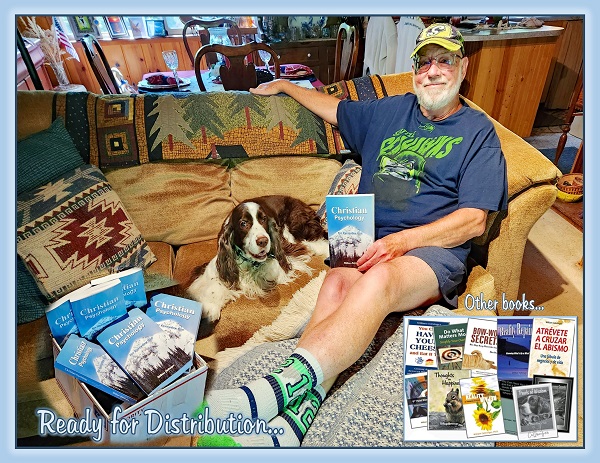
William Cottringer, Ph.D., NSLS, is retired Executive Vice President of Puget Sound Security in Bellevue, WA, along with currently being a Sport Psychologist, Business Success Coach, Photographer and Writer living on the scenic Snoqualmie River and mountains of North Bend. Bill is also on the Board of Directors for the Because Organization involved in human trafficking intervention. He is author of several business and self-development books, including, Re-Braining for 2000 (MJR Publishing); The Prosperity Zone (Authorlink Press); You Can Have Your Cheese & Eat It Too (Executive Excellence); The Bow-Wow Secrets (Wisdom Tree); Do What Matters Most and “P” Point Management (Atlantic Book Publishers); Reality Repair, (Global Vision Press), Reality Repair Rx (Publish America); Thoughts on Happiness; Pearls of Wisdom: A Dog’s Tale; Christian Psychology for Everyday Use; and Reality Repair Rx+ (Covenant Books, Inc.) Coming soon: A Cliché a day will keep the Vet Away (Another Dog’s Tale). Bill can be reached for comments or questions at (206) 914-1863 or ckuretdoc.comcast.net .