On Becoming a Great Counselor
by Bill Cottinger
One of the best predictors of counseling success is if both parties believe in the inherent drive of people towards growth and development. ~ Adapted from Carl Rogers.
Becoming a great counselor takes much time and effort, involving two important processes:
· First you have to work on becoming an expert on meeting your own needs in life.
· Next you have to become integrated in grounded in spiritual wisdom.
The first phase of development is aimed at arming you with the amount of knowledge and size of toolbox that is necessary to help others meet their needs. The gap here between helper and helped can range anywhere from slight to overwhelming. The second phase is to build your trustworthiness, credibility, soundness, integrity, and dependability in order to share important insights you have learned at the right time. Sometimes these processes take a lifetime to go though.
Meeting your own needs.
We all have certain needs we need to satisfy to become successful and happy with the quality of life we are trying to build for ourselves. Early psychologist Abraham Maslow aptly described these as physical comfort, security, belonging, love, and self-actualization. Self-actualization is the gradual self-improvement process of how we become our best self—physically, mentally, emotionally, socially, vocationally and spiritually. Certain skills are helpful to facilitate this process, including critical thinking, emotional intelligence, mindfulness and developing an optimistic perspective on life and people. The main point of each of these is briefly discussed below.
Critical thinking involves not assuming anything, being aware of your own personal biases that can blur the truth, and verifying conclusions carefully with solid evidence. Emotional Intelligence is useful to help you manage yourself before you try to manage others. Mindfulness can help you focus less on the competing past memories or future expectations that may cloud awareness of what is happening around you right now, where it counts most. And optimism is a positive validation of the reality that you get what you expect with believing in the inherent nature of people towards growth and development.
Now helping others to meet their needs also requires further skills including empathy, genuineness, trust, love, compassion, likeability, understanding, acceptance, and good communication. Of course, in today’s VUCA world of volatility, uncertainty, constant change and ambiguity, special qualities are required like a working knowledge of virtual technology platforms in a virtual or hybrid work environment, agility and flexibility. Fortunately, the key performance indicators (KPIs), including critical thinking, emotional intelligence, mindfulness and optimism can help develop these skills and qualities, as the needed helper toolbox gradually expands.
Becoming spiritually wise.
Just like the slew of self-help gurus, there is no shortage of religions and philosophies that claim they know how to do this. But at the end of the day, we must each find our own path to spiritual enlightenment. However, there is a growing consensus of what this requires of us. Most wise people maintain that you have to lose yourself before you find yourself. What that actually means is not easy to understand. This is because the “self” you want to dismiss is what gets results for you every day. That is something that is hard to give up. The real problem is the construct of the self which we all have in mind is not real. It is an illusion that is extremely difficult to see though, just like the illusion of time, just being an everlasting now moment that keeps on going like the Energizer Bunny. A self that created problems like low self-esteem, imbalance or emotional disturbance, is no longer around to orchestrate the desired changes. Our self changes from moment to moment and it is not a fixed thing that can do anything but get immediate results with real things that exist, like stopping at a red light, ordering from a restaurant menu or saying the right thing to save a relationship.
A question to ask in this phase is: What is Reality? Commonly known reality is relative to your experience of the for certain existence of things like the moon, a tree, dinner plate or chair to sit in. One caveat here, beware of optical illusions that can challenge what you see as being real! And there is also the nearly unknowable reality which is absolute and very singular without anything to compare it with. To get access to this absolute singular reality, often called the great “Oneness,” (or God, Allah, the Great Spirit, Nirvana, Heaven or something else that is more suitable). we must do something that seems virtually impossible. This is to rise above the pervasive dualism of all the multitude opposite Yangs and Yins and land somewhere in the middle ground between the illusory difference between these opposites, like good and bad, hot and cold, right and wrong, true of false, etc.
Most spiritual philosophers think you can’t do this anymore than you can get rid of the idea of a fixed self from our self-consciousness, because it is like trying to get your mouth to bite itself or your eyes to see themselves. The consensus seems to be that you probably have to just let this happen, like the simple and profound process of becoming who you are and not who you pretend to be. Seeing these dualistic opposites as really just being two different sides of the same coin is some good advice offered by the Berkely philosopher, Alan Watts.
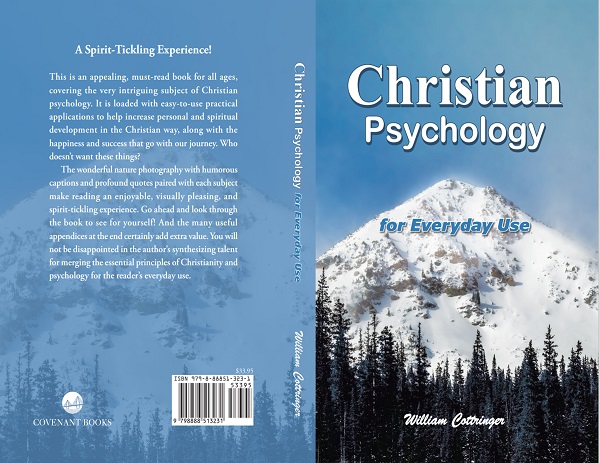
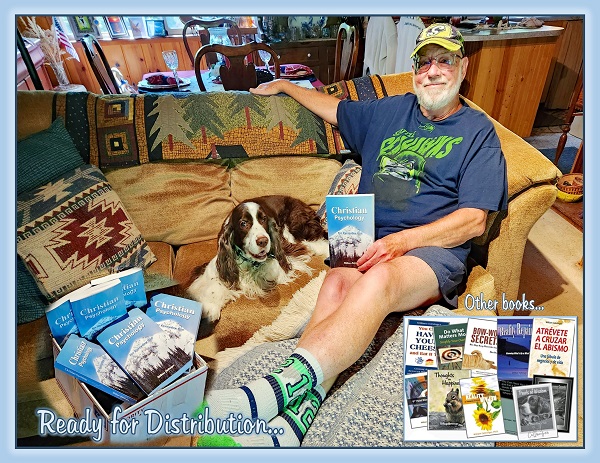
William Cottringer, Ph.D. is retired EVP of Puget Sound Security Companies in Bellevue, WA, along with being a Sport Psychologist, Business Success Coach, Photographer and Writer living on the scenic Snoqualmie River and mountains of North Bend. He is currently Chairman of the Board for the Because Organization dealing with the problem of human trafficking, a member of the King County Sherrif’s Community Advisory committee and an officer in several veteran’s organizations. Bill is author of several business and self-development books, including, Re-Braining for 2000 (MJR Publishing); The Prosperity Zone (Authorlink Press); You Can Have Your Cheese & Eat It Too (Executive Excellence); The Bow-Wow Secrets (Wisdom Tree); Do What Matters Most and “P” Point Management (Atlantic Book Publishers); Reality Repair, (Global Vision Press), Reality Repair Rx; Thoughts on Happiness; Pearls of Wisdom: A Dog’s Tale (Covenant Books, Inc.) Coming soon: A Cliché a day will keep the Vet Away (Another Dog’s Tale). Bill can be reached for comments or questions at (206)-914-1863 or ckuretdoc.comcast.net