|
Ever wonder what an average writer really thinks about? Robert Humphrey shares a few personal observations on the craft and draws from many years experience honing his own skills.
A Writer’s Contemplation - Robert Humphrey
Disclaimer: First of all, I am no expert on any subject, especially writing or publishing. Perhaps that is why some novice writers actually seek my advice on the subjects, not because of any tremendous success on my part, but because I have continued working through my failures, have managed to realize a childhood dream, and I am certainly approachable. I have published numerous magazine and newspaper articles over the years, have four published novels as of this writing, (two of which are optioned for film) and have four different manuscripts in various stages of production. My muse has an irritating habit of switching genres on me when I least expect it and I am an editor’s worse nightmare. Any advice I offer may be suspect, but it comes from the heart and from at least forty-five years experience in chasing the dream.
con·tem·pla·tion
Pronunciation: "kän-tem-'plA-shun
Function: noun
Date: 13th century
1 a : concentration on spiritual things as a form of private devotion b : a state of mystical awareness of God's being
2 : an act of considering with attention : study
3 : considering and appraising, usually from a particular point of view
4 : intention, expectation
The Writer
With pen in hand and paper blank
He sets out to create
A world yet unknown
Save somewhere in his soul
Passions deep arise from the muse within
To light revealing and the inspection
Of prying eyes and hungry minds
Searching for truths in their own fantasies
Ink is the lifeblood now
Giving rise to phantom experience
And making that which is not real
Into events historic and revered
As a god he creates
A universe all his own
With players and places
And times of future and past
Weaving human emotions
Into a fabric so rare
To fashion a garment
Of joy and despair
He manipulates creatures
And controls the events
Of his universe imagined
Yet when it’s all done
His creation is nothing more
Than a dream, a fantasy,
An enigma of mind over matter
Which, in the finality of it all
Means little more than ink on a pad
Like so much rain on desolate sand
There for a moment
Then absorbed into oblivion
Copyright 2002
Robert Humphrey
I have always believed that everyone has a story to tell. Unfortunately, most people never record any of the unique and fascinating events and thoughts that make up their daily lives. True, not everyone is a poet or novelist in the strictest sense, but almost all have some ability to relate the important, the happy and sad, and even the humorous events that grace not only the waking hours, but the night dreams as well.
I began recording my own thoughts, story ideas and poetry many years ago. Unfortunately, most of the paper disappeared along the way but perhaps the more important things were relegated to memory until such times that I could record them again. Thank goodness for the computer age and word processing programs with their abilities to store things so compactly.
Writing provides an outlet in many ways. Poetry seems to dig deeply into the inner person and allows one to express guarded emotions or experiences in a way that can provide entertainment, thoughtful reflection or even healing. I can only speak for myself, but I am at times very surprised at what comes from the well within. It is almost as if someone else is dictating and I am merely the scribe. Admittedly, my poetry comes sporadically in that I will go for months on end without writing a single line only to find myself suddenly immersed and scrambling to get the words recorded before they are forgotten. I never set out to be a poet and, although some of my poems have been published, it is not really a part of the original dream. Generally, they are musings I keep to myself in an obscure file rarely, if ever, seen by others.
My short stories and novels come in much the same way as the poetry in that they are quite unplanned. This writer is not the greatest example of discipline and I certainly break most of the rules when it comes to the novel. I seriously tried to follow the universally accepted formats of exhaustive outlines, complete characterizations and a defined plot line prior to embarking on the story itself, but that simply never works for me. My novels are much like life itself in that an idea is born, characters are introduced and a plot is realized as everyone grows toward the conclusion. I never know in advance just how the story is going to end. I do not like pre-set limitations on characters or what they contribute to the story line, or even the number of personalities I may introduce into the mix. My characters often reflect people I have met in life, even the fleeting introductions whose paths are never crossed again or simply someone observed in a public place. Everyone I meet has some characterization to offer and it is simply up to me to recognize and catalog it for future reference.
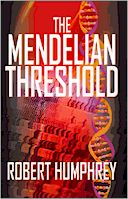
In The Mendelian Threshold (Tattersall Publishing, August 2000), I broke one of the cardinal rules, that of writing my debut novel in first person. Further, I wrote the first chapter with no clear idea on where the story was going. I had a basic idea for Nick Hoskins, the main character who, as a reporter, would have access to unique circumstances and the ability to record them. I was also fascinated by current events at the time involving the work of Ian Wilmut of the Roslin Institute in Edinburgh, Scotland, when he set medical science on its ear by producing the first cloned mammal in history. The mere idea of science on the threshold of playing God to the greatest extent fueled the imagination enough for me to complete my very first real manuscript in less than three months.
Submitting that first manuscript was an education in itself. Six years, two rewrites and numerous rejection slips later, I finally took the advice to subject my work to an editor before submitting it again. This is where I learned that editors are either your best friends or your worst enemies. I paid that first editor a lot of money to tell me that I had too many characters. He proceeded to slash characters and dialog and even removed some of my favorite scenes altogether. This did not bode well and made for a very short professional relationship. I was very fortunate the second time around when Crystal Wood of Tattersall Publishing did an excellent edit, leaving my characters intact and even helping me develop a couple of them much more. I owe her a great deal for assisting me in pulling the story together and making my debut novel a work of which I am extremely proud.
Contemplation:
1 a : concentration on spiritual things as a form of private devotion b : a state of mystical awareness of God's being
I find it impossible to believe that this world and everything in it came about through some sort of cosmic accident. Someone once likened the Big Bang Theory to an explosion at a print factory where the final outcome was the complete and unabridged Webster’s Dictionary landing precisely on the doorstep of a library on the other side of the globe. There is an undeniable order of things in this universe and to think such order simply appeared out of chaos without the intervention of a Greater Being is really incomprehensible. My atheist acquaintances have ceased arguing with me over the matter since they know my logic will not change. I tell them that to simply say one does not believe in God means that there must be a God for one not to believe in. So, whether you wish to believe in Him or not, He is still there and that mystical awareness of Him opens the inner person to experience the realities of life, love and relationships in a far greater dimension. And, face it, these are the ingredients of which great stories are made.
Soul Flight
Beyond the veil of sunlight setting
A fleeting soul makes its way
Through misty clouds of gathering darkness
On the great path unknown.
No chart to guide, no northern star,
Just an unseen force that gently beckons
To a time and place unfathomable,
Beyond the realms of the reasoning mind.
No life experience could ever begin
To prepare any soul for the journey
Nor for the destination that lies ahead
Beyond the stars and past the universe.
How few the days spent in living
A life so bound by time and space.
How trivial the mortal heartaches,
The pain of self unabated,
When compared to what lies ahead
Beyond the misted darkness
A future endless, and limitless, and pure,
Eternal.
Take flight, my soul.
Fear nothing, harbor nothing,
Seek the beckoning light with open arms
And welcome the Grace that makes it real,
And in one moment of time immeasurable
Every dream realized, every aspiration come true ,
All love requited and every pain vanquished,
The journey will have just begun.
Copyright 2002
Robert Humphrey
I have seriously considered how my stories could be rewritten to leave out the Divine aspect of the universe and His influence on the fortunes of man. They cannot.
Contemplation:
2 : an act of considering with attention : study
By nature I am what is called a people-watcher. I can sit for hours on end observing the actions and reactions of total strangers and I often find they have influenced some of my favorite characters. I much prefer using real-life subjects to help me cast a scene and they are abundant in everyday life if you just look for them. A colorful person you observed at the mall may be just what you need to spice up a dialog or help to describe a setting for your main character to do something significant. In the course of writing the sequel to The Mendelian Threshold, a work titled Inherent Evil, I was having a problem with casting one particular character. She was to be a middle-aged woman, a widowed and eccentric psychic/medium who becomes instrumental to the story. I spent a lot of time observing people and looking for someone among our acquaintances as a subject after which to fashion this person, but to no avail. Finally, quite by accident, I caught a portion of an old movie that co-starred Phyllis Diller. I had just listened to a recording of Bette Midler and, amazingly, the combination clicked in my brain.
"If she truly could have read my mind, she would have slammed the door in our faces, for my first impression of Mme. Von Heldingburg was a cross somewhere between Phyllis Diller and one of those sassy broad characters usually played by Bette Midler." - (Nick Hoskins in Inherent Evil)
Now, try to tell me you do not have a clear vision of this woman. You can already see her mannerisms and you should have some notion as to what she sounds like when she speaks. All this from a simple sentence of dialog that reminds you of real people you have observed, even if only on the screen.
Sometimes there are other factors beyond sight that help you formulate a character, a scene or even a circumstance that will carry through the story. I passed a small coffeehouse one evening and took note of the evening’s entertainer, a young man playing his guitar in the dimly lit corner. His song, which I later found was an original composition, reached across the small room to the hallway where I stood and somehow gave me a glimpse into the romance developing between two characters in one of my manuscripts. Not only was I inspired to convincingly bring them together in my story; I also got a poem out of that encounter.
The Musician
The music flows smoothly
Just a man and his guitar
I hear the sweet tones
As he manipulates each string
And I think of you
How you play my heart
With the fingers of your love
Strumming the strings of my life
Making such sweet music
And touching my soul with your essence
How did I ever live without you
The princess who has stolen my heart
With a music and rhythm so strange to me
Yet you anticipate every measure of my love
As you articulate the phrases of passions deep
Play on, musician to my soul
Draw from me every sweet strain
Fill the air with your delight
As you weave your mystical magic
And fill my heart with joy immeasurable.
Copyright 2000
Robert Humphrey
Contemplation:
3 : considering and appraising, usually from a particular point of view
How you and I perceive a person or situation may differ completely. We may read the same passage and get a totally different concept of what the writer wanted to convey. The elementary essence of this does not demean the fact that words can be crafted and even manipulated to appeal in ways completely unexpected by the reader. I call that the "wow factor" and I envy the writers who are really good at it. As a writer, it is sometimes difficult to step into your characters and genuinely relate their points of view, especially when they may differ from yours completely. This may be the time to consult someone outside yourself to help you clarify things so your scene does not become completely one-sided. Sure, you ARE the author and it is YOUR story, but the true magic of storytelling is the ability to present the inner thoughts and feelings of your characters without too much personal contamination. One of the best exercises I have found is in putting a manuscript aside for weeks or months at a time, then returning to it when I am hopefully in a completely different frame of mind. This helps me to recognize the places where I may have melded a character so far into my own psyche that he is losing his original identity.
Point of View
A thought, a whisper
How does one describe
Something that never happened
Except in the mind’s eye
How does one see
What is not there,
And endeavor to record
The words never uttered
How can one perceive
A concept without clarity
To fashion an event
That simply never occurred
In that place
Where truth and fiction collide
And thoughts turn to words
And words to deeds
Through the mind
Of a Writer
Phantoms become flesh,
Ideas become substance
Emotions prevail
And a story is born
From one solitary viewpoint
To stand alone.
Copyright 2005
Robert Humphrey
Contemplation:
4 : intention, expectation
I come from a family of musicians and have always had an intrinsic love for classical music. Since it was my major in college, I learned a lot about the similarities between a musical score and the written word. In a musical composition, the themes and recapitulations keep the listener focused on what the composer wanted to convey. The key in which the work is played helps to set the mood. Emotionally dark or mysterious works are generally in the minor keys while uplifting and positive music is in the major keys. You set the tone of your written word in much the same way.
"It was a dark and stormy night" actually does set a minor key mood just as "the sunrise brought a joyous refrain to the meadow now glistening with refreshing dew" would most definitely be major.
Large musical compositions such as concertos and symphonies can be an emotional roller coaster and, to me, tell a story all their own. Sometimes that was the intent of the composer and many works were given titles to reflect just that.
According to writer Allen Rich, the very term "concerto" comes from the word "certare" which means to battle or struggle; "con" means "with". The concerto pits small forces against large ones: soloist and orchestra locked in wordless struggle. (Sound familiar?) The Romantic musical era brought us symphonic poems or tone poems. They believed that even music without text should be about something…a story, a hero, a philosophic concept, all clearly described by the tone-color and overall mood of the music. Tchaikowsky called his Romeo and Juliet an overture-fantasy, but it really is a tone poem in which themes clearly relate to the characters in Shakespeare’s tragedy.
The next time you listen to a piece of music, think of it as a short story or novel. You will be amazed at the similarities as you grasp the theme (plot) and observe how each instrument (character) has its individual purpose in expressing the composer’s thoughts. You will see that the music draws a conclusion in its own terms as it ends for it will leave you with some form of emotional relief. It will also make a statement. I always marveled at how Beethoven ended his Fifth Symphony. It certainly leaves no doubt that it is a great work and that the ending is most definitely THE END. Tchaikowsky, on the other hand, could leave the audience either in stunning triumph, as evidenced by the ending of his Symphony No. 5, or in dismal distress, as evidenced by the ending of his Symphony No. 6. These great works are among many that tell tremendous wordless stories.
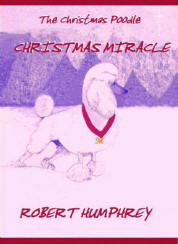
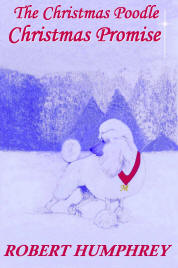
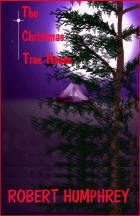
When I write, it is my intention to tell a story completely. That means that I must tie up all the loose ends by the final chapter and leave little or no room for questions in the reader’s mind as to the purpose of the experience. I expect this of myself to the point that one of my juvenile fiction novels, The Christmas Poodle, (PageFree Publishing, 2002) eventually became a three-book series, The Christmas Tree House, (PageFree Publishing, 2003, and The Christmas Poodle Christmas Wish, (PageFree Publishing, 2004). This was just for the purpose of bringing closure to the main character’s plight that began in the first book but did not end even in the second. That series is a shining example of starting a story without an outline and no idea where it is going. My high school English teachers would have been horrified, but the final result was a well-received trilogy that is now in screenplay format and optioned for film.
It was never my intention to purposely break the rules of writing for the sake of stubbornness. I generally do not recommend it to other writers unless, like me, they want the complete freedom to tell their stories their own way, even at the risk of having them rejected. I do have the expectation of myself, however, to tell a good story…an interesting story…one that will hopefully leave a lasting impression and make the reader glad he or she took the time to read it.
Robert Humphrey
Copyright 2005
|