I remember when “text” was a noun.
Yes, I do, and it wasn’t all that long ago.
A book with text had printed or written words in it. My school chums and I carried these books home with us every night to assist with homework.
I’m not quite sure when “text” took on this new capability and became the “verb” that it is today.
Maybe it began when we gave up our phones with the rotary dial for the fancy push buttons.
Letters found their way onto the buttons. We seldom used them for the rotary dialing, but there they were—ready for the future. Companies jumped on this opportunity to advertise and attract attention with new phone numbers like 1-800-AAA-CARS, 1-800-HOT-FOOD or even 1-800-FUN-GIRL.
In what seemed like a speedy second, the e-mail phenomenon happened. You could send a note to anyone. Anywhere. Around the world with no postage and receive a reply in minutes.
The keyboard was unleashed from the cumbersome typewriter and elevated to godlike status.
With no slowing to catch a breath, “Instant Messenger” made its debut and was grabbed up and accepted like an offer of free money. When all these “gotta-be-in-constant communication” people started using the IM application, the rules of spelling, grammar and punctuation began to fade away a million times faster than your latest summer tan. Speed became the engine driving the messages. In some instances, numbers filled in for words during the formation of this evolving shorthand.
The world population of Type A personalities multiplied and they couldn’t be out of touch with anyone for even a short period of time. That’s when the cellular phone explosion happened.
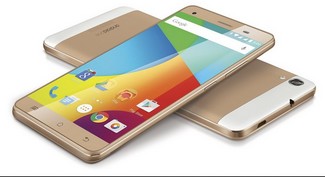
Cellular companies looked at the Instant Messenger popularity. They decided more revenue could be gained by adding this feature to cellular phones. Letters were already paired with the numerals on the phone keys. Allowing non-numeric messages to be sent was all that was necessary to cash in on this communication jackpot. Young people with overly agile thumbs from hours of video games took to this method of networking like the proverbial duck to water.
Now, all ages are accepting this messaging system and it’s rare to walk down a busy street without encountering a majority of heads-down pedestrians “texting” a message.
Makes you wonder, doesn’t it?
Who was first?
Who did it?
Who changed it to a verb?
Were the cellular companies the first to name this type of call a “text” in their list of charges?
Was a user the first to describe this method of communicating a “text”?
The progression of the noun “text” to a verb has been rapid. Check your dictionary. Is the word described as a noun or a verb?
“Sexting” is the latest mode of cell phone communication.
We all know this isn’t the progression of a word from noun to verb. Sure, we know “sex” refers to one’s gender.
But to all the many “sexters” out there, “Sex” was, is, and always will be an action verb.






Seriously, I seem to recall that letters were always associated with the numbers on the dial. And I remember when phone numbers were alphanumeric. Perhaps the most famous phone number using the exchange, Butterfield, with the number on that exchange, 8, leading to the Elizabeth Taylor movie, Butterfield 8. People really complained when those exchanges were phased out for numbers, probably in the 1950s. Back then, the Internet was the operators who listen in on all the gossip going on in their exchange and passed it on to all the other operators. "Don't telephone… Tell a woman."
Ron