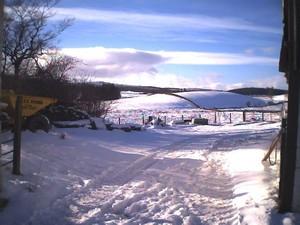
The weather remained wintry and the temperature continuously below freezing for five days. We left the door between the kitchens open all the time to allowthe heat to keep the pipes free from frost, but this made the ‘Esse kitchen’ verycold too, and we struggled to keep the temperature in there up to 60 degrees. The days were spent keeping the cattle fed and watered, as once the water was used upin the storage tanks in the cattle shed, Richard had to carry it to them in buckets from the house.
I strove in vain to keep the house at a viable temperature, in spite of having three electric heaters on all the time and the new bedroom heaters on night and morning. We managed to keep the water flowing most of the time, but, at quite a cost, both to our pockets and our comfort.
When Richard had finished his daily round of seeing to the stock, he gave his attention to wood for the fire. Often, it was dark before he found the time to do this, and the wood he found around the steading was mostly wet and soggy.
When he appeared with the log bucket, I would go into the sitting room and try to light a fire. We had very little dry wood even to get it started, and it took me along time to build up a reasonable fire. Even when we did get it going, we had only wet wood to put on it, and we developed a system of drying out the next days logs overnight in the Esse. However, this took even more heat away from the house.
Eventually, the weather gave us some help, and temperatures returned to the positive side of the thermometer. We were quite lucky with the winter, as there were only three spells of very cold weather, and we had three occasions when the water pipes were frozen, but each time we were able to thaw them out quickly enough not to cause us real hardship; and we kept the cattle well fed and watered throughout. However, I swore that we would not spend another such winter at Low Arvie.
At times, it was only the real conviction that this was going to be the lifestyle we both wanted that saw us through the worst of the weather.