Printed in The Macon Telegraph, Georgia, August 1999
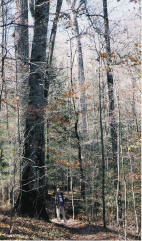
You are about to bulldoze a 200-year old tree in a shady neighborhood. Before you take a life...pause a moment to reflect on that tree. That oak tree has the power to change the temperature and humidity of the air, give off oxygen, capture pollutants, mediate chemical exchanges between the soil and atmosphere and intercept rainfall. It will also slow the flow of storm water, and stop erosion and sedimentation.
It is a mistake to ignore tree's. Temperatures rise as the canopies shrink forming urban heat islands. The 60% loss of natural forest in metro Atlanta, Georgia, the past 20 years has increased their temperature up to nine degrees according to Gary Mull, the coordinator and vice president of American Forests.
Tree loss affects air quality. A tree can make pollutants disappear. Trees breathe in carbon dioxide (a greenhouse gas) and store carbons. American forests recommend cities set a canopy cover goal of 40% overall-the equivalent of 20 large trees per acre. Trees slow the flow of storm water, lower the total runoff volume and reduce the risk of catastrophic flooding. A tree's root system can absorb up to 400 gallons of water a day, and the limbs and leaves reduce the force with which water hits the ground.
Trees improve water quality. They stop soil erosion and sedimentation and slow the runoff of pollution and pesticides that affect our rivers. Trees can reduce up to 60% the amount of water reaching streams and water tables and retain the excess phosphates and nitrates pollutants found in the runoff.
Too much muddy brown silt from rivers suffocates the ocean's plankton. Plankton produces more than half the planets oxygen and is mostly found around land masses. Loss of plankton also means loss of fish which effects the entire food chain.
Without trees, which breathe water vapor into the air, less rain falls and water tables drop. An oak, with 200,000 leaves gives off 900 gallons of water in a single summer day. Without trees we have no way to replenish precious topsoil.
Trees provide wildlife habitat and bring people. Look at Savannah, Georgia, who established The Savannah Tree Foundation in 1982. Think about a tree: They wow us, they stir us, stir memories, stir history, they increase tourism.
Our ancestors honored the trees, some worshipped them. Trees outlive us, they shear rock, fan the air, offer food, shelter and beauty. We admire trees through our furniture, woodwork, art, hardwood floors and use them to build our homes and for wood products.
Humans have not invented anything close to wood... it's miraculous. Trees run on rain and air, and can make up to six million leaves, when we cannot make one. They put on a colorful show in the fall and a striptease in the winter. Trees should be an essential partner for urban ecosystems.
When a tree disappears we loose more than a tree, we loose a climate regulator, an oxygen producer, an erosion and flood controller, a habitat and water shed protector. These services are free of charge, without them these functions must be provided by the government. A public-private partnership to increase tree cover is a cost efficient way for cities to improve the quality of air, water and soil, increase energy efficiency and spruce up the community. Trees measure the health of a community.
You are about to bulldoze a 200-year old oak tree. Pause, will trashing that tree benefit the next seven generations?