|
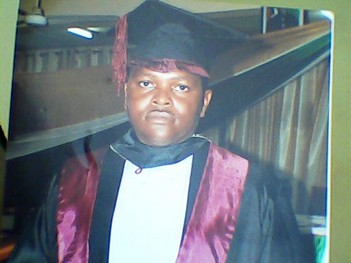
The Priesthood is a journey of self donation to the people in order to draw closer to Christ. The priest achieves this through his imitation of the life of Christ and availability to his flock.
THE JOURNEY TO THE PRIESTHOOD OF CHRIST IN RELIGIOUS CONGREGATION
WHO IS A PRIEST?
A Priest is an ordained minister for the Eucharistic sacrifice. The priest at the altar represents Christ and stands before the people as a mediator between God and the people. Hence, a priest fulfills the role of offering, teaching and presiding “in the person of Christ”. To Christ he is configured by the consecration of the character of priesthood.
The priest is a divine teacher who teaches and directs the faithful to God, in doing this the priest ought to be strengthened spiritually. The divine teacher gains his spiritual nourishment through a union with God in prayer. However, through the divine union a priest protects himself or prevents himself from the imminent danger of sin which is an ill wind that shakes the foundation of spirituality. A priest is a visible extension of Christ Jesus (in persona Christi), invested with power and authority by none other than God himself. Consequently there is no more important human office than the catholic priest.
As the ordinary minister of baptism, it is the priest who brings people into a personal relationship with Christ. When he celebrates the sacrament of reconciliation, he provides the forgiveness that enables people to restore and heal that relationship insofar as it has been damaged through sin. The priest is therefore sure and reliable reference point. His ministry provides life- life which brings stability here and now as well as hope for eternal life. The presence of priest provides a sense of security among the people of God.
However, the priest himself is not a super human but rather he is selected among human being to lead others to Christ facing the circumstances surrounding humanity in struggle to eternity. The priest holds a delicate function, thus his life is vulnerable if not well secured in prayer and intimate relationship with God who is the divine master of all priests. The priest is a human being among not above other human beings, he is therefore subjected to human passions and inclinations and have to work harder to overcome the concupiscence of flesh which is an obstacle to spiritual growth. He therefore relies on God who called him, ordains him and commissions him for the people of God.
The priestly life is a life of self donation to God whom only protects and directs. In self donation the priest embraces the life of poverty, giving up his own personal possession in order to focus on the people of God who is paramount concern of the priest.
VOCATION TO PRIESTHOOD
God does not call an individual because he is perfect. He calls an individual even when an individual is unworthy, incapacitated or deficient. In his infinite mercy and his power of creativity he strengthens the individual and gives him or her, what is required to administer his or her task. God does not consider age, height, race or social class but chooses at will based on the particular task he wants from an individual and activates him or her for the particular task.
The priestly vocation begins in the desire of personal denial for the sake of Christ who is the divine master. "If anyone wishes to come after me, let him deny himself, and take up his cross and follow me" (Matthew 16:24). The journey of priesthood begins in the recognition and acceptance to fulfill this injunction of Christ. The priest as a human among human is selected not to be transformed to super human but to utilize his human weakness as a donation to God in recognition of the greatness of God who gives life and sustains life. The priestly vocation is situated in the love of God and love of our fellow human being and the strong desire towards working to alleviate the lives of our brothers and sisters who are confronted with agony of life, hostility and despondency as a result of human miseries. To be a priest is to begin to nurture the spirit of universal fatherhood in a world of miseries.
God calls individuals depending on the needs of his people. One is not called to be a priest because he is a superhuman but because he is a human who will work with human using human culture and fragile nature with a strong desire to incline on God who empowers and commissions. Since a priest is to work for the people, the priest is called to adapt to human cultures using cultural values to promote the gospel of Christ, he is therefore required not to isolate himself from his people but to integrate with them to project the goodness of God in their life.
RELEVANCE OF RELIGIOUS LIFE IN PRIESTHOOD OF CHRIST
It is not everybody that is called to embrace the life of celibacy, is called to religious life. In religious life individuals work out their salvation in companionship with their fellow confreres in the community whose lives are sources of motivations and inspirations. A religious is called to be a manager of humanity; this implies that human psychology should be in his or her finger tips, taking into consideration that the community is made up of different people with different temperaments. The priest utilizes this religious formation which gives an opportunity of self masterly to work for the people of God who are made up of different personalities.
Religious life is an invitation of the life of tolerance in human co-habitation since it is the ability to share in community living. Since religious can serve the needs of God’s people in a variety of ways and various areas of the world, community provides the affirmation and a healthy environment in their ongoing effort to say “yes” to God’s call. Community living is a challenge to share ups and downs, success and failures and whatever is impacting the lives of the fellow community members. Religious are present to one another to challenge and support each other in their effort to grow spiritually and emotionally as they strive to develop their full potentials.
The religious life is a reflection of the early life of believers;
The group of believers was one mind and heart. None of them said that any of their belongings were their own (Acts4:32-36).
However, not everyone has the vocation to religious life, this is because humanity is complex, and not everyone can live in the community and imbibe the spirit of sharing.
THE TASKS OF A PRIEST
The priest is chosen from the people to represent Christ who is the high priest in his life as a teacher, prophet and king. He is chosen from the people to be the mediator between the people and Christ by being attentive to the needs and aspirations of the people of God. Ordained for the Eucharistic Sacrifice, the priest at the altar, ambo and chair fulfills his role of offering, teaching and presiding, "in the Person of Christ". To Christ he is configured by the consecration of the character of priesthood. By word and action he should strive to "teach the faithful to offer the divine victim to God the Father in the Sacrifice of the Mass and with the victim to make an offering of their whole life". The priest is also conscious of the priesthood he shares with brother priests, as he concelebrates at least on appropriate occasions, such as Holy Thursday.
THE PRIEST AS AN AMBASSADOR OF CHRIST
The ambassador is a delegate who represents an institution or a person of authority. In the work of representation an ambassador promotes the dignity of his master or institution by conducting himself or herself in manner that is quite appropriate of a delegate. An ambassador sacrifices his personal interest and attunes himself or herself to the condition of his or her master in order to render an appropriate service.
The priest in rendering service is an ambassador of Christ. In his function as an ambassador he is called to reflect the life of Christ by denying his personal interests and donating himself freely to the service of God. As an ambassador he represents Christ before the people in his sacrifice at the altar and in preaching the gospel of Christ thereby comforting downtrodden and down-casted. This priesthood is not transmitted by heredity or human descent. It does not emanate from the Christian community. It is not a delegation from the people. Prior to acting as representative of the community before the throne of God, the priest is the ambassador of the divine Redeemer. He is God's vicegerent in the midst of the flock precisely because Jesus Christ is head of that body of which Christians are members. The power entrusted to him, therefore, bears no resemblance to anything human (Pius XII, encyclical Mediator Dei I, 40).
THE PRIEST AS A TEACHER
Christ is the great teacher. The priest is called to continue the teaching role of Christ who entrusted this role to his apostles in the verge of his departure and strengthened them by the power of the Holy Spirit. Priests by sacred ordination and mission which they receive from the bishops are promoted to the service of Christ the Teacher, Priest and King. They share in his ministry, a ministry whereby the Church here on earth is unceasingly built up into the People of God, the Body of Christ and the Temple of the Holy Spirit (Council II PRESBYTERORUM ORDINIS
December 7, 1965). The priest teaches and guides the people of God to the way of truth. As a teacher he depends on the teachings of Christ and must go beyond the teachings of Christ. In order to render service as a teacher appropriately, the priest depends on the power of the Holy Spirit who is the teacher of truth.
THE PRIEST AS A PROPHET
A prophet is who guides, instructs, and reveals God’s message to his people and prevent them from an impelling doom by drawing them towards God who is the guard to his people. Prophet in the broad sense, one who speaks under divine influence in the name of God; in the strict sense, one who learns of future events from God and consciously announces them. The priest in his ministry plays the role of a prophet in drawing men and women towards God by instructing and directing them to the truth.
THE PRIEST AS A SHEPHERD
The work of shepherd is to gather the flock and prevent from the attack of malevolent forces. A shepherd loses his function or role as a shepherd when he fails to protect the lives of his sheep and thereby exposing them to danger. The shepherd endangers his own life in his protective role. A priest on the other hand is a shepherd called to the service of God’s people by protecting from the powers of principalities, exposing to the light of Christ. He gives his life as a self donation to his flock and through contributes to their spiritual growth. Thus, the identity of the priest comes from the specific participation in the Priesthood of Christ, in which the one ordained becomes, in the Church and for the Church, a real, living and faithful image of Christ the Priest, "a sacramental representation of Christ, Head and Shepherd".
THE PRIEST AS A SERVANT
A servant is one who is sent by a master to execute his plans without allowing his will to dominate that of the master. A servant is characterized by simplicity and submissiveness. The priest is a servant of Christ who executes the injunctions of Christ before the faithful. The priest in rendering his service must project the image of Christ. In the course of his ministry the priest must forfeit his personal will in order to project the will of Christ to every Tom, Dick and Harry in the journey of faith. He must constantly return to Christ in meditation to give account of what he has done. He stands as the mouth piece of Christ and a messenger at the altar of Christ.
EVANGELICAL COUNSELS
The greatness of the priesthood is in the imitation of Jesus Christ" (Pius XII, Discourse of April 16, 1953), priests will therefore be more than ever attentive to the calls of the Divine Master: "If anyone wishes to come after Me, let him deny himself, and take up his cross and follow Me" (Matthew 16:24). It states that the Holy Cur'e of Ars "often meditated on these words of Our Lord, and endeavored to put them into practice." God gave him the grace to remain heroically faithful to these words and his example still guides us along the ways of priestly aspirations where he shone brilliantly by his poverty, his chastity and his obedience. Priests are therefore encouraged to live this life, which helps them in their evangelical ministry.
POVERTY
The priestly poverty helps to detach from materialism and draws him towards the needs of the people. Pius XI, thinking precisely of the Holy Cur'e of Ars, "that the priests of humble life, who, according to the evangelical doctrine, do not seek in any way their own interest, contribute admirable benefits to the Christian people."
As Christ made himself poor to enrich us, religious profess the vow of poverty to strive for a simple and modest lifestyle free from the pursuit of material possessions (Code of Canon 600). Thus they are free to share their time, energy and resources within the community and with their poor and needy sisters and brothers.
CHASTITY (CODE OF CANON LAW 599, PERFECTA CARITAS 12)
This necessary virtue of chastity, far from shutting the priest up in sterile selfishness, opens his heart more and makes him more understanding of the needs of his brothers: "When the heart is pure," the Cur'e of Ars would say optimistically, "it cannot but love, because it has found again the source of love which is God."
What advantage for society to have in its midst men who, free of temporal preoccupations, consecrate themselves completely to divine service and dedicate their own lives, their thoughts and their energies to their brothers. What grace for the Church are the faithful priests of this excellent virtue. Together with Pius XI We consider it the purest glory of the Catholic priesthood and "inasmuch as it concerns priestly souls, it seems to us to respond in the most worthy and suitable way to the designs and wishes of the Most Sacred Heart of Jesus." The Holy Cur'e of Ars was thinking of this design of divine love when he exclaimed: "The priesthood, behold the love of the Heart of Jesus."
OBEDIENCE (CODE OF CANON LAW 601)
In the spirit of obedience the priest is invited to give up his own will towards the submission of the will of the local ordinary and other ecclesiastical authority. The priest in his obedience considers the need of the church as paramount. As Christ submitted himself in loving obedience to the will of his father, the priest are called to submit to the needs of the church.
CHALLENGES OF PRIESTLY VOCATION
In my earlier discussion we are called as human beings among human beings not above human being or what could be called super human not as saints that implies that as priests and ministers there could be some challenges which one must be careful not to fall into. These form the major challenges in the apostolate as priests in the pastoral ministry;
1. MATERIALISM: When the yearning for material pleasure emanates it prevents the priest from his charism of availability and self surrender. The search for self fulfillment begins. It is therefore necessary for priests to curtail their desires for these material things. They could be good but our entire being must not be dominated by them.
2. AMBITION: Priests are called to work in the spirit of self donation to the people of God, as brothers and friends. When the tussle for power and wealth comes in it destroys this spirit of selflessness and availability to the people of God. It brings about dichotomy and pride in their relationship with the people of God. The gospel of Christ begins to suffer.
3. SEXUALITY: When adequate maturity is not observed, relationship to opposite sex becomes an obstacle to the ministry. Sexes should be valued as God’s gifts for the completion of humanity. While men are seen as brothers women could also be seen as sisters and either of the sexes should be seen as God’s image which are sacred and must be related with care. It therefore means that homosexuality relationship or heterosexuality must not be found among priests since these acts violate the vow of chastity. When human nature is allowed to project one becomes a failure in this aspect, and ministry suffers, thus in priestly formation sexuality is a major course.
4. SOCIETY: Priests are called to be the light of the society, a mediator between God and the people. However, when a priest dissolves into the society it destroys his ministry. When the desire for competition arises among priests and society the law of diminishing returns takes place in their spirituality. This could be competition with friends in relation to drinking, material acquisitions and other forms of social vices.
5. MONEY: Money is the root of all evil and the same time money is good because human activities are best managed by financial power. However, humanity is meant to control money and should be seen as a disposable items designed for human control in rating values. When money penetrates into the heart of the priest and captures him, it could incapacitate him in his ministry. Hence an awareness of the danger of money is necessary in the life of Christian. Heaven is the target of all Christians’ attachment to money brings about a loss in focus and thus brings about religious fractions and violates the vow of poverty. The priest should see money as perishable and secondary as the spiritual needs of the people is the primary assignment of the priest.
WAYS OF ATTAINING THE DESIRED PRIESTHOOD OF CHRIST
1. Self Examination: Continual examination is needed in the journey to the priesthood of Christ. According to the great Philosopher Socrates; a life without reflection is not worth living. The priest must often examine his life and ask some fundamental question which Jesus asked the apostles concerning himself; “who do people say I am?” When adequate reflection is not realized the priest ends up living in the world of illusion, he becomes a failure in his expectations as priest. In the priestly self examination he should access and access his relationship with people entrusted to his care and his relationship to Christ in the Blessed Sacrament. He should always make an amendment where he fails in rendering his service as required in the priesthood of Christ.
2. Prayer: Prayer is the blood stream of any Presbyterian community. Just as the blood is important to individuals, prayer life is important to the priest. The cessation of prayer in the life of a priest leads to spiritual dryness and ineffectiveness in realizing the priesthood of Christ. Jesus ministry was sustained in prayer and he reserved time for prayer Mt 14:23. After he had sent the multitudes away he went up into the mountain and prayed. Prayer life when strengthened in the community helps individuals to overcome temptations. In Mt 26: 41 Jesus said; “watch and pray that you do not enter into temptation”. In prayer the religious keep vigil for the kingdom of God, for no one knows when he shall come, but the devil is in continuous battle Mk 13: 33.
3. TOTAL ABANDONMENT TO THE HOLY SPIRIT: The priest’s aspirations, wills and desires must be governed by the dictates of the Holy Spirit represented by the voice of the superiors. In this the priest emulates the virtue of Jesus Christ in Phil 2:6-11; He, who was God did not think he should claim equality with God but humbled himself and subjected to the will of the father for human elevation. We are rational beings with our desires, wills and aspirations, but the priest ought to submit to the Holy Spirit who is the enlightener and giver of knowledge. Our knowledge as human is myopic but the Holy Spirit sees beyond the limitations of humanity.
4. AVAILABILITY TO THE NEEDS OF THE UNIVERSAL CHURCH: The priest is ordained to serve the needs of church in his priestly function as shepherd, teacher and prophet. For this reason, the priest must be conscious and sees the needs of the church as priority. Hence the priest should be ready and available to carry out the task entrusted to him by the universal church.
5. OBEDIENCE TO LOCAL ORDINARY AND SUPERIOR: The promise of obedience of priests demands obedience to the Superior and local ordinary that represent the Holy Spirit here on earth. For solidarity in the church the priests must submissive to ecclesiastical authorities irrespective of the spiritual gifts they own. The Holy Spirit works more effectively under the atmosphere of this obedience.
6. LIVING OUT THE GOSPEL OF CHRIST: Priests are called to be preachers through their life. The moral life of the priest is the highest gospel to be preached. Priests are therefore encouraged to live out the gospel in order to unravel the mysteries of the gospel through their practical life. As moral custodians the faithful should be convinced of the feasibility of the stipulations of the bible by observing it in the life of the shepherd.
7. ACCOUNTABILITY: As priest and religious in order to gain fulfillment in the special vocation of self donation to the people and to the universal church, one is obliged to be accountable. It is obvious that from the moment of the first religious profession one gives entire life to the congregation and to God who is the source of life. It therefore implies that whatever we receive as a gift or in payment for our work; gifts or salaries, pensions, grants, insurance benefits, mass stipends and every other income we may derive from our work belongs to the congregation( Spiritan Rule of life 65). In view of this accountability should be the paramount concern of priests in religious life. In this life of accountability one shares the self surrender of Christ to the father who called him for the work of human salvation and was accountable to the father.
TOWARDS SUSTAINING THE JOY OF PRIESTHOOD.
1. FRATERNITY: No vocation is born of itself or lives for itself. A vocation flows from the heart of God and blossoms in the good soil of faithful people, in the experience of fraternal love. This reflects in the words of Jesus Christ; “By this all men will know that you are my disciples, if you have love for another” (Jon 13:35). The priests are therefore called to be in fraternal relationship with fellow priests, through this they learn from one another and encouraged on how to face life situations with vigor. No one is an island; hence each one is a being for the other. The priesthood of Christ is realized in full solidarity with the church and mutual understanding among fellow priests.
2. DEVOTION TO THE BLESSED SACRAMENT: Jesus is the high priest, the Chief shepherd and the standard for all priests. He is the priest, who offers sacrifice, and at the same time, the victim at the Holy mass. He invites all priests to continue this sacrifice in memory of him and each time sacrifices are made by the priest Christ becomes really present at the altar. In order for a priest to be successful he must be in union with the High priest Jesus who is the priest and victim of the sacrifice.
"I am the vine, you are the branches. He who abides in me, and I in him, bears much fruit; for without me you can do nothing. 6 If anyone does not abide in me, he is cast out as a branch and is withered; and they gather them and throw them into the fire, and they are burned (Jon 15:5-6)
3. DAILY CELEBRATION OF MASS: Masses are celebrated not only for the faithful but also for the priests who needs daily nourishment of our Lord Jesus Christ in the Blessed Sacrament. The priest must therefore see it as his priority to celebrate the Holy Mass whether during holidays or within his period in the office the Holy mass must a paramount position in his life.
4. DAILY RECITATION OF THE DIVINE OFFICE: The divine is the prayer in solidarity with the universal church. These prayers are arranged according to hours of the day. The priest must see it as his priority to recite the office daily in order to be in union with the universal church and also to fortify his position as a priest knowing that he is a fragile being who needs the continuous support of the church.
5. PRESERVING HIS CHASTE LIFE: The priest by the virtue of his office as an ambassador of Christ is called to chaste life. In rendering his service the priest must conscious of his vocation to a chaste in order to reflect the image of Christ who called him to this divine office. The joy of a priest lies in his effort to preserve this vocation.
CONCLUSION
My brothers, we are called to reflect the face of Jesus Christ; teacher, prophet, priest and king in order to say what Christ said of himself in relation to the father; “he who has seen me has seen the father (Jon 14:9). The basic mission of priest is to be the face of Christ. People should be able to see the face of the Lord in the face of the priests. In the vocation of priesthood he is called to work among his fellow human using fragile nature. In his struggle with his human weakness he is called inclined on Christ who called him and through whom he could be successful in his ministry.
Furthermore, as priests our relationship with one another should be governed by the invitation of Christ to be his imitators. Hence in relating with the other, one should project the image of Christ, one who was loving, humble and submissive to the father. The priest as a father of all should donate himself freely to the people of God in order to create the image of unseen God among human being thereby providing a platform for the feasibility of Christianity presented by Christ. Always remember that priests are ambassadors of Christ!
TABLE OF CONTENTS
1. WHO IS A PRIEST?
2. VOCATION TO PRIESTHOOD
3. RELEVANCE OF RELIGIOUS LIFE IN PRIESTHOOD OF CHRIST
4. THE TASKS OF A PRIEST
5. EVANGELICAL COUNSELS
6. CHALLENGES OF PRIESTLY VOCATION
7. WAYS OF ATTAINING THE DESIRED PRIESTHOOD OF CHRIST
8. TOWARDS SUSTAINING THE JOY OF PRIESTHOOD
9. CONCLUSION
THE JOURNEY TO THE PRIESTHOOD OF CHRIST IN RELIGIOUS CONGREGATION
A PRIESTLY ORDINATION RETREAT OF REV. LIVESON MUTUME
BETWEEN 22ND JUNE 2014 AND 28TH JUNE 2014
AT IMMACULATE HEART PARISH, SNAKEPARK, HARARE.
MODERATED BY REV.FR.SYLVESTER CHUKWUDI OYEKA C.S.SP
|