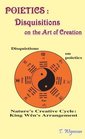
How a KURAL (distique/couplet) in Classical Tamil literature, dating from some 1500 years, was composed, the Master craftsman having been Thiru-Valluvar, reputedly of the priesthood caste officiating for the lowest social outcastes: the Untouchables.
The Anatomy of a Kural: Maxim 245 of the Thirukkural by Thiruvalluvar
The Anatomy of a Kural: Maxim Number 245 (taken at random) of the Thirukkural, the Tamil Classic on Ethics by Thiruvalluvar
allal arulaalvaarkku illai valivalangum
mallalmaa naalam kari (K245)
“The teeming earth's vast realm, round which the wild winds blow,
Is witness, men of 'grace' no woeful want shall know.” (Tr. G.W.Pope)
“This great rich earth over which the wind blows, is a witness that sorrow never comes upon the kind-hearted.” (Tr. W.H.Drew and John Lazarus)
“Misfortune the good-natured spares, the wind-tossed
Great cornucopian world bears ever testimony.” (Tr. T. Wignesan)
allal=privation or affliction
arul=kindliness, benevolence
aalvaar(kku)=to those who manage or exercise; (ukku)=here denotes the dative case ending
illai=negation (no/not)
vali=wind
valangkum=passing round
mallal=abundance
ma=great
naalam=the pendant globe of earth
kari=witness
Now the task here for the poet is to put these senses of the words together in an arrangement of seven metrical feet to comply with the classical Tamil prosodic rules while incorporating certain rhetorical features, such as, initial rhyme (ethukai), alliteration (monai), exceptionally end-rhyme (iyaippu), typical to a particular metre called "venba".
Example of "ethukai": allal/mallal. The rules require that the rhyme must fall on the second syllable, here: "ll" or as pronounced “il”.
Example of "monai": line one = a/a/aa/i/ (according to the rules "a" and "i" (or as pronounced “e”) for the sake of alliteration are phonetic equivalents.
Feet: There are seven metrical feet in each "kural" or couplet or distique, four in the first line and three in the second, though now and then this pattern may be reversed.
The feet are represented by both the short syllable: "-" and the long: "_". This distique (given the lack of adequate diacritical signs on my computer) could be transcribed as follows:
-- -- -_ _ _ - - --_ ----_
--_ _ _ -- --*
* lines above are short, lines below long.
In order to respect the brevity of these pithy sayings, the author has also to constrict the grammatical structure of the sentence (often a complex sentence with a main and a subordinate clause) by the adroit use of ellipses through omitting case endings or post-positional morphemes, etc., and by the use of substantives to take the place of verbs and by juggling the words in groups through meaningful juxtapositions.
To illustrate this device, see how he uses the negative particle "illai" placed further away from the noun "allal" which it qualifies; or see how he separates the epithet: "valivalangkum" from the "noun" it qualifies in the next line while interposing yet another two epithets in between. The last word, the seventh is almost always only made up of two short syllables.
Thiruvalluvar has had to cope with all these poetical and prosodic devices and literary embellishments, such as, the use of imagery, metaphor or simile, and even ambiguity, all through 1330 couplets, arranged according to thematic chapters of ten distiques apiece. This exercise in itself is a veritable achievement, not to mention the overall philosophic treatment of his thesis which is the admonishment of a way of life for a people in all the aspects of the domestic, amorous, social and political spheres of their existence.
Little wonder then why the Thirukkural has enjoyed the highest place of praise and pride in the hearts of an entire Tamil population which can boast of having engendered a totally unrelated/isolated family of languages in South India (including Brahui in present-day Pakistan) with a continuous corpus of literary masterpieces lasting over at least two-thousand three hundred years.
© T. Wignesan - Paris, 2017
Copyright © T Wignesan | Year Posted 2017
|



So you now think I didn't use unsavoury methods like "pathetic pithyless shrill" techniques (cf. your poem reaching out to members of the DEN) to judge Thiru-Valluvar's masterpiece???
I always did think you were the Sagittarius kind to roam the world in search of TRUTH.
Did you know Romans and Greeks traded with Tamil kingdoms and exchanged ambassadors fomenting cultural ties "long" before Alexander conquered the Indian North West Frontier region??? Romans actually greatly appreciated Tamil girls as prostitutes in Rome. Read the "Peripulus of the Erytherean Sea" (my spelling might be slightly askew).
Ron