|
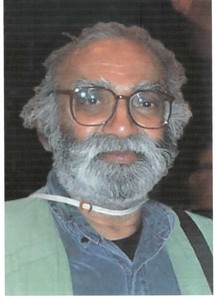
More of Eric MOTTRAM's pronouncements on the literary scene, and "the eminences in a flat land", plus the literary strategies of getting into print: once he had finally arrived at his permanent seat at King's College, University of London...
Department of English
University of London King's College, Strand,
London W.C. 2.
January 21, 1960
Dear Wignesan,
Your very welcome letter caught me at a most awkward time for prompt replying. Now I have got through all the "farewell" business in Gröningen, and Christmas, and New Year in the Isle of Wight, and finding a place to live in London, and finding out about my new job. So I'm recovering routine which is the only way I ever get anything done at all -- and time to write letters.
I wonder whether you are in England or in Germany now [I threw up my Harrods Ltd. "Out-of-Print Bookman" job for the promised increase in salary didn't materialize making supporting a family impossible, so I left for Schwäbisch Hall to work there ] -- I think I'll send this to Malaya Hall and hope for the best. Congratulations on being happy in family life in Germany [but I kept the truth from EM for he would be unnecessarily concerned and worried]; congratulations on producing the play for Deepavali [I staged Nobel Prize winner Rabindranath Tagore's play: "Sacrifice" at Malaya Hall: cf. my "Victorian Vignettes" book, chapter 10, pp. 137-160, with pics.] -- I'd like to have seen it ; congratulations on making up your mind for the Law finals [EM must have forgotten that I was cheated of my Barrister-at-Law qualification in 1956 for I refused to BRIBE the clerk-in-charge of the pass list.]
I can only look forward to having a literary talk again -- the literary set don't seem to have been much use to you in London. But I think perhaps you expect writers to be writers all the time. But I also agree that the literary set wields atrocious power in England. Poetry has to be in the modes agreed upon to get far towards publishing. I myself find it extremely difficult to recognize the new and valuable, so entrenched in patterns of the recognizable does one become. Open mind seems to be not enough -- even an ironic pose which really stems from patronizing superiority.
In a way I'm jealous of your being on terms with Colin Wilson, Spender, Enright, and so on, although I do not admire anything they've done except early Spender poems and Enright's essays on Rilke and Goethe. Surely you are on the right track to be healthily sceptical of these eminences in a flat land. Try sending your stuff direct to the Evergreen Review, Grove Press, 64 University Place, New York 3, N.Y., U.S.A. They have been publishing out-of-the-ordinary stuff for a number of years, and often print Asian material -- not that I think your poems and stories specifically Asian, I had better say, to fend off your derision.
The only poetry I've read recently that might interest you is Robert Lowell's "Life Studies" which is a fine achievement I think. His use of flexible rhythms in long lines will interest you.
Why John Press ? Not surely because I reviewed his earliest critical book very critically ! don't suppose I told you any way. He's a pretty awful poet -- has all the clichés of other poets, a sort of idle Georgian whose [who has ?] read Eliot and Auden, but who can't help letting his rubbishy romantic naturism poke washily through. Who is John Press, by the way ?
Before you send off the poem ["Tracks in the Private Country", which I never sent, though], do correct "Quisent" in verse 2. It's a good poem -- line 2 in verse 3 is clumsy and cramped; "hill-point" [?] is affected -- surely there's a better phrase or word somewhere ?; I don't understand verse 6 line 1 -- does the comma separate things equal or in opposition -- how can futurity have qualms ? what is the difference between future and futurity ? Why "the" laugh ? I don't follow "For who may ask .....disrespect !" -- the verb and the nouns don't fit however I read it. Over what is the poet supreme ? Why comma after "one" in the penultimate verse ? Isn't there a false emphasis on "Or two" in the last verse which you don't intend but is there because emphasis always tends to fall/ on the beginnings of lines unless you control the rhythms very carefully. I like the idea in the last line very much -- in fact the ideas seem to me interesting and the images fair enough; the rhythms urgent and arresting (I mean it literally -- journalese for striking.)
The story is good enough to publish - especially where I have just said if you can. Your style is purposely Americanized ! In places it's as if you had read "The Catcher in the Rye" -- whether you have or not, be careful you don't have it aimed at you. But the whole thing is lively and direct. Doesn't Spillane spell Mickie Mickey ? I may have forgotten. The style of the story worries me a bit: is it genuine or a bit of a pastiche ? Anyway the whole thing I liked very much.
Yours sincerely,
Eric Mottram
[ I'm phoneable at Sloane 3968 if I'm in]
(c) T. Wignesan - Paris, 1960-2023
|