For the title of this article I borrowed an idea from the National Dairy Council’s “Milk, it does a body good” advertising campaign – guilty as charged! However, from this point forward, I will be leaving the milk in a glass and talking about a specific part of the body that we use 24 hours a day, but does not get the same amount of attention and fanfare as some of it’s neighbor organs like the heart and lungs - the brain.
In a previous article that I wrote on the topic of learning patterns and aging, I used a quote from Henry Ford that said, “Anyone who stops learning is old, whether at twenty or eighty. Anyone who keeps learning stays young. The greatest thing in life is to keep your mind young.” In the context of that article, I was highlighting how we learn differently as we age due to physiological changes in the brain. That is a process that occurs as a part of getting older that we do not have much control over. However, as Henry Ford was alluding to, there may be some connection to brain activity and the physiological process of aging. Let’s see if Ford was on to something.
In 1986, Dr. David A. Snowdon, an epidemiologist at the University of Kentucky, began a 15-year longitudinal study focusing on a group of 678 American Roman Catholic sisters who are members of the School Sisters of Notre Dame, colloquially known as The Nun Study. The initial purpose of the study was to examine the onset of Alzheimer's disease. Snowdon’s impetus for studying a relatively homogeneous group (no drug use, little or no alcohol, similar housing and reproductive histories, etc.) was centered on minimizing the extraneous variables that may confound other similar research.
As many of us are aware of, Alzheimer’s disease is a chronic neurodegenerative disease that usually starts slowly and gets worse over time. As the disease advances and a person's condition declines, she or he often withdraws from family and society. Gradually, bodily functions are lost, ultimately leading to death in three to nine years.
The Nun Study is very important because not only does it study the effects and progression of Alzheimer’s, but it also uses information obtained about people who contract the disease before the onset of the illness as well as information from others who do not contract Alzheimer’s. Of the many theories gathered from the Nun Study, one of the most ground-breaking observations was that people with Alzheimer's were, as young adults, less physically and mentally active outside of their jobs than people without the disease. So how does this observation intersect with learning, the brain, and what Henry Ford said? The key may be in the dichotomy of Alzheimer’s and non-Alzheimer’s Nuns with their mental and physical activity outside of their jobs!
Putting this into perspective, consider the marathon athlete. I know of no case where a person who may be sedentary suddenly deciding the day before a marathon race, to get up off the couch and compete the next day. As we all know, it takes weeks, months, and years of physical conditioning and mental discipline to become a marathon runner. The circulatory, respiratory, and muscular organs of the body must be conditioned and nourished to their maximum potential for even a novice marathon runner. Now consider the brain. Is it any less of an important organ to your body than the heart, lungs, and muscles? The answer to that question is absolutely not, in fact without the brain; none of the other systems of our bodies would even exist!
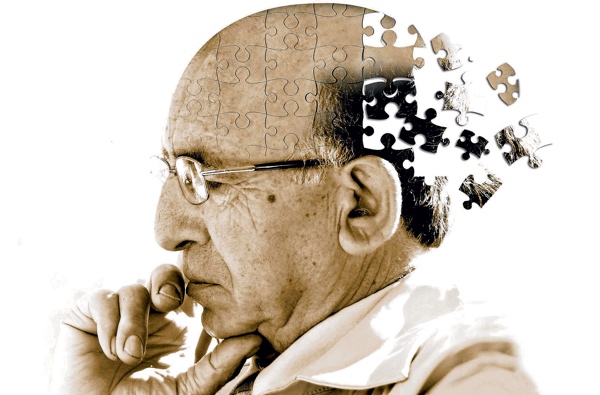
As an organ, the brain is the single most important piece of the physiological jigsaw puzzle we look at in the mirror everyday. Yet in the context of conditioning and discipline, it’s almost an obscurity in comparison to the other organs and systems of the body. Very few if any of us consciously think about daily exercise or conditioning for our brains, but it the context of our overall health and existence, especially in light of the Nun Study, it may be the most important.
This brings us back to Henry Ford’s idea that anyone who stops learning gets old while those who continue to learn stay young. It’s the intersection that I mention earlier about learning and the brain, they are symbiotic and dependent physical processes that help to keep the brain and ultimately our bodies from slipping into atrophy or just wasting away. The Nun Study, showed that there may be credible evidence of the role that learning and brain activity may play in the instances of Alzheimer’s and dementia. How attributable this may be toward the ultimate diagnosis and treatment of neurodegenerative disease, may still be years away, but the correlation of physical and mental activity to the instance of these diseases is enough for us to not ignore the opportunity to do something about it now rather than later.
In this regard, and as Henry Ford alluded to, learning could be our best offense in conditioning our brains against neurodegenerative diseases. From an organizational perspective, learning and training opportunities offered to employees may not only be beneficial to the bottom line of productivity, but also beneficial to the bottom line of health care and employee wellness expenses.
Just as conditioning the heart, lungs, and muscles requires discipline, so too does the conditioning of the brain. It must be nourished and exercised daily to keep it at its peak performance potential. Learning stimulates brain activity that ultimately affects our prospects for long-term health. So as you take that daily walk or work out to keep your body it shape, learn something new today and take your brain out for a little exercise as well, it does a mind and body good!





I wholeheartedly agree.
We must take time exercise that grey matter our brains daily
To do otherwise would be like casting off in a storm to the sea.
I am close to seventy now
But I am still attending school
It's harder to learn now, sometimes it's Hell!
But it is also much more rewarding as well.
Thank you for sharing Paul.
John Michael