Most people associate mind and intelligence mainly with humans and only marginally with other highly evolved animals. We tend to regard humankind as separate from the rest of nature, a different order of being. In pre-modern times this was not so.
People of the ancient Germanic, and other, traditions, as well as medieval mystics like Saint Francis of Assisi (1181/82-1226) and Saint Ignatius Loyola (1491-1556) and others, saw the whole of nature as an interrelated community. We see the same message in the Hebrew Psalms, the Hindu philosophies, et cetera.
Today most scientists recognise that humankind is an integral, interrelated, part of the universe. We are of the earth, and of Spirit and mind, a product of cosmic processes, not outside observers or alien invaders. Some say we are stardust, however, we are much more than just dust, wherever its origins.
Insofar as scientists recognise the existence of mind today, they do not confine it to humankind. True, it is manifested quite intensely in humans (as heat is manifested in suns, for example), but it does not stop there. It appears less clearly in the higher animals and insects and less still in the lower ones. Even plants [seem to] possess intelligence. However, although there is no detectable trace of intelligence in a rock, there is no definable cut-off point either.
Earth may be the cosmic centre of ‘gravity for mind’, or it may not be. There may be other concentrations in other places in the universe. Even though mind is not a material substance, it is still not unreasonable to suppose it is distributed through the universe, albeit very unequally, like matter. Some scientists have coined the term ‘psi field’, an energy which we have at present no means of measuring quantitatively.
Ervin Laszlo (1932- ) thought if maybe this entity we call ‘Mind’ is really a vaster collective consciousness – the fount of ‘all’ consciousness. Considering a self-aware universe, Laszlo believes that such a Cosmic Entity would be subject to conservation as a ‘dynamic energy’ phenomenon just as are all other phenomena in the physical universe. Energy is conserved according to the first law of thermodynamics so that it might only be transformed from one form to another, so that nothing is lost in the universe.
For Laszlo there is the possibility of what he terms a ‘psi field’, a psychic field. Comparing this psi field to gravitational and electromagnetic fields, et cetera, it is here, in which all individual experience could be accumulated and deposited at the universal level. Laszlo stresses that such a psi field would have to possess a ‘mental dimension’. In essence, this special ‘psi field’ would then represent the ‘mental dimension of the universe’ – the noösphere.
To summarise, mind is a cosmic phenomenon that we cannot locate precisely. It is everywhere. It functions predominantly, physically, in the organs we call brains and nervous systems, but we cannot locate it there. Some have suggested that the cosmic mind directs the process of cosmic evolution, however limited it is by uncertainty and randomness. This is metaphysics, even spirituality, but not science.
Physicist Brian Swimme (1950- ) says that the universe is not a material object, but a spiritual event. The whole universe, the ‘Cosmic Christ’, is God’s progressive physical self-manifestation in mind, energy, matter, space and time.
When we speak of intelligence, it is only as we recognise it in ourselves, but in fact we refer to a transcendent quality of the whole universe. Ours is an intelligent universe – where we can define intelligence as the ability to achieve complex goals in a complex environment.
There are other abstract qualities we see in ourselves; ones we value and others we would rather not have. We need not baulk at seeing imperfection, incompleteness, in God’s cosmic incarnation.
However, what is mind? Is mind an excretion of matter and energy (something physical), or is it perhaps something like a program (a software algorithm) on a PC (i.e. computer hardware – matter and energy).
What is matter and energy? Who, or what, created matter and energy? Was it a Supernatural Being/Principle or the Big Bang? If it was the Big Bang, then who, or what, created the Big Bang. If the Big Bang was created by the many-dimensional membranes/manifolds of M-theory – who, or what, created these membranes/manifolds?
However, to quote Jeremy C Campbell, “Evidently nature can no longer be seen as matter and energy alone. Nor can all her secrets be unlocked with the keys of chemistry and physics, brilliantly successful as these two branches of science have been in our century.
“A third component is needed for any explanation of the world that claims to be complete. To the powerful theories of chemistry and physics must be added a late arrival: a theory of information [and therefore mind].
“Nature must be interpreted as matter, energy, and information [mind!].”
Whatever you do, you first must do in your mind (your software), whose machinery is the brain (the hardware). The mind can do only what the brain is equipped to do, and so you must find out what kind of brain you have before you can understand your own behaviour, strengths, and limitations. Gnothi se auton – Know Thyself. The greatest discovery is that you can alter your life simply by altering your attitude of mind.
Indubitably, in our physical sojourn on earth we experience everything through mind, and there undoubtedly is no information, good or evil, or the ‘evolution’ of species (or anything else) without mind. Even Charles Darwin’s (1809-1882) natural selection requires mind, as Jan Smuts (1870-1950) so eloquently illustrated in his book Holismand Evolution(1926), namely “In its analytical pursuit of the parts, science has missed the whole, and thus tended to reduce the world to dead aggregations rather than to the real living wholes which make up nature.”
Smuts(1987:1) was of the opinion that “The acceptance of Evolutionas a fact, the origin of life-structures from the inorganic, must mean a complete revolution in our idea of matter. If matter holds the promise and potency of life and mind it is no longer the old matter of the physical materialists.
“We have accepted Evolution, but have failed to make the fundamental readjustment in our views which that acceptance involves. The old mechanical view-points persist, and Natural Selectionitself has come to be looked upon as a mere mechanical factor.
“But this is wrong: Sexual Selection is admittedly a physical factor, and even Natural Selectionhas merely the appearance of a mechanical process, because it is viewed as a statistical average, from which the real character of struggle among the living has been eliminated.”
In fact, ‘the old mechanical view-points’ still persist to this very day!
Thus, we either have
Energy --> Matter --> Life --> Mind (--> Spirit)
Or
Spirit --> Mind, Matter, and Energy --> Life
[Where --> (the arrow) means ‘leads to’, ‘preceded’, or even ‘created’]
Thus, if the first case (i.e. matter and energy is all there is) is true then we have underestimated the potency of matter and energy. Then the intelligence and/or consciousness in matter and energy must be enormous, and the Sun then must have incredible intelligence and/or consciousness. The intelligence and/or consciousness in the universe must consequently be so big that we are back again to the principle of a universal (albeit material) God – the Creator of life and mind no-less.
The materialist say, ‘all there is, is matter’. I am matter, but I am also conscious. Therefore, matter is conscious. The universe is matter, and therefore the universe must have cosmic consciousness.
Alternatively, as Pirsig(Lila, 1992:255) stated, “A metaphysicsof substance [matter and energy] makes us think that all evolution stops with the highest evolved substances, the physical body of man. It makes us think that cities and societies and thought structures [information] are all subordinate creations of this physical body of man.
“But it’s as foolish to think of a city or a society as created by human bodies as it is to think of human bodies as a creation of the cells, or to think of cells as created by protein and DNAmolecules, or to think of DNA as created by carbon and other inorganic atoms.
“If you follow that fallacy long enough you come out with the conclusion that individual electronscontain the intelligence needed to build New YorkCity all by themselves. Absurd”.
Therefore if:
The (Physical) Universe = Space-Time + Matter + Energy (+ the 4 Fundamental Forces)
Then at least:
Nature [and/or Life?] = The Universe + Mind (which then includes Information)
And then, mind (and information) is not matter and/or energy, and contrary to a long philosophical tradition, it is very important to emphasise that mind is patently not the commonplace ‘substance’, or res, with which we all are familiar. If the mind were this everyday ‘substance’, its study would be the empirical domain of physical science; it is not. If mind were an ordinary substance, it would be something individual; again, it is not – mind is universal, whichever way we look at it!
However, the materialist insists that there is only matter, and energy, and nothing else. So, matter and energy created life, mind, and everything else, including Los Angeles, New York City, London, Berlin, Tokyo, Earth, the Sun, and galaxy clusters. So then, did quarks created everything there is, or was it perhaps electrons, or maybe both?
Great Article Willie! I enjoyed it alot. I feel exactly the same about the existence of the mind, and loved the way you included your knowledge and study into the article itself, showing how people through history have viewed this subject.
I would love to include a link through to this article from my blog at http://themindperspective.wordpress.com. If you have an outside blog or website I can also add a link there. Just let me know.
All the best to you,
Stacey.
(Stacey T Pollock)
http://creationtheory.weebly.com
This book presents a narrative story of one person's journey of transcendental Awakening and Enlightenment as guided by his two Sage companions. It is grounded in Zen Buddhist and Taoist perspective and uses the I Ching as its structural framework. T
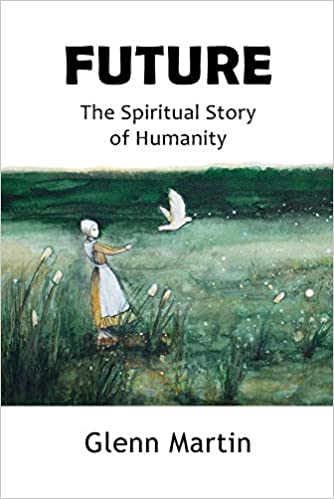
Histories of the world are generally written to either celebrate technology and science, or to herald doom. My book examines the path of the spirit in the onward rush.
This book presents a narrative story of one person's journey of transcendental Awakening and Enlightenment as guided by his two Sage companions. It is grounded in Zen Buddhist and Taoist perspective and uses the I Ching as its structural framework. T


I would love to include a link through to this article from my blog at http://themindperspective.wordpress.com. If you have an outside blog or website I can also add a link there. Just let me know.
All the best to you,
Stacey.
(Stacey T Pollock)
http://creationtheory.weebly.com