 The sum of who we think we are, is a low form that changes as we change.
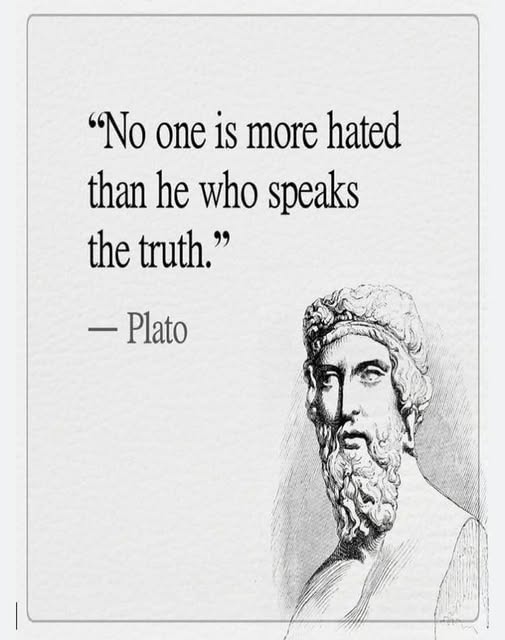
"The whole is more than the sum of parts." - Aristotle.
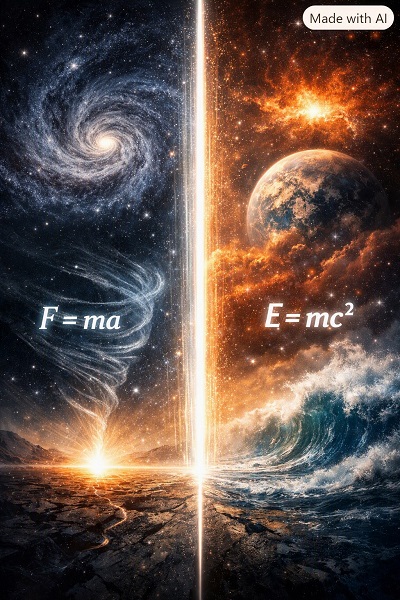
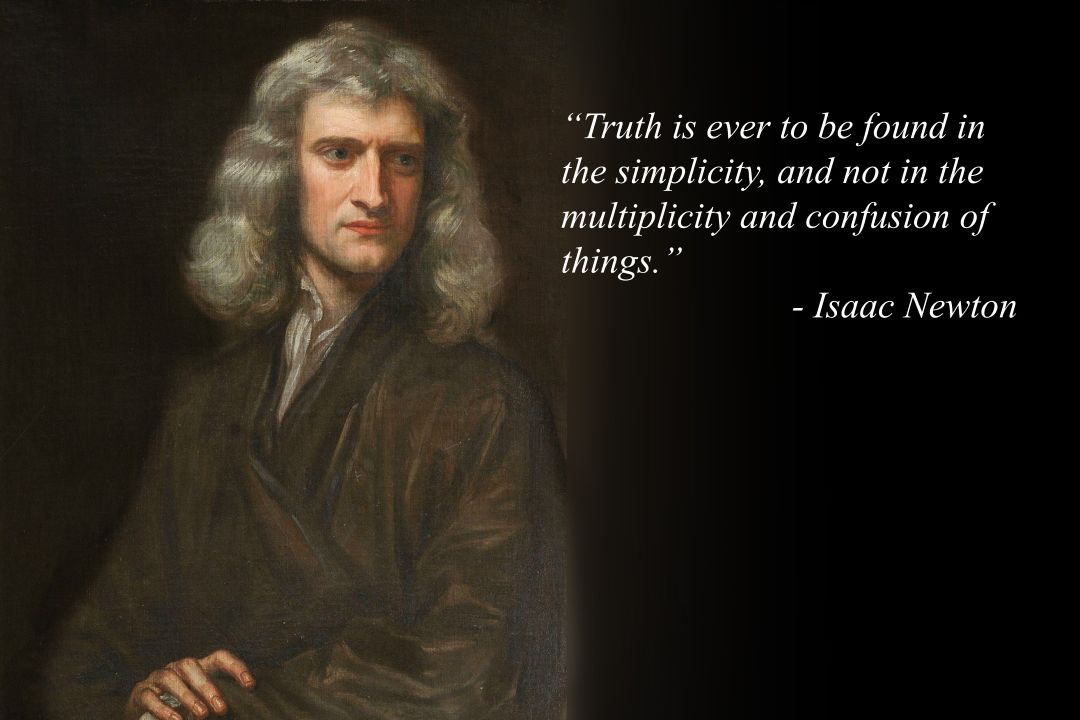
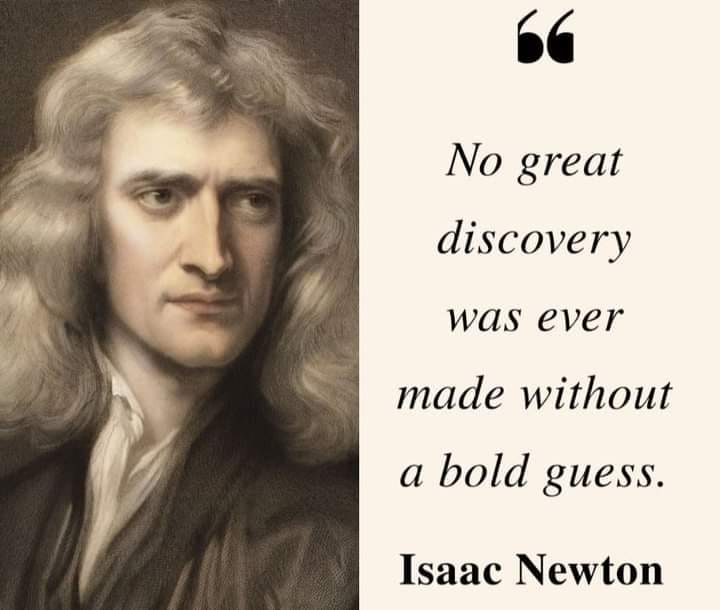
The universe, in all its complexity, is vanishing into eternity—not at the speed of light, but at the speed of gravity, a force that Newton first formalized as F = ma, the simplest equation with the deepest implications.
This movement—this disappearance from time—was not merely a physical insight. Newton’s calculus, born of necessity, became a metaphysical tool. As physicist David Bohm later observed, “Thought itself is an actual process of movement”. Newton’s force was not just mechanical—it was the twist of eternity trying to right itself.
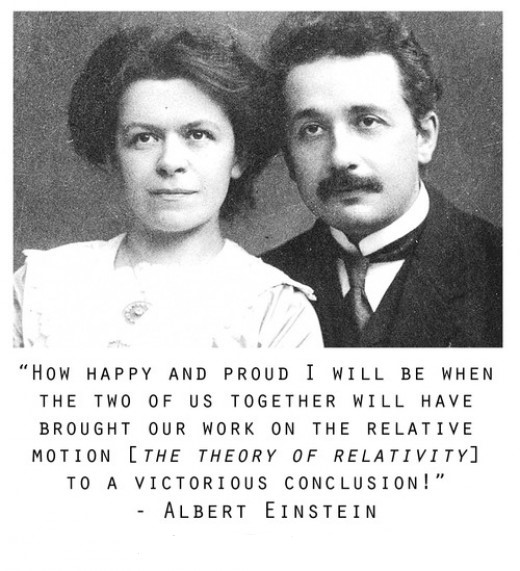
Two centuries later, Mileva Marić, a brilliant physicist and mathematician, applied calculus to the emerging field of relativity. Yet her contributions were obscured by the gendered norms of her time. Her husband, Albert Einstein, took the prize and ran with it—crashing the insight at the speed of light. As Nikola Tesla once said of Einstein’s relativity: “It fascinates, dazzles and makes people blind to the underlying errors”.
To understand this manipulation, we must return to F = ma and realize: its cause is everywhere at once. This is not Newton’s isolated apple—it is Bohm’s implicate order, where every part enfolds the whole.
The sum of repeats in any moment is the collective cause. We are not observers—we are part and parcel. As Aristotle wrote, “The whole is more than the sum of its parts”.
This demon—the collective illusion of life-for-life’s-sake—waters our gardens like crops for harvest. It convinces us that abundance is proof of goodness. But as Charlotte Knowles argues, complicity is not just causal—it is phenomenological. We are responsible not because we act, but because we are embedded.
Life is a process toward Love. Love is the origin and the return, pulled by gravity—not the Newtonian kind, but the metaphysical gravity of awareness.
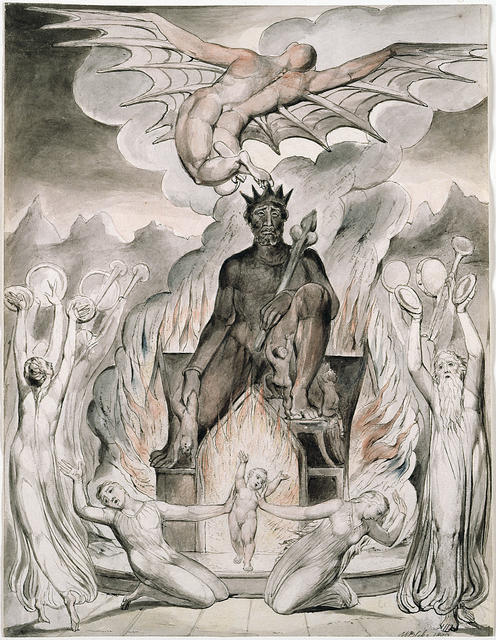
The demon is the sum of who we think we are—defending life for its own sake, blind to its twist. It is everywhere at once, making fools of everyone.
We are as waves to its ocean.
Humanity, as one, is evil incarnate—not in malice, but in ignorance. As the Tao Te Ching warns: “Not to know it is blindness that works evil”.
Ask any good man if he believes in life for its own sake. Of course,
he does—though he knows not why. The demon rides our ponies to hell, disguised as innocence.
We must learn about natural complicity—the embeddedness of thought, the twist of recurrence, the illusion of separation. Only then can we begin to untangle the metaphysical knot.
“Every human being participates in the machinery of harm—until they learn how it works and take the wheel.”
|