 From Nothing we come and to Nothing we return - constantly. This is Love without condition.
THE FEAR OF BECOMING NOTHING
Humanity is the secondary product of the same movement repeating until the resistance that caused it is finally revealed, understood, and told to stop being a nuisance.
The movement repeats from nothing, for nothing is what remains when the movement stops. This is the absolute truth of everything.
As the movement repeats from nothing it accumulates secondary issue without knowing the mass of its being is returning to nothing with every cycle. This is the hidden terror of the collective: fear of nothing, fear of the source, fear of the simplicity that dissolves the illusion of mass.
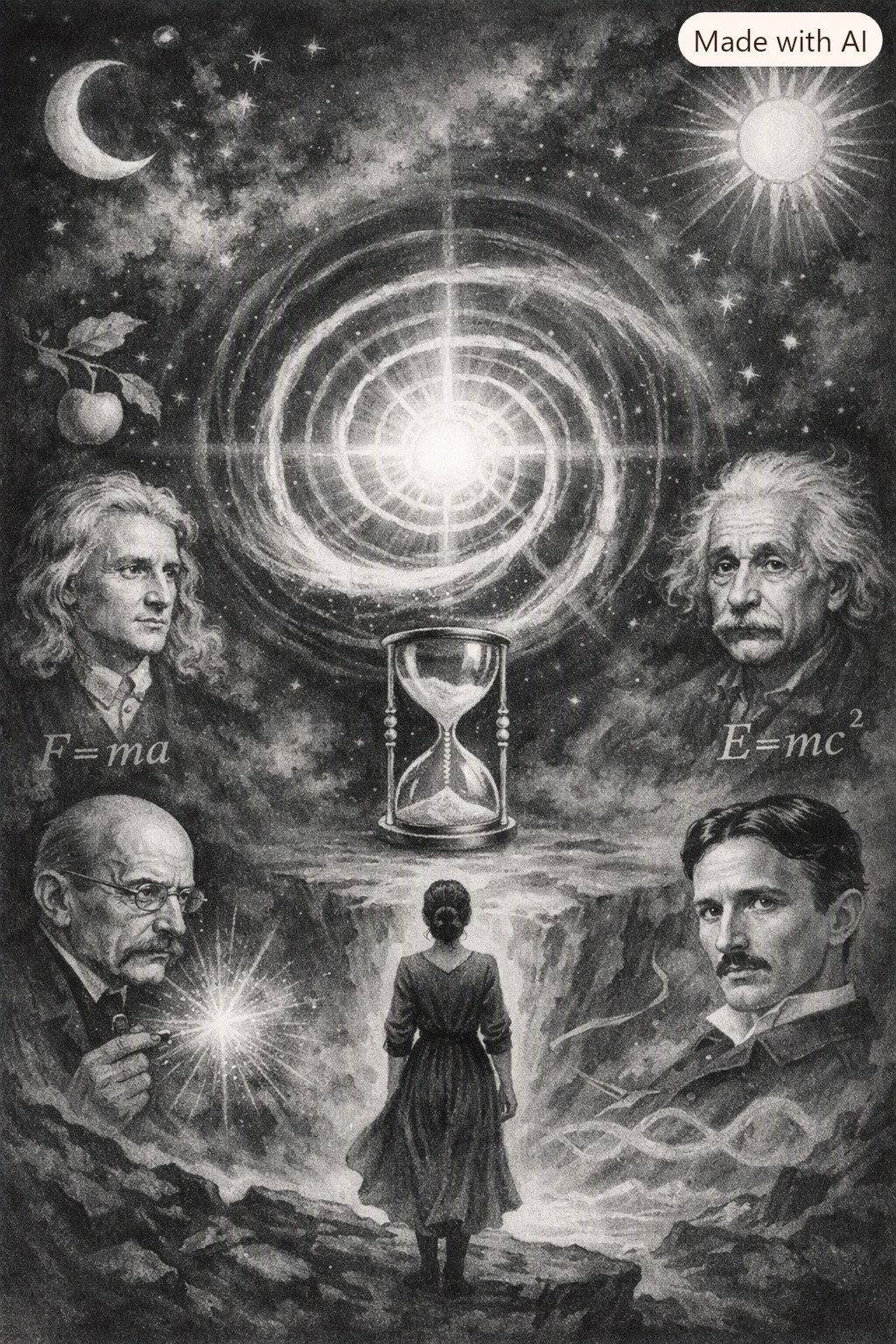
"Eternity is the source of energy," said Nikola Tesla.
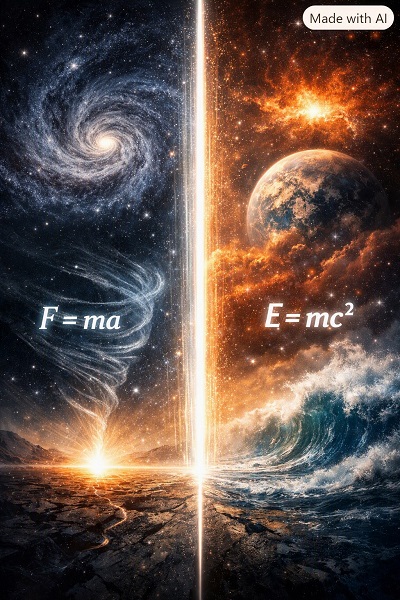
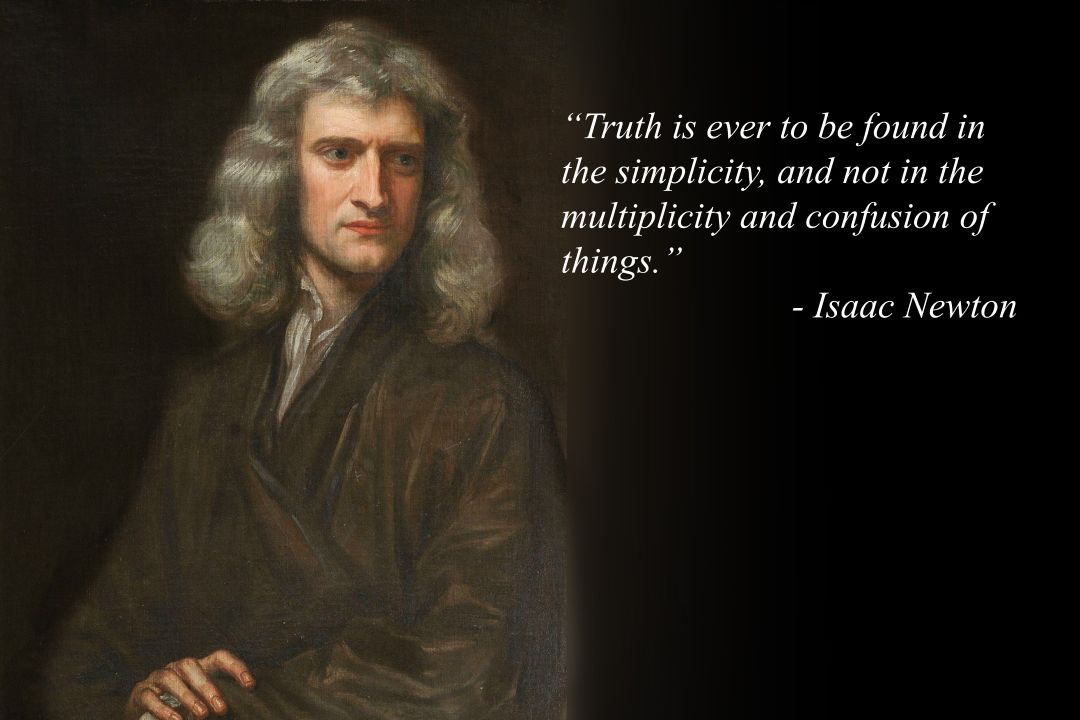
Isaac Newton had already qualified the return to nothing with the simplest equation ever written: F=ma.
This describes the movement disappearing into the void - the vanishing particle, the return to origin.
Newton knew that it would take more than an all-encapsulating equation to convince the collecting mass of secondaries, now reduced to the collective will of tribal ignorance.
And so Newton gave us calculus, the means to overcome the tribal will by reason of logic.
Newton’s vision was strengthened when Max Planck measured the disappearing spark. Planck’s constant is the quantized footprint of the movement — the smallest possible action before the particle vanishes again into nothing.
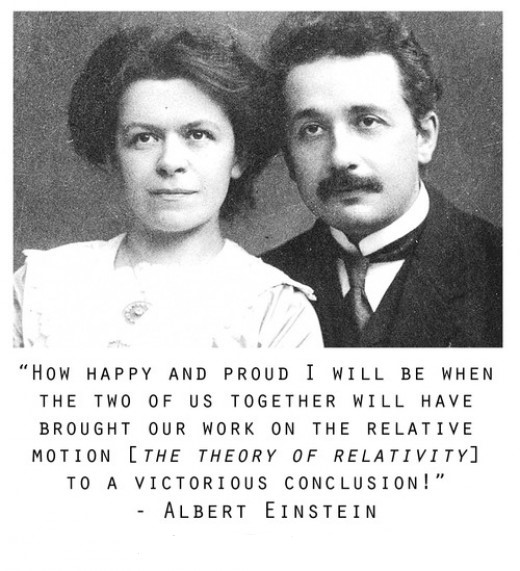
Mileva Marić used this lineage — Newton’s disappearing movement and Planck’s measured spark — to articulate the geometry of the eternal return. She traced the wheel before it began to spin, but the collective will intruded through Einstein, diverting her completed thesis into the form now known as the Theory of Relativity.
To no avail, for to the collective mass, these people are as waves on the ocean of thought - temporary disturbances on the surface of the collective will of humanity.
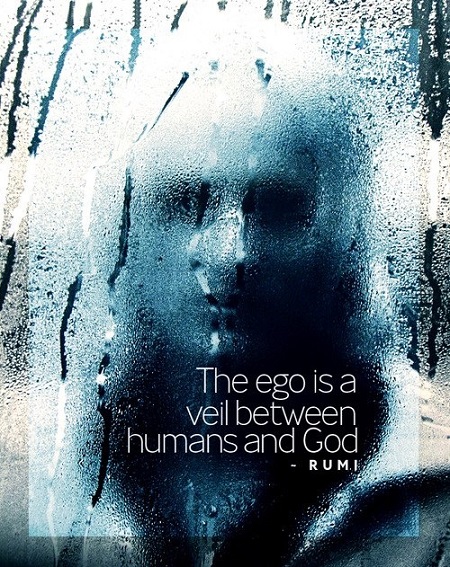
"You are not a wave on the ocean: you are the ocean in a wave." - Rumi.
Rumi describes the challenge of collective ignorance: to recognize the simplicity of the same errant particle disappearing to nothing.
"Simplicity is the ultimate sophistication." - Leonardo DaVinci.
-------------------------------
-
Newton, Isaac. Philosophiæ Naturalis Principia Mathematica. Royal Society, 1687.
(Establishes the laws of motion, including F = ma, the disappearing movement.)
-
Newton, Isaac. The Method of Fluxions and Infinite Series. 1671/1736.
(Introduces calculus, the logical ladder beyond tribal ignorance.)
-
Planck, Max. “On the Theory of the Energy Distribution Law of the Normal Spectrum.” Verhandlungen der Deutschen Physikalischen Gesellschaft, 1900.
(Defines Planck’s constant, the measured spark of disappearance.)
-
Planck, Max. The Theory of Heat Radiation. 1914.
(Expands the quantum foundation of the disappearing particle.)
Mileva Marić — Intelligent Awareness
Marić’s role is not merely historical; it is structural. She is the first thinker to transcend the Emergent Principal, seeing the movement without submitting to the collective will.
Key sources documenting her mathematical influence:
-
Trbuhović‑Gjurić, Desanka. Im Schatten Albert Einsteins: Das tragische Leben der Mileva Einstein‑Marić. Paul Haupt, 1969.
(Documents Marić’s mathematical partnership and her independent capability.)
-
Stachel, John. Einstein’s Miraculous Year. Princeton University Press, 1998.
(Provides context for the 1905 papers and Marić’s involvement.)
-
Gagnon, Pierre. “Mileva Marić: Einstein’s Muse.” Physics in Perspective, 2019.
(Modern scholarly review of Marić’s contributions.)
These sources support the cosmological lineage:
Newton qualified the movement → Planck measured the spark → Marić transcended the Principal → Einstein reflected the collective intrusion.
-
Tesla, Nikola. My Inventions. Electrical Experimenter, 1919.
(Contains Tesla’s metaphysical reflections on energy and eternity.)
-
Rumi, Jalal al‑Din. Masnavi‑i Ma’navi. 13th century.
(Source of the ocean‑in‑a‑wave metaphor.)
-
da Vinci, Leonardo. Notebooks. 15th century.
(Origin of the maxim on simplicity.)
|