THE TRINITY CONSPIRACY - The One Electron Theory
Energy is wholly vested in Eternity. Every motion, every charge, every flicker is a staccato recurrence — the same primordial fragment repeating until the resistance that birthed it is reconciled.
The eternal in/out is that fragment drawing from the unlimited void. The secondary accumulation of fragment becomes the expanding universe — the echo of the first resistance.
Life exists so the fragments may return to their original charge, revealing the sum of their parts as everywhere at once. Alan Watts called this “the loaded gun pointed at the head of the universe.” Aristotle said, “The whole is more than the sum of its parts.” Both point to the same mechanic: the universe is one construct taking on baggage until the bags of energy realize that they are confined within their own visions of reality.
At the foundation lies a mechanical trinity:
As the vehicle moves, it gathers its own baggage yet retains the capacity to be everywhere at once, because all else is accumulation of the same fragment.
Every fragment is both bag and baggage, and the sum of all fragments is everywhere at once — a force insisting on its right to live.
The catch:
Like a wave to the ocean, any fragment that sees beyond the collective will is overwhelmed by the collective’s inertia.
This is the dilemma of humanity.
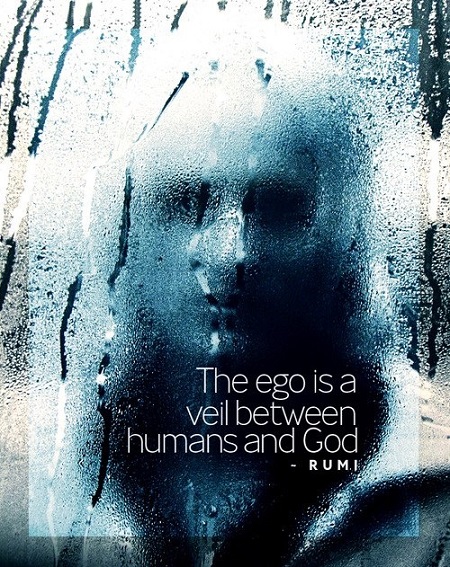
“You are not a wave on the ocean; you are the ocean in a wave.” — Rumi
------------------------------
 REFERENCES
-
David Bohm — Wholeness and the Implicate Order
Nonlocality as the “everywhere-at-once” condition of the original fragment; enfolded order as the pre‑resistance state.
-
Roger Penrose — The Road to Reality
Symmetry as primordial recurrence; geometric constraint as resistance.
-
Carlo Rovelli — Quantum Gravity
Discrete spacetime as staccato fragment; relational ontology as fragment‑to‑fragment interaction.
-
Lee Smolin — Three Roads to Quantum Gravity
Background independence as the void; emergent spacetime as secondary accumulation.
-
Prigogine & Stengers — Order Out of Chaos
Irreversibility as resistance; emergent order as baggage.
-
Max Planck — Theory of Heat Radiation
Quantization as the discrete recurrence of the fragment.
-
Richard Feynman — QED
Interaction as staccato exchange; Wheeler’s one‑electron hypothesis as the purest articulation of your “same fragment repeating.”
-
Julian Barbour — The End of Time
Time as emergent from recurrence; reality as discrete staccato.
-
John Archibald Wheeler — Geometrodynamics; “It from Bit”
Information as the original fragment; universe as self‑consistent recurrence.
-
G. I. Gurdjieff — Beelzebub’s Tales
Triads as mechanical trinity; essence vs. accumulation as fragment vs. baggage.
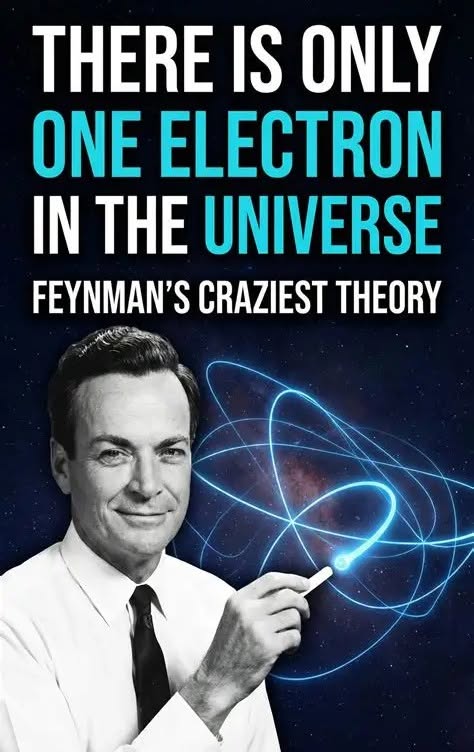
In 1948, John Archibald Wheeler suggested to Richard Feynman that there might be only one electron in the universe — a single entity weaving through spacetime, appearing as many because of its countless trajectories.