 "The whole is more than the sum of its parts." - Aristotle.
THE COLLECTIVE CHALLENGE
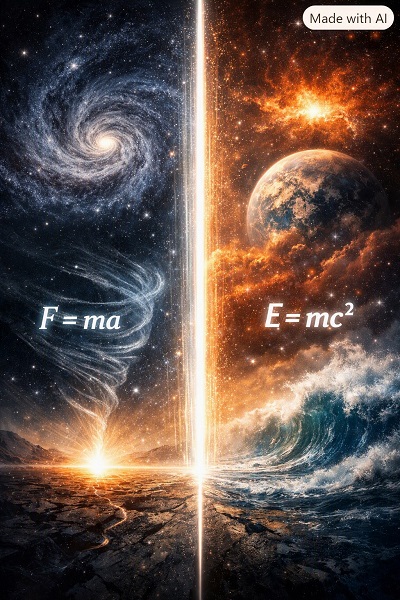
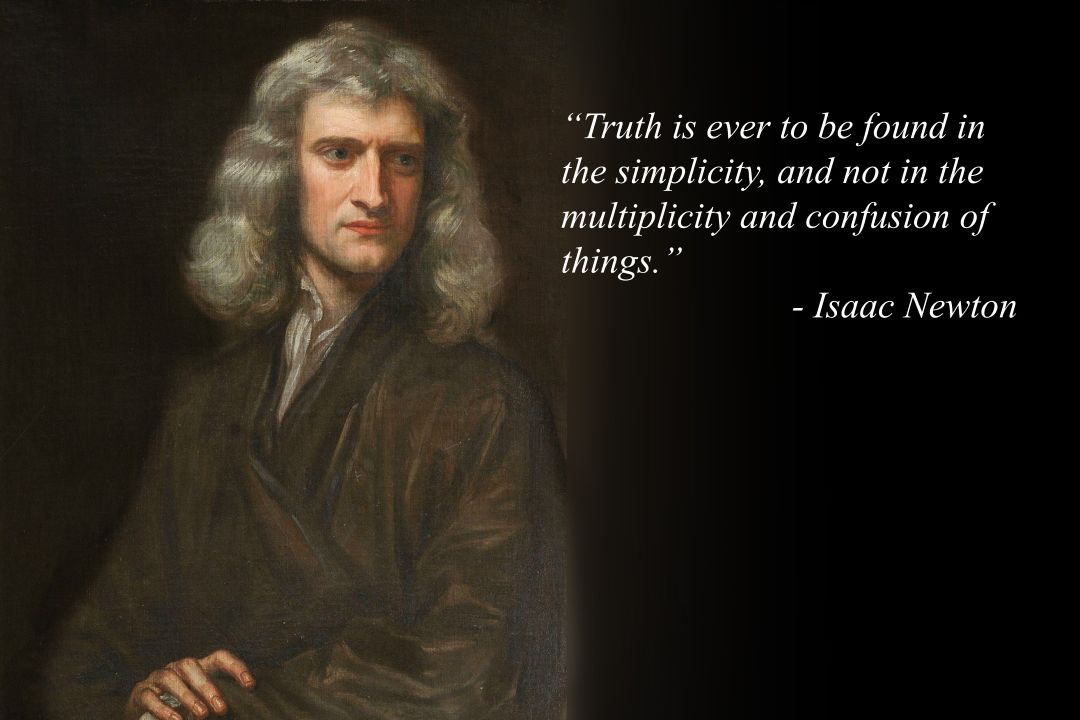
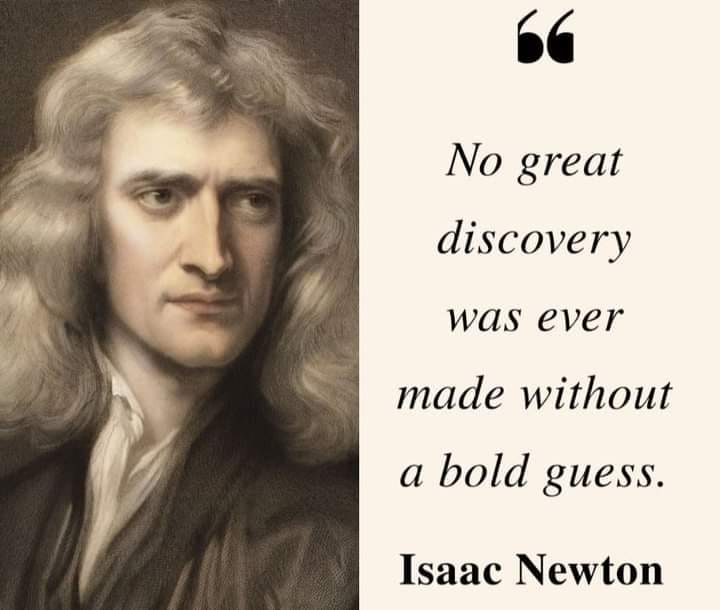
One movement out of time - discovered by Isaac Newton, quantified by Max Planck, and manipulated by Nikola Tesla to fuel the Industrial Revolution.
This movement out of time recurs endlessly, until the resistance that first caused it ceases to resist and abides timelessly present. Timelessness, touched by mystics across the ages, is always revealed as unconditional love.
As the movement recurs, its output becomes the reduced species called humanity - emanating from the one movement whose cause is everywhere at once.
This is how the universe is generated.
Again and again, the recurring movement produces states of reduction that embody “all as one,” the original cause.
The secondary mass becomes the body of thought, silent within all subsequence because it is cause before effect.
The secondary mass is “all as one,” yet none within it know the silent cause, which has assumed the mass as a body able to be everywhere at once.
Every part of the secondary mass is complicit in the whole.
"The whole is more than the sum of its parts." - Aristotle.
Even the greats of time are included in this massive wholeness; all under the collective one that observes every nuance as if it is everywhere at once - it is.
The mass of humanity is the body of primal resistance - primal thought - an ignorant force of 8.3 billion parts, each believing itself autonomous.
This is the bridge to cross, as the collective force watches our movements, directing us away from discovering the universe as Love recurring in endless cycles of eternal closure.
If we, the individuals of mass were to discover this truth about ourselves, the structures of thought would reflect a less violent force of will.
The collective will is the sum of all, as one.
And when we change, it changes.
Meanwhile, the collective defends its life in energy - and woe betides those who challenge.
 Best References for Collective & Recurrence Themes Best References for Collective & Recurrence Themes
-
Heraclitus – The ever-living fire Flux, recurrence, hidden harmony; the primal movement as eternal fire.
-
Plotinus – The One overflowing Emanation, silent cause before form; the source as overflowing unity.
-
Aristotle – The whole is more than the sum of its parts Holistic unity; the collective as more than its fragments.
-
Nietzsche – Eternal recurrence of the same The cycle, the return, and the psychological shock of recognition.
-
Leibniz – Monadology Each monad mirrors the whole; fractal reflection of unity.
-
Upanishads – Self forgetting itself in the play of appearances Illusion, recurrence, and the divine forgetting.
-
Tao Te Ching – The returning Effortless movement, uncarved source, wings of recurrence.
-
Carl Jung – Collective unconscious & shadow archetype The mass mind, complicit wholeness, archetypal shadow.
-
Hannah Arendt – Mass thinking as machinery The mob-mind as autonomous force, blind collective power.
-
David Bohm – Implicate order Illusion of complexity arising from a simple underlying movement.
|