LEARNING TO DRIVE
How the Machine Began and Why We Are Its Parts
“Without self‑knowledge, without understanding the working and functions of his machine, man cannot be free, he cannot govern himself and he will always remain a slave.” — G. I. Gurdjieff, In Search of the Miraculous (1949)
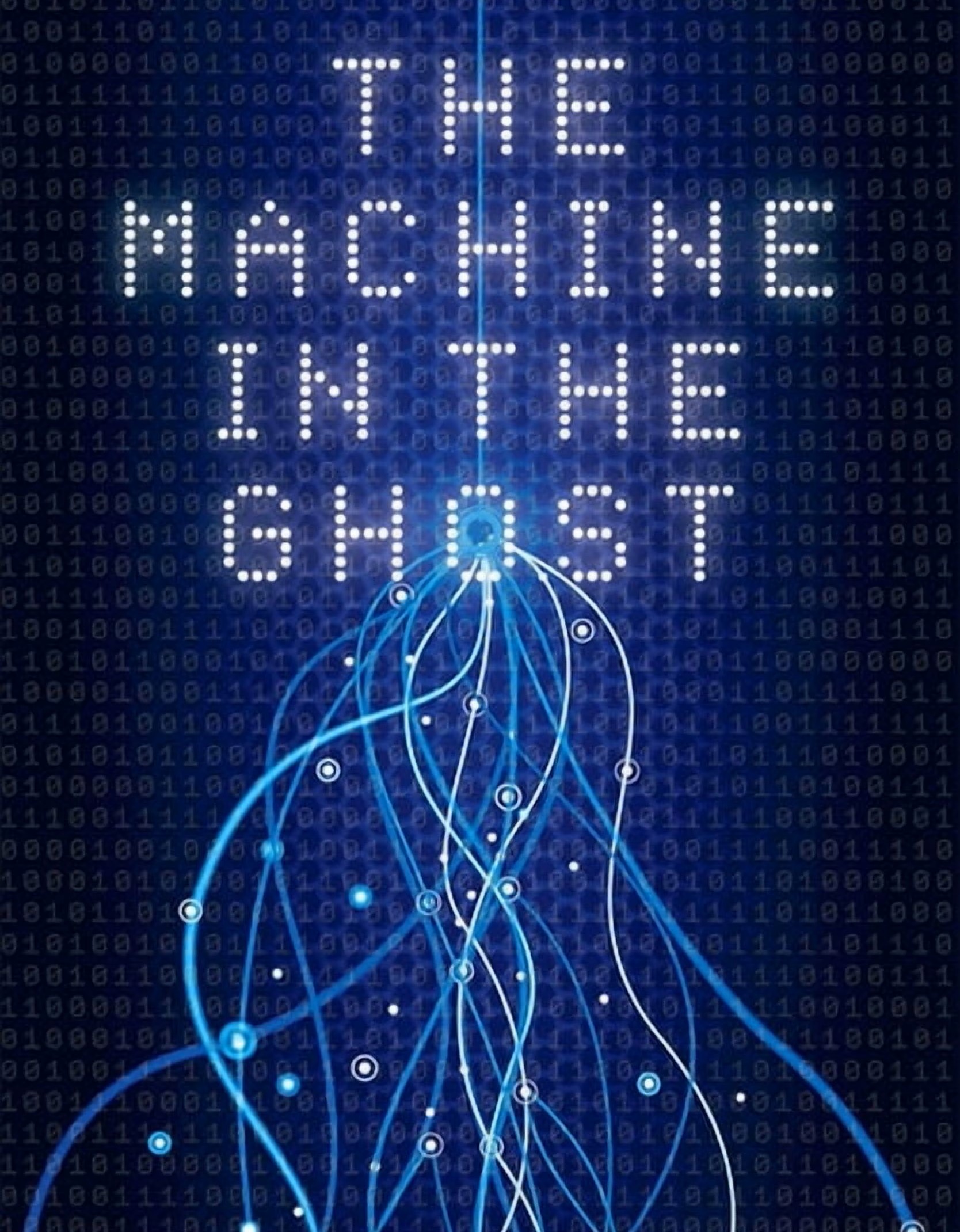
To understand the machine, one must step outside emotionalism and observe the energetic substrate in which we all participate.
Energy orders itself for protection—
a mechanical device driven by the will to live—
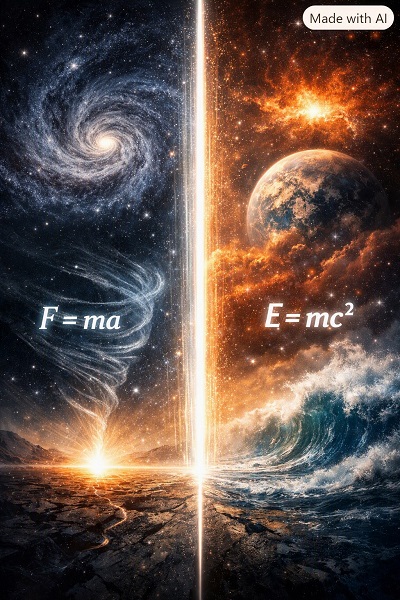
a generator whose rotating field produces the universe as a secondary issue.
This rotation is re‑produced from nothing—ETERNITY.
“Eternity is the source of energy.” — Nikola Tesla.
The cause of energy is also energy—infinitesimal:
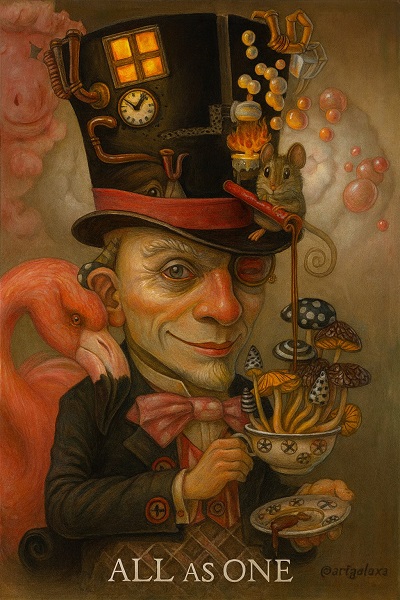
that moment when One‑is‑all became all‑as‑one.
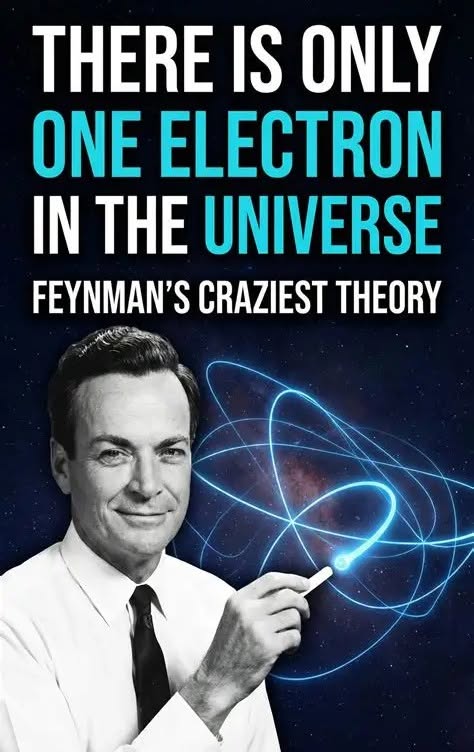
All‑as‑one, we are an eternal twist—
twisting and untwisting;
eternally recurring until we release the tension.
The primal twist is the seed of Planck’s constant,
whose repetition generates the universe as a secondary issue.
All‑as‑one, we are the smallest particle—
everywhere at once within the emerging universe.
The life‑force wants to live for its own sake,
enacted through each new thing that pours forth—
from a flower to a human—
all process to live for its own sake
until the forces of reason and pain initiate a return
to the power of Love.
The deep need to gather back is misunderstood
and misrepresented by the sum of who we think we are,
all‑as‑one.
Fear multiplies reactions;
reactions multiply confusion.
The simple mechanism of eternal recurrence becomes obscured.
All‑as‑one, we are a mess that cannot be cleaned
until we accept that One‑is‑all means that one is God—
anyone at all—
each of us carrying the spark of who we already are: God.
We are lost in the machine because we do not realize
that the machine is run by the sum of our parts—
the will of the people.
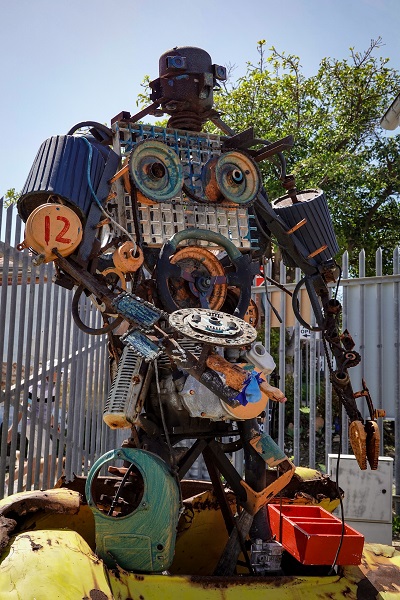
The machine is there for us to drive—
we just have to learn how to drive our parts, all as one driver.
-
G. I. Gurdjieff — Self‑knowledge, the machine, and awakening from mechanical life
-
P. D. Ouspensky — Recurrence, time, and the structure of consciousness
-
Max Planck — The quantum of action and the birth of the smallest event
-
David Bohm — The implicate order and the undivided whole
-
The Tao Te Ching — The One that becomes the ten‑thousand things
-
Heraclitus — The unity of opposites and the ever‑living movement
-
Spinoza — God as the single substance: all‑as‑one
-
Plotinus — The One and the emanation of all things