The most complex structure becomes simple the moment you step back to a higher view.
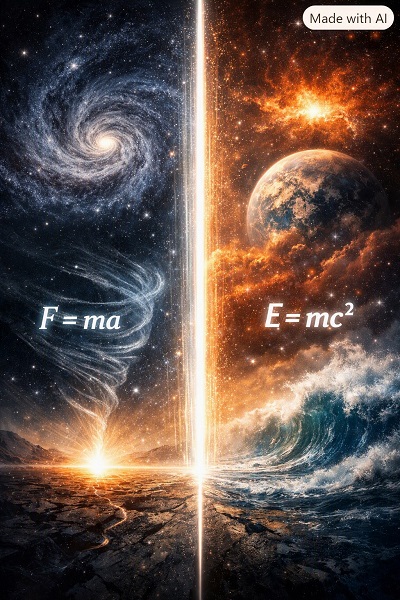
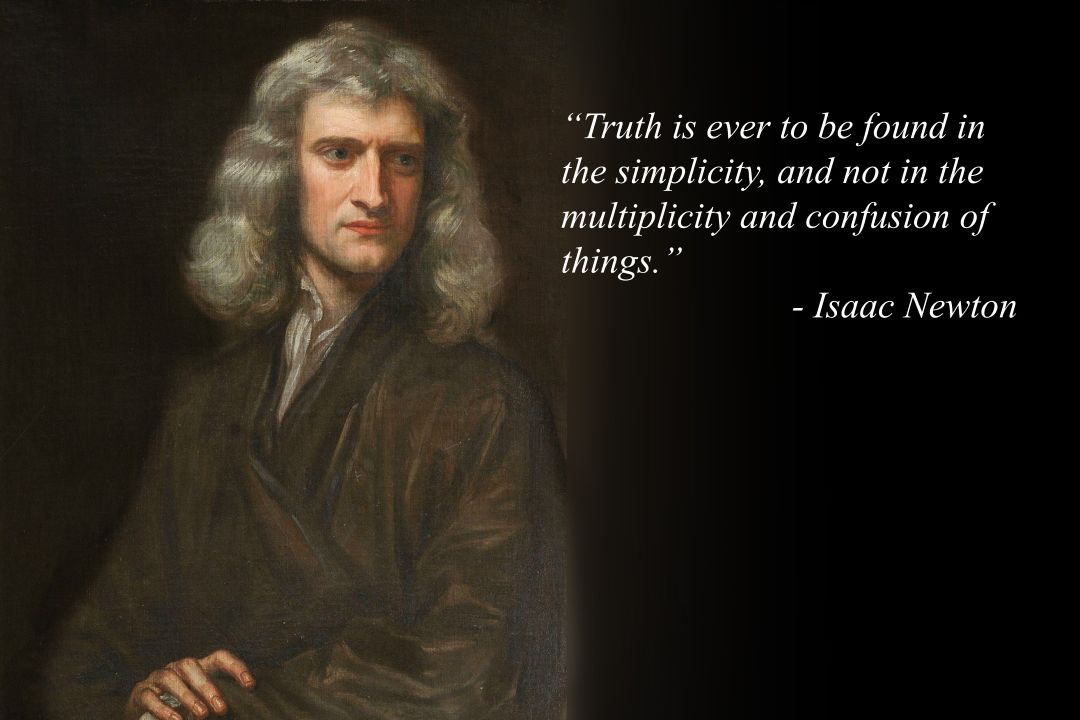
Newton's F=ma is a circle closing to infinity - to nothing - to non- reference.
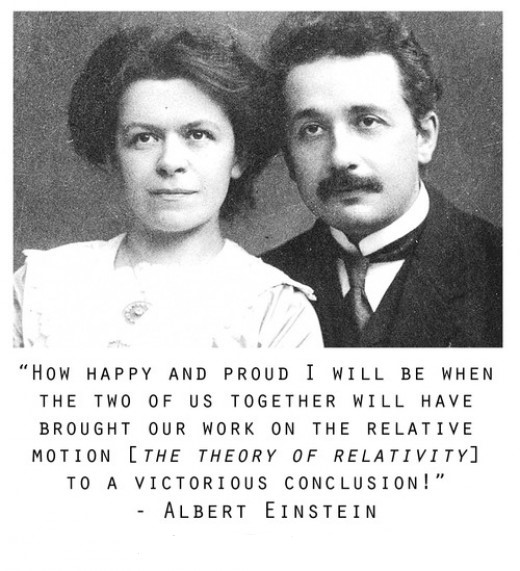
Einstein's E=mc² never closes. It creates tangential forms, each drifting outward as the universe expands to contain them.
F=ma was quantified by Max Planck and given utility by Nikola Tesla - one eternally recurring movement, each repeat the beginning of time.
The reason we chase our own tails instead of recognizing the one movement is this:
the sum of who we think we are is an inclusive force of ignorance - a singularity with universal clout. It is the all-as one field of personal thinking, everywhere at once, keeping us from the information of constant closure. Energy is all inclusive - the good, the bad, the indifferent; as long as you are energy you are included in the clout.
What moves as a field cannot see the limit of its own movement.
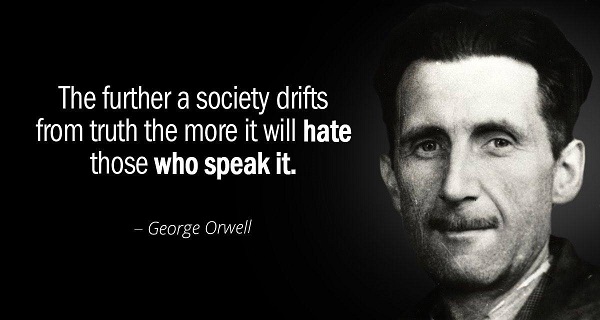
All-as-one we are as clever as we are ignorant, extreme in our confidence. And those who serve the truth are washed under like waves returning to the ocean.
This has been shown, again and again, on OnePositive.
The return is the proof.
.................................................
REFERENCES:
Isaac Newton — Principia Mathematica
For the vision of motion returning to its cause, the architecture of closure, and the circle tightening toward non‑reference.
Albert Einstein — Special Relativity
For the break in closure, the tangential drift of forms, and the expansion that prevents return.
Max Planck — Quantum Hypothesis
For the discrete, recurring movement at the foundation of physical description — the one quantum repeating itself.
Nikola Tesla — Lectures and Patents
For the primacy of movement over form, and the practical harnessing of cycles before interpretation.
Erwin Schrödinger — What Is Life?
For the understanding that the “self” is a temporary pattern in continuous processes, not an independent entity.
David Bohm — Wholeness and the Implicate Order
For the insight that what appears separate is an unfolded expression of a deeper, unified movement.
Carl Jung — The Undiscovered Self
For the recognition that the personal sum behaves like a totalizing field, shaping perception and resisting dissolution.
Lao Tzu — Tao Te Ching
For the paradox of confidence and ignorance, and the way the mind clings to its own continuity.
Heraclitus — surviving fragments
For the understanding that identity is a knot in the flow, not a fixed point.
Alan Watts — The Book: On the Taboo Against Knowing Who You Are
For the idea that the personal sense of self is mistaken for a universal field, and protects itself from being seen through.