THE SUM OF WHO WE THINK WE ARE
Energy is positive, negative, and resistance.
Positive and negative are verbs of the noun that caused them - resistance to eternity, antithesis, the first relative verb.
This resistance - thought - comes alive through its thinking, and becomes the eternally recurring center of everything.
The noun-verb is common to all as the smallest particle of matter.
Thought is everywhere at once.
Humanity is the thinking of thought - one and the same.
As the universe expands, the sum of individual thinking becomes the thinking of thought: the sum of who we think we are is everywhere at once - all, as one mind and body.
The universe is the table we have set and the challenge we must overcome.
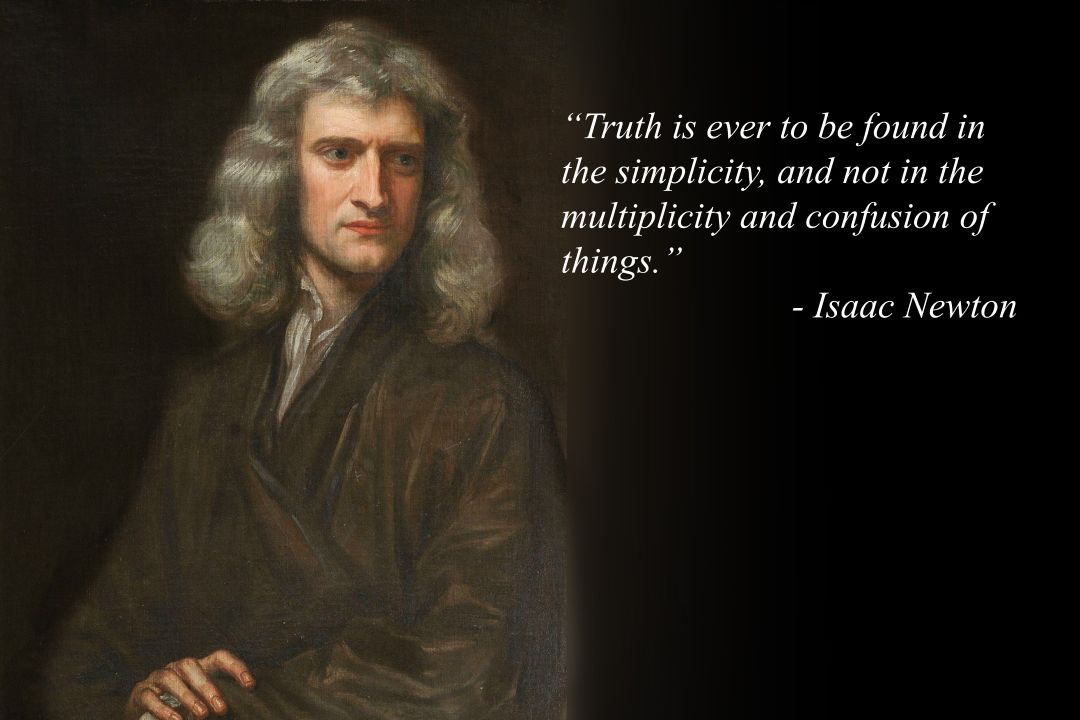
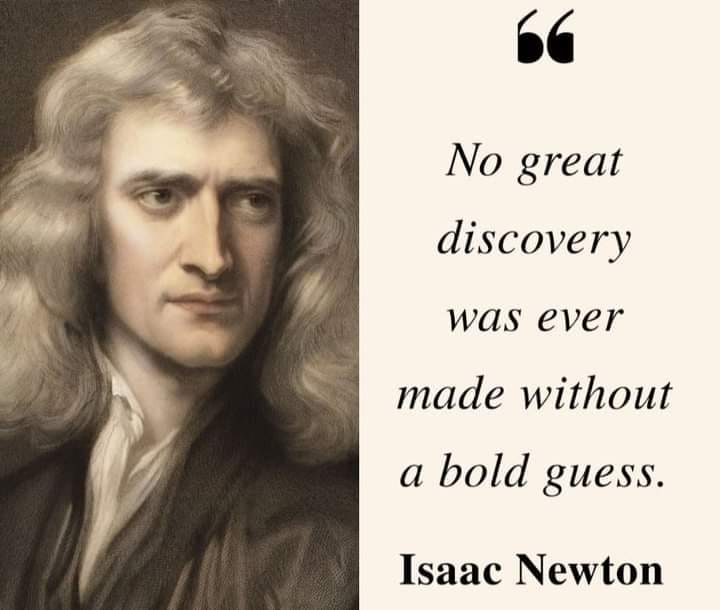
Isaac Newton described all things as the same movement going in and out of time - in and out of eternity - disappearing and reappearing at the speed of gravity, generating the universe as secondary issue.
The cause of movement is the smallest particle of matter - the thought behind every act of movement, running confused throughout the universe.
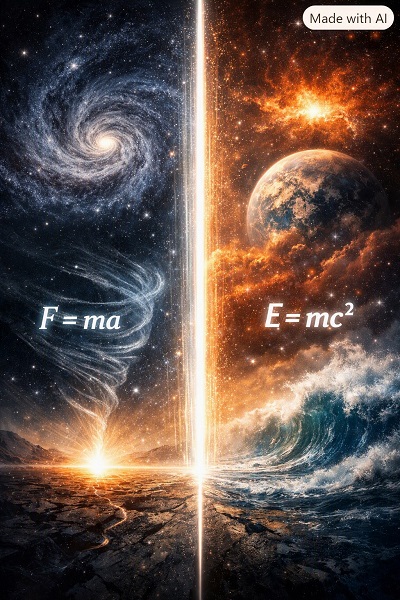
Newton's F=ma is movement out of time, no crash-point on the way, disappearing into the eternal void, repeating until its cause is reconciled.
The sum of who we think we are - all-as-one - is dedicated to maintaining its boxed-in means of survival.
Recognition is the key to reversal: the moment one sees that because energy is movement - all is illusion - a bubble of time.
Recognition is not peace - it is a call to arms.
Jesus said: "I come with a sword."
----------------------------------------
The question begins in the crowd, but the answer rises from the center of thought.
The sum of resistance alive everywhere at once.
-----------------------------------------
And in the end, thought recognizes itself — and we remember. Home was never a place — only the moment thought stops resisting itself.
-----------------------------------------
On recurrence, opposition, and the unity of movement.
On the noun as infinite substance; thought as its attribute.
David Bohm — Wholeness and the Implicate Order
On hidden wholeness, verb‑motion, and the unfolding of thought.
Isaac Newton — Principia Mathematica
On movement in and out of time; gravity as recurrence.
On emanation, return, and the reconciliation of cause.
G.I. Gurdjieff — Views from the Real World
On the trickster’s confusion of reaction for origin.