"What if today, we were just thankful for everything?" --Charlie Brown
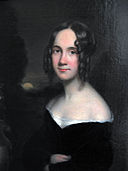
Americans have always given thanks for their bounties and blessings. Whether in their homes or as local proclamations, they gave thanks for everything from their humble meals to the existence of the United States. However, as there wasn't a unifying national day of thanksgiving they did so at different times in different places for different reasons. Enter Sarah Josepha Hale.
Born in Newport, New Hampshire, on October 24, 1788, Hale grew up in a family that set aside a day each year to give thanks for their good fortune. This tradition stayed with her throughout her life and was the catalyst for her efforts in campaigning for a national day of thanksgiving. After her husband's sudden death in 1822, she was forced to go to work to support herself and her five children.
A prolific poet and writer, she used the power of her pen and position as the editor for the influential Godey's Ladies Book to tirelessly lobby state and federal officials for the proclamation necessary to create the holiday. Finally, in 1863, letters to President Abraham Lincoln and Secretary of State William Seward bore fruit. Stating that he believed it would “heal the wounds of the nation,” Lincoln signed the proclamation written for him by Seward, and America finally had its annual national day of Thanksgiving on the last Thursday of November.
Hale was editor at Godey's for forty years, continuing to work until 1870, dying two years later in Philadelphia, Pennsylvania, at the age of 91.
c. 2016
Bibliography
Maranzahi, Barbara. “Abraham Lincoln and the Mother of Thanksgiving.” History.com, www.history.com/news/abraham.lincoln.and.the.mother.of.thanksgiving. Accessed 17 November 2016.
Sarah Josepha Hale.Wikipedia.com, https://en.wikipedia.org/wiki/Sarah_Josepha_Hale. Accessed 17 November 2016.
https://commons.wikimedia.org/wiki/File%3ASarah_Hale_portrait.jpg
|





Ron