Beautiful Hybrids: Alternative Histories and Parallel Worlds by Ian Irvine (Hobson)
Rated "G" by the Author.
Last
edited: Tuesday, January 2, 2024
Posted: Wednesday, November 30, 2022
This article looks at the history and development of the 'Many Worlds/Universes' trope (as well as a sub-trope to do with 'alternative selves') from the 1930s to the present. If you are interested in Quantum Fiction and Science Fiction tropes such as: Alternative Realities, Time Travel (in a quantum context), A.Is. (run on Quantum Computers), Simulated Realities/Universes and 'Paranormal is Normal' (in a Quantum context) then this discussion of the Many Worlds Trope is relevant to you.
This piece belongs to Hermes and Sesheta: (Unheralded) Gods of the New Media Revolution, Vol. 2 of The Collected Works of Ian Irvine (Hobson). (Nonfiction)
Please note: this article was originally delivered as a public talk by Ian presented in the Bendigo (Goldfields) Library, for the Bendigo Philosophical Society, on May 2nd 2016.
As a result of all these sub genres of science fiction, the genre is overwhelmed by fantasy with no basis whatsoever in science. Some good fantasy and some very bad fantasy.
Perhaps the first fanciful tale that is easily recognized is the Odyssey, where real events became heroic and fanciful. And then, the modern era begun by Alice in Wonderland, Gulliver's Travels, The Time Machine and War of the Worlds, to name a few.
While the comic book story, Dick Tracy, had a wristwatch similar to today's mobile phone or smartwatch, I am not sure there was any science fiction that predicted use of the cell phone the way it is used today except in Star Trek. Supposedly, in a far-off future with unrealistic metal spaceships doing "warp" speeds. A very bad analogy to the warping of space theory that may make some parts of visible space closer than the eye (of the telescope) sees. Not an acceleration beyond light speed. And other strange anomalies in modern science fiction like animals that act like human characters.
Why I've stuck with science with the many predictions in my writing. Some of them may actually come true. But those who dream of living on Mars will find it a very difficult and dreary place to live compared to the Eden we have here.
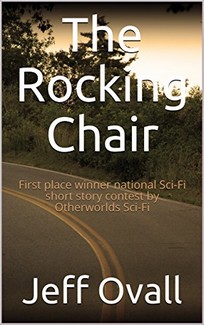
This chair is not your grandmother's rocking chair! In fact, you wouldn't want your grandmother or any loved one near it! So find a well lit room and enjoy an intense read of this Sci-Fi thriller.
Pieces of Eight, Part II is an eclectic collection of eight imaginative novellas that complement the eight tales that appeared in Pieces of Eight. The selections are a blend of different short story/novella plots and themes. Science-fiction, paranorm
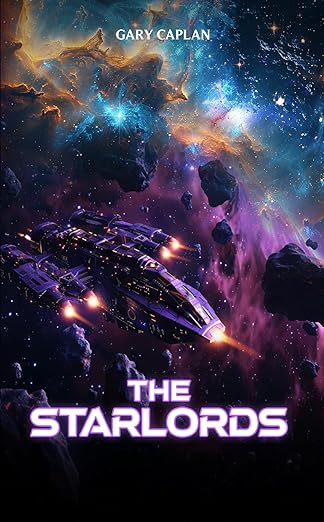
The Starlords is a science fiction/fantasy story about ancient Starlords (old gods) or ancient aliens who along with their scions rule parts of the galaxy.






Perhaps the first fanciful tale that is easily recognized is the Odyssey, where real events became heroic and fanciful. And then, the modern era begun by Alice in Wonderland, Gulliver's Travels, The Time Machine and War of the Worlds, to name a few.
While the comic book story, Dick Tracy, had a wristwatch similar to today's mobile phone or smartwatch, I am not sure there was any science fiction that predicted use of the cell phone the way it is used today except in Star Trek. Supposedly, in a far-off future with unrealistic metal spaceships doing "warp" speeds. A very bad analogy to the warping of space theory that may make some parts of visible space closer than the eye (of the telescope) sees. Not an acceleration beyond light speed. And other strange anomalies in modern science fiction like animals that act like human characters.
Why I've stuck with science with the many predictions in my writing. Some of them may actually come true. But those who dream of living on Mars will find it a very difficult and dreary place to live compared to the Eden we have here.
Ron