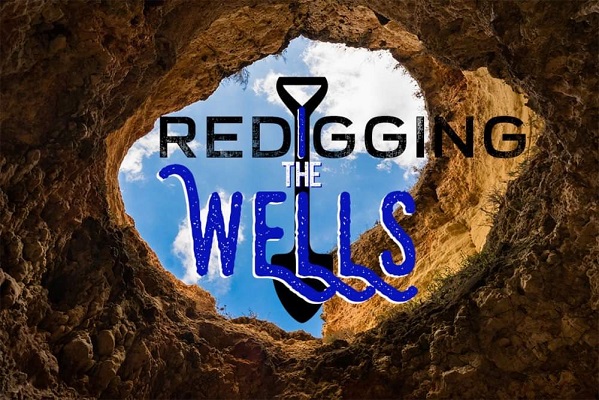
This message reveals God's powerful method for bringing a spiritual awakening to his church. Gain biblical insights to ignite your faith and fill you with hope for experiencing a spiritual awakening in your soul.
Genises 26:18-19) [18] And Isaac digged again the wells of water, which they had digged in the days of Abraham his father; for the philistines had stopped them after the death of Abraham: and he called their names after the names by which his father had called them.
[19] And Isaac's servants digged in the valley, and found there a well of springing water.
In ancient Israel, wells were significant social and economic factors. They provided water and served as central gathering places for communities. People would come to the wells to collect water and socialize, share news, conduct business transactions, and build relationships with others in their community.
Communities often chose their locations based on the proximity of these wells to ensure easy access to this life-sustaining resource. The presence of a well was not just a convenience but a determining factor in a settlement's feasibility and success. Access to a reliable water source is necessary for severely disadvantaged inhabitants to meet their basic needs and sustain their livelihoods.
Access to large amounts of water is essential for animals, drinking, and maintaining cleanliness. Wells played a crucial role in ensuring that herders had a reliable water source for their flocks and herds, supporting food security and facilitating trade. This access to water not only benefited the well-being of the animals but also contributed to the overall livelihood of the community by providing a sustainable resource for animal farming and economic activities. In the 26th chapter of Genesis, we find the story of Isaac, Abraham's son, who reopens the wells his father had originally dug. As he does so, he discovers that one of the same wells now flows with running water, symbolizing the cycles of blessing and renewal in the family's history.
This act powerfully demonstrates the continuity of the blessings bestowed upon Abraham, which are now being continued through his son Isaac. It vividly illustrates the fulfillment of God's promises and his unwavering faithfulness to future generations, highlighting the enduring legacy of faith and blessing within the family line. Researching the lives of the individuals whom God powerfully used to bring revival to their generation can help us better understand the message about God's proven method for revival and the significance of re-digging the wells of revival. Even the prophet Jeremiah speaks a solemn warning to the people of his day.
(Jeremiah 6:16) “Thus saith the LORD, Stand ye in the ways, and see, and ask for the old paths, where is the good way, and walk therein, and ye shall find rest for your souls. But they said, We will not walk therein.”
Beloved, as we reflect on Jeremiah's teachings, we can better understand how God honored Isaac when he chose to honor his father's legacy by re-digging his old wells. This act of reverence and diligence provides valuable insights into the significance of honoring the forerunners of our faith and the resulting blessings. The parable in the twentieth chapter of Matthew, which illustrates a man hiring workers at different times of the day for his harvest, elaborately illustrates God's approach to spiritual renewal and growth. By delving into the nuances of this parable, we can unearth profound insights into God's timing, fairness, and grace regarding spiritual labor and reward.
(Matthew 20:1-7) (1) “For the kingdom of heaven is like unto a man that is an householder, which went out early in the morning to hire laborers into his vineyard.” (2) “And when he had agreed with the laborers for a penny a day, he sent them into his vineyard.” (3) “And he went out about the third hour, and saw others standing idle in the marketplace,”(4) “And said unto them; Go ye also into the vineyard, and whatsoever is right I will give you. And they went their way.” (5) “Again he went out about the sixth and ninth hour, and did likewise.” (6) “And about the eleventh hour he went out, and found others standing idle, and saith unto them, Why stand ye here all the day idle?” (7) “They say unto him, Because no man hath hired us. He saith unto them, Go ye also into the vineyard; and whatsoever is right, that shall ye receive.”
(Matthew 20:8-14) ( 8) “So when even was come, the lord of the vineyard saith unto his steward, Call the laborers, and give them their hire, beginning from the last unto the first.” (9) “And when they came that were hired about the eleventh hour, they received every man a penny.” (10) “But when the first came, they supposed that they should have received more; and they likewise received every man a penny.” (11) “And when they had received it, they murmured against the goodman of the house,” (12) “Saying, These last have wrought but one hour, and thou hast made them equal unto us, which have borne the burden and heat of the day.” (13) “But he answered one of them, and said, Friend, I do thee no wrong: didst not thou agree with me for a penny?” (14) “Take that thine is, and go thy way: I will give unto this last, even as unto thee.”
I am convinced that the scriptures above provide profound insight into God's mind and plan. They offer a touching glimpse into an imminent revival of glory about to unfold. This upcoming revival will showcase God's profound purpose and bring about a transformative and awe-inspiring experience for all who witness it. The parable in Matthew 20 speaks of a man who hired workers to work in his field to bring in his harvest. Note how the Lord of the Vineyard instructed his servants to pay the ones who came in on the last hour as much as he did those who braved the day's heat and how he instructed them to pay them in front of all the others. In this parable, the Lord attempts to show man's greed and glimpse God’s plan for the end times.
The late Smith Wigglesworth stated that God would visit his people in the end-time harvest of souls so great that how he used him would be nothing compared to how he would manifest his glory in the end-time church. Beloved, according to this parable, we can reflect on the day in 1611 when the honorable King James of England made a decree to put God's word into the people's hands, causing people to leave England to discover a land where they would be free to worship. God used this precious moment in history to birth forth ministries such as the Wesley brothers, Charles Spurgeon, Whitfield, Jonathan Edwards, and others in what we call the Word Revival or the Revival of the Word, which we will label Revival number one.
After the word Revival Era, prominent figures like Smith Wigglesworth, William Branham, Oral Roberts, Kathryn Kuhlman, William Seymour, A.A. Allen, Don Stewart, T.L. Osbourne, and others were part of what we call the Power Revival. During this period, God demonstrated his power through signs, miracles, and wonders, marking what we label as Revival Number Two. Following a series of signs and miracles during the power revival, notable figures appeared, such as Kenneth Hagen, Kenneth Copeland, and others who visibly lost their composure and began laughing during their services. This unconventional display of joy, labeled the Joy Revival, sparked criticism from the broader church community. It is significant enough to be recognized as Revival Number Three.
In the parable found in Matthew 20:8-14, Jesus tells the story of a landowner who hired workers throughout the day to work in his vineyard. When it came time to pay the workers at the end of the day, the landowner instructed his foreman to call the workers who were hired last and pay them first. This caused the workers hired early in the morning to expect more payment, but they received the same wages as those hired last. This parable teaches about the generosity and fairness of God's grace, illustrating that in the kingdom of heaven, the last will be first, and the first will be later. Beloved, God is preparing for a tremendous outpouring of his Spirit, bringing millions into his kingdom. Those who come in at the final hour will receive everything that those before us did, demonstrating the glory and anointing of God through the power of the preached word, accompanied by signs, miracles, and wonders. This will bring forth a joyful sound as souls are delivered from trauma, hurts, and depression. The power of God in a revival filled with his glory will touch and change lives for eternity.
1. The Revival of the Word
2. The Revival of the Power of Faith
3. The Revival of the Joy
4. The Revival in Experiencing the Glory
|