Intellectual property is that segment of law that protects the rights of those individuals who create original and authentic works.
Intellectual property is that segment of law that protects the rights of those individuals who create original and authentic works. Because creations of the mind have both recognition and financial benefits, it is, therefore, worth protecting. When we think in terms of new technologies, artistic, innovative and creative expressions, as well as inventions, we think of economic growth as a benefactor that encourages the ability to develop, enhance, produce and create new technologies and processes into jobs. Keeping in mind that there are three main mechanisms in respect to protecting intellectual property in the United States, we will begin to define and become familiar with copyrights, patents, and trademarks as we engage further and find ways to enlighten ourselves, in this particular correspondence.
In researching a few articles, one in particular, found in the Franchise Law Journal – American Bar Association, Francis J. Duffin and Bryan S. Watson wrote about Best Practices in Protecting and Enforcing Trademarks, Copyrights, and Other Intellectual Property Rights. In this article, the authors outlined some of the best practices for protecting intellectual property, which included trademarks, service marks, trade dress, copyrights, patents and trade secrets. Although these authors talk much about franchise relationships and how crucial franchise agreements are in determining the relationship between a franchisor and a franchise, they write candidly, about the importance of trademarks, service marks, trade names, and other commercial symbols and related logos as it relates to business and the need for organized and structured requirements of the intellectual laws and property rights that are associated and that are put in place to protect and provide a fair market value of anything pertaining to an original and authentic work; however, we have to stay focused and remember that those same intellectual laws and property rights, if not handled properly and carefully, could have the propensity to strangle sustainable innovation.
A second article published by the UCLA Entertainment Law Review, written by Joseph D. Schleimer, entitled Protecting Copyrights at the “Backbone” Level of the Internet, discusses the survival of copyright in the digital age and how this can only happen through the implementation of technical measures to block infringements at the backbone level of the Internet. The article goes on to identify the music industry, as it experiences the onset of such developers and service providers like Napster, Grokster, Aimster, Kazaa, Pirate Bay, Mininova, Usenet.com, Newzbin, and Isohunt, etc…, as one of the key examples of the measures needed to prevent illegal music downloads that exceed twenty billion infringements annually. Schleimer writes that “The potent combination of high-speed Internet access, personal computers, and devices such as the iPod, has placed the technology of mass copyright infringement at the disposal of hundreds of millions of consumers. As a result, the incentive structure of intellectual property law, developed over centuries, is in jeopardy.”
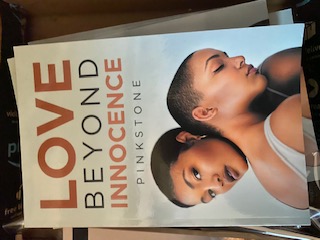
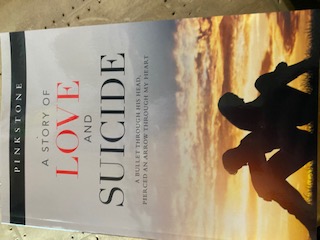
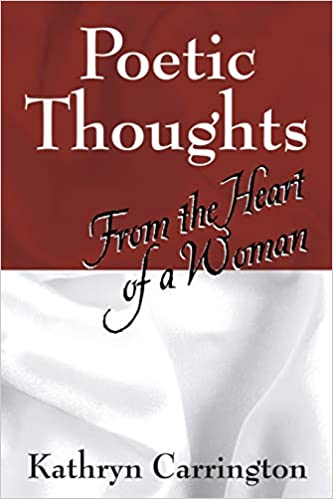
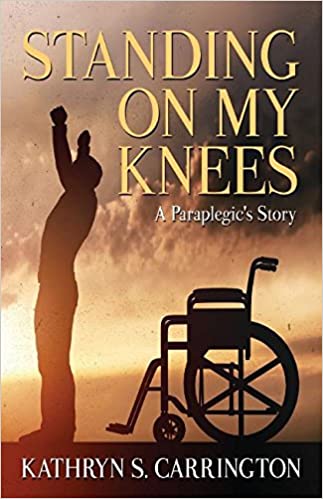
This brings us to the first mechanism of intellectual property that I wish to define and that is copyright. Copyrights protect the mere art of individual expression. This particular segment of the intellectual property experience is close to my heart because I am one who is a creator in the literary world of book publishing, as well as, article writing. Copyright can include books, music, maps, databases, films, computer programs, sculptures, advertisements, paintings, technical drawings and so on. It is with high regard and respect that any individual can have exclusive rights to reproduce their work, publicly display or perform their work and create copied works, as well as, to benefit from their own work. It is just as well that these same individuals are able to prohibit others to do the same of their work, and especially without their permission.
An example of a copyright violation and or infringement is when I wrote a professional article back in 2009 called, The Love of His Country and Its People. I interviewed for a position of which I was contracted to be paid in full. It was for an article and boy, was I excited! It had been my first real assignment as a freelance writer and I was definitely up for meeting the challenge. I had taken the liberty to solicit a close friend to act as my photographer. He and I rode about forty-five minutes from Baltimore to Washington D.C., to do this interview on this particular gentleman that had started a successful money exchange business. I was terribly disappointed to have never gotten paid, not one red penny! I was not given the opportunity to sign or give any permission for its publication, because, as I’ve mentioned more than once, I had not been paid! After complimenting me on such a great and prudent job, the individual took my work, said he was going to read it over and get back to me the next day; but instead, he vanished in thin air with a copy of my hard-earned work. After a year or so, I noticed my article, on the internet. The article had been published as I had written it, word for word, in an African magazine, located in Sierra Leone. This, I knew, was an example of a stolen work of art and a copyright violation and infringement in the highest degree. I felt as if someone had stolen a part of my heart and suddenly hopelessness, confusion, betrayal, and hurt became a part of my very first freelance writing assignment. It is something that I will never forget. Aside from being my very first real freelance writing assignment, it has also been a lesson well learned through inexperience and loss. (See this article in its entirety, including phots, on my website: www.authorsden.com/pinkstone) & Risingstarrbooks.com.
The second mechanism of intellectual property patents. Patents protect exclusive works from being sold or used by individuals, other than the persons who created the original or authenticated work. The three different types of patents in the United States are Utility, Design and Plant Patents. While the Utility Patents protect things like chemicals, machines, and technology, Design Patents protect the way a manufactured object may appear. Plant Patents protect plants in their varieties.
When you have an invention or idea worthy of a patent, you must submit a patent application that includes a written description of your invention. It would be wise to include an explanation of how to make use of the invention. Some examples of things that people patent are rubber shoes for horses, breastfeeding shirts, scanners, animal toys, and ways to exercise animals, chin putter, light bulb changer and most other unusual creative ideas that would raise an eyebrow or two.
The third mechanism of intellectual property is called the trademarks. Trademarks make it easy for consumers to distinguish competitors from each other. When I owned a small pro-construction company, some years back, I remember establishing a certain symbol of identity that I chose for my small business. Aside from the particular symbol, I chose light green and dark green as my company’s colors. It was another way of distinguishing my company from others.
There are some sure and vital ways of making certain and implementing a solid plan to protect your intellectual property. We all know that products and creations can take time to develop and present themselves to markets. We know that products and creations can often be imitated as well; this same creativity can be the catalyst for other companies to create competitive products. Service of products can be provided in an even shorter period if it were not for trademarks and patents. To protect any invention that is new and original in any facet, market or country is an important characteristic of protecting intellectual property as we know it. One website, in particular, is called Uspto.gov., which is the Office of Policy and International Affairs –Protecting Intellectual Property Rights (IPR) Overseas; this office focuses on protecting intellectual property in other countries that extend through out the territory of the United States. I must mention that there is an original office which is The United States Patent and Trademark Office, an agency of the Department of Commerce that is committed to promoting awareness and providing answers to all aspects of intellectual Property Law and Policy.
In closing, and in thinking of ways to educate ourselves on the copyright and intellectual property laws, we know that many of those ways can be read about in articles and journals that are written by such scholars as Duffin, Watson, and Schleimer, as noted in the above paragraphs. Many of our scholars assist us as we think of protecting copyrights and intellectual property, and its importance to the development of innovative and creative thoughts or deeds and the pursuit of knowledge. We must realize that it is a real need for the insertion of those tools into our tool-belts that will allow us to be destined to evolve over the years. A reflected sequential process allows us to create that, which is in us; this sequential process that allows us to hope to share with others. As we begin to pass the torch to the next generation of creators and innovators we must balance the rights and wrongs in terms of opportunities that will ultimately benefit society in general and carefully sustain us as we move towards less and fewer limitations; limitations that will not allow us to easily give up our own rights of that which we work so passionately and diligently to express and then to share with others; it is the invention of writing that allows the passage of knowledge to expand itself in many facets and expose itself to many understandings. The internet is the tool that has made the art of learning a usable passage for people on all levels and from all classes and cultures of societies; it is to this capacity and because of this insight that copyright and intellectual property guard themselves to the highest degree.
References
Bowles, M.D. (2013). Introduction to Computer Literacy. San Diego, CA: Bridgepoint Education, Inc.
Duffin, F. J., & Watson, B. S. (2009) Best Practices in Protecting and enforcing trademarks, Copyrights,
and Other Intellectual Property Rights (The American Bar Association) Franchise Law Journal, 28, 132-180. Abstract retrieved May 22, 2014, from ProQuest Direct database.
Schieimer, J. D. ( 2008) Protecting Copyrights at the Backbone Level of the Internet (UCLA
Entertainment Law Review) 139-168, Abstract retrieved May 22, 2014, from ProQuest Direct database.
Http://www.uspto.gov/ip/igrtoolkits.jsp
www.ashford.edu/students
|