article can be found at this url (just cut and paste into your browser):
http://geography.about.com/cs/calendarsseason/a/winter.htm
December 21 is one of two solstices, days when the rays of the sun directly strike one of the two tropical latitude lines. In 2007 at precisely 1:08 a.m. Eastern Standard Time on Saturday, December 22 (06:08 UTC) winter begins in the Northern Hemisphere and summer begins in the Southern Hemisphere.
The earth spins around its axis, an imaginary line going right through the planet between the north and south poles. The axis is tilted somewhat off the plane of the earth's revolution around the sun. The tilt of the axis is 23.5 degrees; thanks to this tilt, we enjoy the four seasons. For several months of the year, one half of the earth receives more direct rays of the sun than the other half.
The earth's axis always points to the same point in the universe. When the axis points away from the sun from December to March (because of the relative location of the earth to the sun), the southern hemisphere enjoys the direct rays of the sun during their summer months. Alternatively, when the axis tilts towards the sun, as it does between June and September, it is summer in the northern hemisphere but winter in the southern hemisphere.
December 21 is called the winter solstice in the Northern Hemisphere and simultaneously the summer solstice in the Southern Hemisphere. On June 21 the solstices are reversed and summer begins in the northern hemisphere.
On December 21, there are 24 hours of daylight south of the Antarctic Circle (66.5° south of the equator) and 24 hours of darkness north of the Arctic Circle (66.5° north of the equator). The sun's rays are directly overhead along the Tropic of Capricorn (the latitude line at 23.5° south, passing through Brazil, South Africa, and Australia) on December 21.
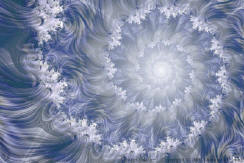
Dear Amber, The picture is more then great, and the description is very instructive, Thank you for sharing this marvel with us. Bravo et mes meilleures compliments Emile
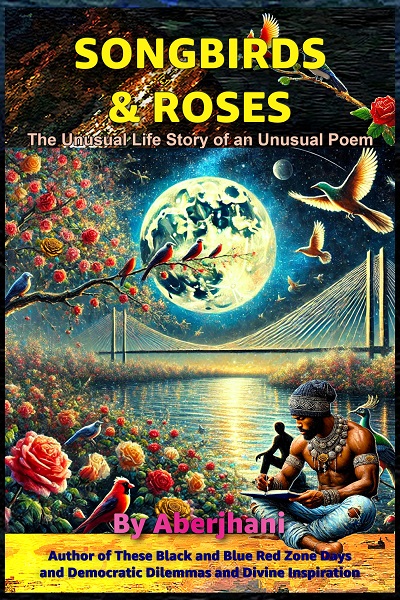
A book of nature inspired poems and essays, written from the heart and soul of a life-long nature, animal, and wilderness lover, and dedicated to today’s children - Earth's only hope for a better tomorrow.
This book won 'The Poetry Category'
Explore the mystery of how nature makes unexpected gifts of creative wonders to an unsuspecting caregiver one late night and early morning in southeastern Georgia, USA.
A book of nature inspired poems and essays, written from the heart and soul of a life-long nature, animal, and wilderness lover, and dedicated to today’s children - Earth's only hope for a better tomorrow.
This book won 'The Poetry Category'




Walt