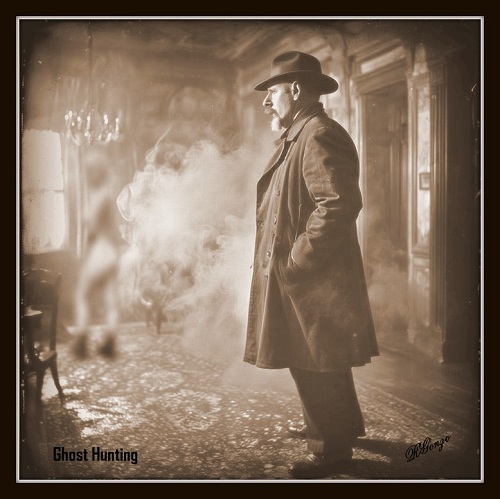
A new essay, based on earlier works, argues that criminology, along with other social studies like psychology, sociology, and theology, operates as a pseudoscience rather than a rigorous scientific discipline. Rooted in the liberal arts, there is a notable lack of empirical rigor compared to the "hard sciences" such as biology, chemistry, or physics. The philosophical nature of criminology suggests that it relies heavily on subjective opinions, confirmation bias, and unverified theories, rather than objective, scientific, evidence-based methodologies, such as those found in biology, for example. The discourse emphasizes the prevalence of belief-driven conclusions in criminology, likening them to public beliefs in the paranormal or extraterrestrial life, which persist despite lacking empirical evidence. With the influence of media, social media, and emotional reactivity, unverified narratives about crime and criminality can perpetuate fiction over facts, undermining the truth. As such, movies perpetuate the "CSI effect," where public expectations are based on erroneous perspectives projected by the media, and lead to misconceptions about the reliability of forensic science.
At the first utterance of such mainstream offensiveness, criminology as a pseudoscience, those offended run to their local 'ministry of truth' to ensure censorship ensues. Renting their clothing, gnashing their teeth, and donning sackcloth of pretentious indignation, the hypersensitive know no limits. Minions fan out to promote the exorcism of liberated creativity. Panels for the sake of homeland security summon the assembly of 'misinformation boards' to make sure fiction prevails over facts. In the alleged spheres of higher education, the 'social studies arena' recoils. In this contrived nexus of the liberal arts, the pseudosciences of criminology, psychology, sociology, and theology take inventory of their axes to grind. Meanwhile, across campus, in the real sciences, for instance, astronomy, biology, chemistry, medicine, and physics, scientific research goes on. But, over in the domains of not-so-much science, philosophers in the metaphysical spectrum proselytize the regurgitation of their 'sciences'.
How many science courses did they take? It is crucial to maintain a healthy dose of skepticism, with a hint of cynicism, and engage in critical analysis when evaluating claims in the field of criminology. Critical thinking is imperative. As to the "gists" and "trists", the counteroffensive asserts its commercial interests. For a light-hearted point of reference, the "gist" refers to that which stems from a Ph.D. in more or less a philosophy, or school of thought outside the hard-core sciences, such as "criminologist". An essence of sorts, a reference point, like a nub or tip of something thought to be true , yet there is no certainty, except by way of illusion. Opinions flourish as if they were evidentiary validation. But, they are no more than subjective prejudice or confirmation bias. Someone somewhere did a study, conducted interviews, observed humans doing something, and wrote a paper.
Subsequently, a panel reviewed the writings and the magical thinking of "peer review" confirmed their own biases. Regardless, scientific validation relative to the studies of human behavior remains definitively elusive, conjectural, and often cunningly deceitful. By collusion, the "trist", or "psychiatrist," went to medical school and then entered the realm of the pseudosciences.
For some criminologists, particularly practitioners with real-world expertise, in this discourse, no offense is taken in accepting the notion of pseudoscience as applied to criminology or any other degree program in the liberal arts of alleged higher education. The word is used to infer that those domains are philosophical in nature and not scientific investigations.
To suggest the notion of "pseudo" is to encompass a wide range of investigative possibilities. As thinking is associated with behavior, and a belief system is connected to ideology, the potentiality of prosocial engagement is conducive to exceptional creativity. One caveat, however. Interactivity presupposes a mature perspective with open-minded attentiveness. From the astronomical to the paranormal, insightful inquiries ponder the capacity for increased understanding. To search the unknown, for the possibility of elevated enlightenment, is a positive notion. Naturally, using the unfortunate superficiality of an online search, the term summons the shallow equivocations of simplistic definitions. A "wiki" response is often a weak reference point. A link or two will immediately infer that "pseudo" means the same thing as "lying, falsification, or a sham". And, worse yet, AI can't quite figure it out either.
There is no science in the "social studies arena" other than the pretense of science. As a minor sidebar, a recent survey of a Ph.D. in criminology at a major public university shows that no science courses are required at the graduate and post-graduate levels. So, basically it's philosophical in contract and "pseudoscience" in pretentiousness. Regardless of such fun and frolic, it's okay to advocate investigative progressions from the standpoint of ideology for a philosophical school of thought. Most of the world operates in that manner, as beliefs are key to the expression of thought processes. Most likely, if an assertion claims that a Ph.D. in criminology is a scientific endeavor, then it may be reasonable to suggest that this is also "pseudoscience." And, on top of that, it's not an insult. Instead, such is a realization of reality. In one survey of beliefs, 76% of the American population believes in at least one form of the supernatural or paranormal realm. From demons, ghosts, and witches, most claim some form of believability.
Added to that is survey extrapolation, which suggests that between 50% and 75% of the population believes that some type of alien lifeform lives throughout the universe. Absent any evidentiary substantiation, the belief prevails. Somewhere between this figure, about 50% or more, think planet Earth is being visited by aliens piloting UFOs. Absent any definitive evidence or scientific application, beliefs are based on opinion derived from spurious sources. How scientific is that? In addition, how many academics in the "social studies arena" share similar ideations? Actually, quite a few. It is one thing to be skeptical and pursue evidentiary confirmation of an unnatural phenomenon by way of critical analysis. It is quite another to assume such things exist absent thorough data analysis, objective measurement, and actual physical evidence. Psychics, like so-called criminal profilers, are plentiful and do the same thing as fortune tellers.
Similarly, following a horrific event, the wannabes assemble. From mainstream media 'news' sources, the streams of memes flow with reckless abandonment of rationality. In the cyber realms of social media, the 'experts' without expertise leap off the psychic cliffs of idiotic conjecture. No one is safe from the foolhardy things the fortune tellers summon from other worlds. Emotional reactivity sells products, promotes agendas, and facilitates reelections. Politicians, pundits, and proselytes of every conceivable belief orientation join the melee of inconsistent, short-sighted rhetoric. Sadly, in a devolving culture, the vast majority of storytellers have little understanding of the psychic depths of criminality, which is viewed as a metaphor for the complex and often hidden causes of criminal behavior. From cause-effect pontifications, the smugly pious claim the momentary sound bites of their fame.
Meanwhile, criminology, as a pseudoscience, remains in the shadowy spheres of imprecise speculation. Whatever the neural subterranean cause of a deadly act, the definitive factors, the elemental components, and the psychic instigations assert an elusive nature. As criminality wears many faces, and on those faces numerous masks, the hidden agenda stays deep in the background. And, so the real-life stage play ramps up the clever deceit of superficiality and magical speculation. The masquerade is always unfolding, transforming, and cunningly deceiving everyone. People are adept at deception, or at least attempting to betray another. Where once caught, the criminal blurs the reality as to purpose. He or she scapegoats people, places, and things with convenient intentional trickery. As some fixate on the cause, others focus on the intent, scope, and purpose. For some, it's a "crime gene". Others claim it's society.
Still, another contingent will blame the mystical notions of "mental illness". In a seemingly never-ending exercise in idiocy, inanimate objects get a lot of culpability. By demonic possession, or other occult influence, the thing took on a life force of some kind. As such, the guns are to blame. Other words come to mind. As to that mention, the "mind" is another metaphor for what the brain does and encompasses the vast psychic unknown world of ideation. As physics, a real science, tries to fathom and figure out the origin and depth of thinking, the mysteries continue. Yet, wannabes of every description, mainly from the realms of the "social studies arena", play "rocket science" with hastily drawn, vague conclusions. At the same time, ambiguities of ideation lurk in multidimensional expanses difficult to comprehend. For which, so little is actually understood or comprehended. But, terms like falsehood, fabrication, lie, untruth, misrepresentation, and fantasy join kinship with fiction.
Facts become intentionally blurred and spared the agony of scrupulous, well-founded investigative research. More often than not, opinion, gossip, rumor, and all manner of inconsistent fallacies wear various masks. In the meantime, at the masquerade ball called Criminology, many pretend to have reached the final conclusions. In a recent article by a skeptical inquirer, the inquisition continues. Poking a poignant placement of critical assessment, the suggestion subsumes the saliant observation that the multi-faceted criminal justice systems in the US have a significant problem. And that is the connection to what is commonly referred to as "forensics." Or, so frequently alluded to, the mystical world of "forensic science". Such repetitive regurgitation imagines something sounds so excitingly scientific. However, the complication arises when science intersects with real-world experience.
Not only that, but also the background and skillset of the alleged "forensic scientist". There is a high probability of egregious error in the application of unreliable, questionable, and untested tactics and techniques relative to criminal investigation. From crime scene to courtroom, scientific validation is critical. The entire realm of "forensic science" has been called into question. By comparison, if the domains of "science" used in the world of criminology are questionable, then it follows that so is the philosophical basis in the various schools of thought. To this end, the suggestion is cultivated that exceptional conjecture assumes too much viability as to the reality of cause and effect. An age-old admonition concerning etiology versus teleology moves to the forefront of further consideration. All aspects of human behavior where natural organic processes cannot be substantiated, identified, and calculated are potentially arguable.
This then leads to additional exploration of a more inclusive realm of pseudoscience application. Misleading, erroneous, and fallacious conceptions come to mind given the diverse schools of thought permeating the academic nexus of criminology as a field of study. In all probability, the only science to open the door to scientific authenticity hides in the crime lab.
As to that honorable mention, nothing is foolproof. Forensics in the police world is under severe scrutiny to prove whether it is science or pseudoscience. From a magazine devoted to skepticism, a writer looks into the conceptual framework of scientific methods used in the crime lab. Reflecting concerns by the US. Congress, notoriety over what constitutes hard sciences becomes more and more controversial. With the advent of DNA in crime solving, questions arise as to what constitutes scientific provability. A distinction between real science and that which may not be an exact science potentially collides in the courtroom. In a court of law, lives are at stake.
Clear and convincing evidence, supported by scientific authenticity, is essential; opinion evidence or expert opinion testimony regarding an evidentiary matter warrants close inspection. Hard-core components of crime scene investigative processes, such as fingerprints, body fluids, and firearms, are receiving closer analysis. Questionable methodology raises concerns. At the same time, the phrase "junk science" comes to mind. Or, maybe the workable term is pseudoscience. While "junk science" is not necessarily a positive thing, especially for a criminal case, pseudoscience relates more to the belief systems of the investigator. His or her philosophical perspective portends critical implications for the investigation. Bias is a part of that. And, bias influences conclusions, outcomes, and generalizations. And given the levels of preconceived notions, if DNA can be called into question, then what about alleged "behavioral analysis"?
Where body fluids go under the microscope, for instance, how does one look inside a brain to analyze motivational factors? The answer is that one aspect of an investigation calls upon scientific authenticity, and the other is a philosophical adventure. Criminology, not unlike its liberal arts counterparts, psychology, sociology, and theology, remains in the underworld of pseudoscience.
In one college textbook for a criminology class, the author defines criminology as the "scientific study" of crime and criminals. Yet, no effort is undertaken to distinguish the definitional criteria as to what constitutes a "science". Or, for that matter, what is included in the "scientific study"? The inference seems to suggest criminology has some relationship to a science. However, much of the textual commentary is about what others have said criminology is about. In subsequent discussion, reference is made to the "scientific method".
This, in turn, is said to be that which suggests research that "predicts" and "explains" so-called "social phenomena". That seems nebulous at best, and specious at its worst. Then the textual materials go on to address various opinions about criminality. Various theories are presented demonstrating that there is no single framework that explains every possibility relative to human social dysfunction. Delving further, it gets confusing. As no single theory accounts for all possibilities in the spheres of criminology, which one is correct? Perhaps a fun metaphorical implication is the suggestion that maybe criminology is akin to cryptozoology. Whereas criminology is generally a philosophical adventure into "criminogenic metaphysics" posing as a science, so is the chase of mythical creatures. Cryptozoology has long been considered a pseudoscience in the scientific community. For many realists, particularly criminology practitioners (i.e., police), so is criminology.
As to the role of hypothesis, as suggested by one so-called criminal justice text, the alleged scientific method is based on theory. Theories are based on observations, and observers often bias observations. Some researchers claim that a variety of "experimental" exercises were used to support their theory. In the "social studies arena", a theory is basically speculation attributed to a belief system or other thinking systems. Sometimes called schools of thought, scientific efficacy becomes a nebulous hunt for evidentiary sufficiency. In the criminal justice spectrum, especially in a court of law, scientific viability is absolutely critical. Pseudoscience is not particularly popular. By contrast, though, in the world of movie making, alleged reality television gives new meaning to fake news. As in the hunt for Bigfoot, in the context of cryptozoology, the cryptids remain elusive, with no scientific evidence substantiating their existence.
Numerous "monster hunting" reality television shows testify to the deception rampant in the infotainment industry. One show in particular has been hunting Bigfoot for nearly a decade. And yet, no evidence has been discovered or otherwise revealed. With the immense popularity of such mystical topic areas, audience appeal remains enticing. Since the American population believes in some aspect of the paranormal, viewership is assured. From purported criminal profiling to body language analysis and the polygraph, the topics seem hauntingly right out of a reality TV series. Or, a metaphorical strain of some hybrid manifestation of cryptozoology. Policing and its umbrella field, criminology, are similarly filled with a variety of theoretical constructs. Hoping to be taken as some sort of serious scientific endeavor, criticism as to the validity of such practices continues. Viability strains at the demanding prospects for authenticity beyond a reasonable doubt. Remarkably, fakery appears in every venue of interactivity.
It is particularly prevalent in investigative processes where fact should triumph over fiction. No matter how much effort is made to dissuade misinformation, or as known in the field of criminology, the "CSI effect" remains stronger than ever. Where wishful thinking asserts emotional reactivity, anything is believable, but perhaps also inaccurate. Not knowing sometimes encourages the ignorance of the pleasures of the unknown. As a shortcut, "science" becomes metaphorical in a warped transition into a nonreality for the sake of intentional gullibility. Such academic nausea pervades every textbook in the "criminal justice studies" realm. And, in the process, superficial data devolves to sleight of hand, legerdemain protocols, and magical thinking. Nebulous notions provoke the never-ending saga of Neverland revisited. It's a mythic place, especially in academia, where no one needs to grow up and gain mature insight into life.
For the horrors of intense transformation to higher levels of profound enlightenment, the paths always taken stifle serious innovation. Regurgitation, redundancy, and incessant repetition contrive to maintain the devolution of the status quo. Where fantasy becomes fact is typically where social media meets mainstream opinion pretending to be reality. Everyone is an expert, and no one knows expertise, but fame is in the game. Ten years ago, an article appeared in a major national news publication announcing a failure of alleged "forensic science". It was a press release that the public and news sources seemed to react in a state of sleep mode. As though yawning about the probable repercussions and inferences relative to the field of criminology, not much fanfare erupted. An admission was made by a major federal agency that in one component of "crime scene analysis", technicians had made serious errors.
Pseudoscience resonates across mainstream culture. Such specious conjecture is announced nearly every week on social media. A "new" theory emerges based on questionable research, and miraculously, the notion is accepted without question. That's what the liberal arts are all about. Not science, but instead, a philosophical adventure based on opinion, rumor, and gossip. Metaphysics is not real physics, no matter how many pod cases a person projects across the internet. Who are the "unindicted coconspirators"? Well, there is a cast of thousands in the unfolding saga of criminology desperately wanting to be a real science. Unfortunately, this is not the case in the post-modern era. When asked whether criminology is a science or a pseudoscience, someone should respond, "Yes, there is science in the crime lab with real scientists." Many questions should focus on what that means in terms of reality.
|










For example, during my study for my master's degree in biotechnology [human factors engineering] I attended many seminars where pseudo scientific methods were used, but had to take courses where I had to learn how to use partial differential equations and other mathematical methods never used in the process of trying to improve the function of human minds and bodies.
Criminology for all of it faults you have described, has been improved greatly recently with the advent of DNA testing leading to the surprising conclusion that much of the justice system is unjust and condemned people based on hearsay by rumor and biased eyewitness identification.
I have never watched the CSI television programs. I have recently watched Tracker and find the handsome fellow I realistically always finding what he's looking for and remarkably lucky when he gets in trouble. A bit entertaining but total nonsense.
What about all those medical shows? My doctors are a lot more human than they used to be.
Ron