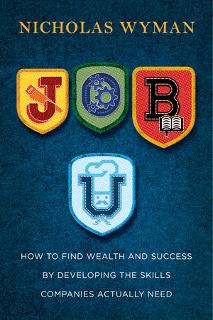
Job U: How to Find Wealth and Success by Developing the Skills Companies Actually Need
Nicholas Wyman is an apprenticeship expert and CEO of the Institute for Workplace Skills and Innovation. He advises and develops programs for companies such as Nissan, Mercedes Benz, Citibank and Coke Cola on how to recruit, train, retain and "reskill" employees. A hands-on leader in the field, Wyman is dedicated to closing the gap between education and employment around the world. ~ Excerpt from Amazon Biography
Guest article by Nicholas Wyman
How to gain the education and skills that really matter to companies and employers (while remaining debt-free)
Student loan debt is 1.2 trillion dollars, 14 million Americans are unemployed, and yet 3.5 million jobs remain unfilled. That’s because many young people are graduating from college with a solid footing in liberal arts subjects, but little to no exposure to, much less training in, the technical and practical skills many of today’s jobs actually require. This is the cause of the supply-demand imbalance—also known as the job skills gap— that has major ramifications for individual job seekers and companies and for the economy at large.
The Author shares many solutions and findings in his book JOB U: HOW TO FIND WEALTH AND SUCCESS BY DEVELOPING THE SKILLS COMPANIES ACTUALLY NEED. One major, and perhaps surprising takeaway, is that many people do not need to go to college to fulfill their career goals and dreams. Instead, they can pursue professional certifications, associate degrees, apprenticeships, or occupational learning.
JOBUBook.com
Job U: How to Find Wealth and Success by Developing the Skills Companies Actually Need



Companies have always wanted educational institutions to provide vocational or technical skills to meet their requirements. They often give huge sums of money to schools who provide these skills. Unfortunately, technical skills tend to change greatly over time, and just because one is trained in a particular skill a company wants or needs, technological requirements will change and that person's skill will become obsolete very quickly in a highly competitive environment.
The difference between education and technical training is immense. Educated people are flexible and have the ability for self learning and self-improvement, just the kind of skills that companies really need. Those that are trained in particular skills and get certified in those skills, must continually spend their lives retraining and becoming more specialized and recertified to continue to advance and stay employed.
The primary problem that young people today face (along with their parents) is to pay a high price for college that they think will guarantee them a job and a tendency to pay for that education (not training) with loans and spending practices (must have a new car and the latest social media devices, consumptive excess.) And then, they avoid (they did in my day, as well) taking the courses in math and science that are necessary to really get ahead in favor of "easy" courses, just enough to get a degree.
What companies want for a work ethic, most young people don't have a clue. Tattoos and earrings may make you popular, but they're deadly in a job interview.
Ron