|
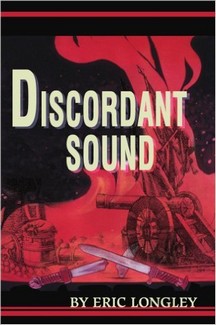
Part of an essay that appears in my new book, *Discordant Sound.*
Certain activists believe that they have discovered a key failing in the American political system.
It seems that there aren’t enough felons involved in politics.
Not enough felons? I would have thought that the problem went in the other direction: We have too many felons involved in politics already. No, say the activists, this is not the case. The problem is that convicted felons lose the right to vote. Different states have different rules about the disenfranchisement of felons. Some states deny felons the vote so long as they are in prison. Others say that felons cannot vote for a specified period after their sentence expires. Some states say that convicted felons cannot vote until their political rights have been restored, either by a reversal of their conviction, a pardon, or some similar method.
All these laws are under attack. The attack began in the pages of scholarly journals (see “Judicial review and criminal disenfranchisement in the United States and Canada,” by Christopher P. Manfredi, The Review of Politics, Spring 1998;“Once a felon, never a voter?” by Meg Twohey, National Journal, Jan. 6, 2001; “Restoring the vote,” by Miles A. Rapoport, The American Prospect, Aug. 13, 2001). From there, it is already percolating into the law journals, and the cause of votes-for-felons has been given a qualified seal of approval by a distinguished commission including two ex-Presidents.
Felony-disenfranchisement laws are included in the constitutions of the several states. These laws are of varying degrees of severity, depending on the state. If the enfranchisement of felons is to be left to the people of the states-whose approval is needed before state constitutions can be changed-then the cause isn’t going to go much further. I don’t see voters marching in droves to the polling places to endorse the pro-felon views of the intellectual classes.
But this issue might not be left to the people of the states to decide. The issue has all the hallmarks of a dispute which shall be “resolved” by a federal court decision, perhaps even a decision of the U. S. Supreme Court. The pattern of federal court decisions usually involves an idea being introduced into the kinds of journals intellectuals read, then the idea being discussed in law journals and endorsed by prominent commissions, followed by one or more federal court decisions embodying the idea in law, thereby bypassing the people themselves. The process is familiar. I see the signs. Will the federal courts get on the bandwagon of the votes-for-felons movement, or will the federal courts, for once, leave well enough alone and let the people of the states decide the issue? I don’t know, but I know that the issue is already on the agenda of the federal courts, and the courts may start issuing their opinions on the subject. You have been warned.
[end of excerpt]
|