|
How do you infuse character emotion into a fast-paced action novel?
Fiction Craft: How Much Emotion?
By
Robert Ferrier
(rferrier2.cox.net)
Question: How much of a character's feelings should you include in an action-packed novel?
Answer: All novels require emotion. Two-dimensional characters devoid of feelings will bore readers. We want to experience the full range of a character's emotions.
Yet action scenes allow no time for feelings. So how do you inject emotion into a fast-paced story? By using the techniques of sequel and viewpoint.
Using Emotion in a Sequel
A sequel shows the character's reaction to a previous scene. The elements of sequel include: emotion, dilemma, analysis, decision and new scene goal. The more devastating the scene-ending disaster, the more emotion in the sequel. A sequel gives the character time to bleed, physically and emotionally, and the reader time to catch her breath. By injecting emotion at this point, we develop the character and gain reader empathy.
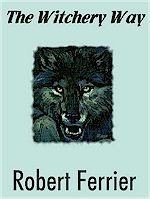
Here's part of a sequel from my suspense novel, THE WITCHERY WAY. Note how emotion infuses the passage, especially the last line of the first paragraph.
Isaac Sixkiller walked through the woods at midnight. The moon hid behind clouds, and that was both a curse and a blessing: a curse because his eyes failed him now, and a blessing because the nightwalker was less likely to see him. He used his snake stick to brush aside the thorny stayawhile and greenbriar. He had walked these hills for decades, and he knew every blackberry hedge, creek, pine and oak. But now, in his seventy-fifth year, he had lost his zest for living, and the trees no longer felt like friends.
The smell guided him toward his goal, and it was a bad smell, like death. He stopped, sniffed the air, and honed in on the source, for there he would find his quarry.
Isaac climbed up a ravine, feeling his bones and muscles screaming in protest, his lungs on fire, his skin scratched by thorns. He was rotting inside with lung cancer that would kill him soon. But he would use all his strength this night to say the i:gawe:sdi, the incantation necessary to kill a human masquerading as a wolf. But to do this, he must see the wolf for the fourth straight night.
Then he smiled in satisfaction.
The nightwalker, clothed in wolf skins, moved up a hill thirty yards away.
Using Emotion in Viewpoint
Viewpoint enables the reader to experience a character's actions and thoughts moment-by-moment within a scene. Elements of viewpoint include: emotion, thought, intent and physical senses (sight, hearing, touch, smell, taste). The first three elements -- emotion, thought and intent -- represent three different forms of internal dynamics. While in viewpoint, we feel the character's emotions, know their thoughts and especially their intent -- usually the goal of an upcoming scene. Combining these elements with physical senses further cements readers into the character's viewpoint.
Here's an edited segment from my novel, DEAR MR. KAPPS. The viewpoint character is 14-year-old Rafe Mackey. He and a friend visit a Hollywood on Wheels exhibit.
When Marvel and I walked into the lobby, we stopped and gawked at a guy dressed as a 7-foot Chewbacca. I smelled hamburgers and popcorn. Old people walked by with their grandkids. Some wore the brightly colored costumes of Star Wars characters. Two teachers from Kennedy School waved. Some girls walked by and flirted with us. (Well, I felt some flirting that bounced off Marvel.) I felt the vibes of movies I had seen: Lord of the Rings, Harry Potter, Star Wars. They had made me laugh, or cry, or had frightened me. I remembered a Ty-Rex gobbling a guy in Jurassic Park.
We entered a room filled with Hollywood stuff. I saw hundreds of props: dinosaur models, dresses Madonna had worn, Leonardo DiCaprio’s tuxedo from Titanic. I put on a virtual reality helmet and punched a button. Suddenly I was thrust into a world of volcanoes; reptilian birds swooped toward me. I used hand controls to escape into a cave, only to be chased by a saber-toothed tiger into a pool of quicksand. I removed the helmet and fled down the aisle. There I saw a display of movie and television scripts. As I flipped through the pages, the author's words felt more powerful than anything in the room.
Copyright 2002 Robert Ferrier
|