
Computers help writers get published.
The Wonderful World of Computers
Two decades ago, computers were enough of a novelty that editors were looking for writers capable of spelling "computer." Few writers used those electronic monsters. Even fewer considered them handier than typewriters.
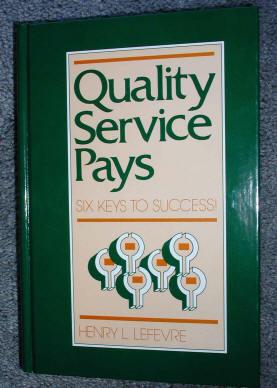
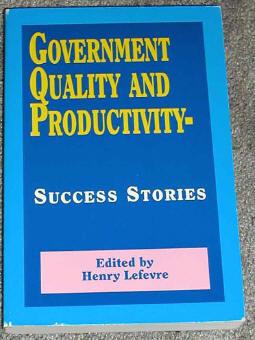
Those were the dark ages. If you couldn't spell, you were in deep yogurt since many editors majored in English. If you misspelled more than a word or two you stood a good chance of being rejected, no matter how well you wrote. During 1980, I spent more time checking my spelling than I spent writing. I didn't dare write any books until I had a computer smart enough to do most of my edits. I now have three books to my credit. They are: "The Good and the Bad News About Quality," and "Quality Service Pays," and "Government Quality and Productivity --- Success Stories." I've also sold a number of short stories, vignettes, humor pieces, and "The Good Old Days" pieces. Now that I'm older than either Adam or Eve, I have been limiting myself to a column per month with "The Senior Perspective" plus a few Internet scribbles.
Am I stretching the truth? Not really. I do have a grandson named Adam.
Today, we find that there are still lots of editors who majored in English. However, we have a few crutches like spell checkers, grammar checkers, and many other quite useful tools. I use them all. When editing, however, I find that those stupid electronic spell checkers can't differentiate between two, to, and too. If an improperly used word is stored in the software, the computer assumes that the spelling's correct.
Internet Access
Good Internet access is critical. You can use it for Googling, finding editors, and selling stories, among other things.
1. When Googling my own work, I access http://www.google.com just like I access http://www.writing.com when I want to look at this web site.
2. I typed in "Henry L. Lefevre" in the "exact phrase" window (without quotes) as a first step in finding out which of my articles attracted the Google search engine's attention. The advantage of using my whole name is that this practice screens out most of the web postings that apply to other Lefevres, and there are plenty. Lefevre is a common name in French speaking countries.
3. Then, I Clicked "Google Search."
4. The last time I used this approach, the first two articles I found mentioning Writing.com were "Hibernation," and "How to Fly Cheap." That means that I did something right when posting those two articles on Writing.com.
5. My next step was to visit http://www.writing.com. Then I clicked on "portfolio." Then, I selected "Hibernation." Finally, I clicked on "edit." I reviewed the "relevant words" option, in order to find out why "hibernation showed up so early on the list.
6. Oddly enough, when I posted "Hibernation" on Writing.com, the only "relevant words" I listed were "hibernation" and "spring." I assume that "hibernation" was the most effective word for drawing the search engine's attention since it is a less common word and I used it more often within the article. It seems as though frequency of use within the article and infrequency of use by other writers are two key elements in getting Google's attention.
I use a similar approach when doing my research. It takes less time than haunting the library, it saves gasoline, and it helps me market my writing.
How many of your stories and articles are easily accessible via Google? Check. If you can't find any of your work by using a search engine, you're not marketing your work efficiently. Appropriate key words help get your work noticed. Your writing won't be read if people can't find it.
-30-
|




Funny when I Google my name, you often appear in the posting. And sometimes you hide as a Bob. Ah, so that's what friends are for. Congrats on the "Good Ole Times" publication. Is it out?
Cynthia
Today, it is questionable if editors have English degrees if you could see the misspellings in grammer and words in the rejection letters. Then, some are so prissy about it, it is the laugh of the day. In one of my novels, there was a time span of five years between the beginning of the story and the end. An editor wrote: "We don't do time travel." ROFL. Reading and comprehension are two different animals. Common sense is lacking where publishing is concerned.
Best,
Elizabeth