America’s Wealth Rests on Sanctimony
When Sam Walton died in 1992 he left a fortune in Wal-Mart equity shares to his family members. Today those shares are worth an estimated $100 billion. The actual funds are divided up among a variety of trusts that allow their administrators to avoid paying taxes on them and to grow and perpetuate the fortune. A similar story exists for tens of thousands of others such that the net wealth of America grows and grows with 85 percent of it ending up in the hands of just the top 15 percent of the population. And most of that is held by the top 2 or 3 percent. In fact, of the $74 trillion of household net worth that exists today, $64 trillion is held by the wealthiest 15 percent. Moreover, they are adding to their wealth at a faster rate than are all others—and all because of our inheritance laws. Hard work, skill, education, natural talent, and creativity have a lot to do with creating wealth, but almost nothing to do with how it ends up in the hands of the few.
Wealth has settled into these percentages by group: The rich hold 85 percent; the middle class hold 12 percent; and the bottom 50 percent of Americans hold zero. The other 3 percent is held by churches, schools, and charities. Ours is the most severely skewed division of wealth among all the industrialized nations in the world. The inheritance laws determine that outcome, and they perpetuate it. That is because 98 percent of all wealth in the hands of the wealthy is passed on to their heirs, and 98 percent of all new wealth flows into the hands of the same heirs, thus ownership of 96 percent of all wealth is accounted for by probability analysis as arising from by inheritances.
These additional conclusions flow from the foregoing facts: 1. 96 percent of all wealth in America is unearned. 2. One half the population has virtually no chance of ever accumulating wealth. 3. The notion of equal opportunity for all is a fiction. 4. The notion of upward mobility does not exist for 96 percent of the population.
Most of the foregoing outcomes are the consequence of laws. Indeed, they are well protected by laws. And we are a nation of laws. The latter is but a slogan, however, that does not tell the whole truth. We are also a nation of engineers, and architects, and artists, and homeowners, and creative thinkers, and people with many talents and goals and aspirations. But if you are a member of the poor bottom 50 percent, you have very little chance of ever changing things for the better. Even if you are a member of the middle class (the next 35 percent), your opportunity for improving your lot is minimal.
Laws do not come to us by way of heaven, or by deep contemplation, or by spiritual revelations. They are created by legislators and signed by chief executives who may be acting, individually or collectively, in their own or in accordance with their benefactors’ urgings. Laws can be changed by simple majorities, or by simpletons acting in majority numbers. Either way, you and I are obliged to follow them because we are a nation of laws. But let us not forget: The sanctity of laws is more sanctimonious than holy.
And so I will end with this final observation: The wealth of our nation, currently totaling $74 trillion, rests on sanctimony. Is this what Adam Smith had in mind?


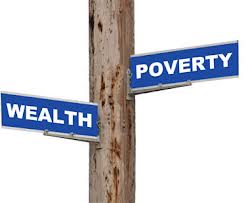




As we sit around our Thanksgiving tables, thankful that we are able to have doctored turkey to eat, the world is being raped for its resources while the rich contemplate what games they will play with us next year in their quest for ever more wealth and who is the richest.
Read Ed Phillips and wise up, America. It's time that equality means fairness to all.
Ron