A First Analysis of the Warren Medicare Plan
These are the times that try our powers of reasoning. Let us not shrink from them. This moment is too critical. There is too much at stake. We must set aside ideologies, narrow points of view, and call upon the wisdom of the ages articulated so well by one of the finest scientific minds of all time in Galileo Galloli when he said (paraphrased) “God gave us a brain, and he expects us to use it.” Our best tools that can be applied to the task of solving the American health care crisis are analysis, synthesis, evaluation, and creative thinking. They must be fact-based, with due consideration for life, liberty, and justice for all. Anything less is unworthy of our task, unworthy of our humanity, and unworthy of our standing in a world that asks us to show that we can meet these challenges and open new opportunities for us and for our posterity.
To begin, free markets are a thing of beauty. They can allocate scarce resources among competing needs and find pathways to fair and efficient ways of meeting our growing needs. For 200 years they have worked well for us and for most of the world. But free markets are not perfectly adaptable to every economic circumstance. The two critical needs of any modern society that cry out for our attention are adequate health care for all and educating our minds to meet any challenge. Anything less is folly.
There is nothing dirty about the term “profits.” But profits cannot be allowed to supersede outcomes when healthy bodies and healthy minds are at issue. Both are needed to make a modern society function well. These are not decisions to be made exclusively by CEOs, or Presidents, or by legislators without special knowledge and skills. Too much reliance on the profit motive in producing vibrant health care delivery system is at the heart of the matter. It is currently working inefficiently, in spite of our efforts to make it so.
Here are the inefficient sources:
Challenges:
1. Our health care system is not amenable to the forces of supply and demand. A market system gives us fair prices and fair outcomes, but only when we have real choices. When too many incomes are too low to meet the high costs of delivery, we have a problem that the marketplace is not solving. A similar condition exists with pharmaceuticals that are too costly for too many. Indeed, our health care system is about twice as costly as any in the entire industrialized world, but with results that are not better, and oftentimes worse.
2. Our health care system is not open to competition, the driving force of a free market. Consumers cannot compare prices because prices are rarely advertised. In addition, consumers are too limited in their knowledge of the terms, procedures, medicines, and a host of related issues so that we might make informed decisions.
3. Health care in the U.S. is currently consuming about 17 percent of our GDP. The costs are rising about twice as fast as all others. A surgical procedure, for example, is often needed whether the cost is $25,000 or $125,000 dollars. This condition in economic terms is known as a highly inelastic demand curve. This demand condition also demands our attention.
4. Wages, salaries, and other incomes within the health care system are about 8 times higher here than in the rest of the world. One reason is because we are not graduating enough skilled practitioners to meet the demand. In economic terms, this is a production-side issue. Entry is further limited by licensing. Most medical professionals are licensed, and licensing requires training in approved institutions that are also costly.
5. Income inequality in the U.S. has become so severely skewed in favor of those at the top that very few in the bottom 90 percent can afford the total costs of health care. We are thus left with a health care system that the great majority of residents do not understand, cannot afford, with virtually no competition, and with both supply and demand curves that are inelastic to price changes.
Discussion. For all the above reasons it should be clear that our health care system is not amenable to the market forces of supply, demand, and competition; nor is it open to entry by a greater number of professionals, nor are the costs of education low enough to attract those with the aptitude but without the funds to seek entry. We also cannot waive a magic wand and bring about changes via legislation because legislators are beholden to lobbyists and to post-legislative careers from the American Medical Association and others.
Out in the “marketplace of ideas” where consumers at least have a voice, the forum is more like that of a high school debate setting than a place where enlightenment is the objective. The winner of the debate too often goes to those who shout the loudest or who rely on name-calling (e.g. “socialism”), or false information (“Europeans pay more in taxes than we pay directly or via insurance; waiting times for services are too long; death groups decide who lives and who dies”). Debates are rarely the pathway to either enlightenment or to change beyond high school settings.
Medicare is the obvious choice as to costs. We spend approximately $688 billion per year for approximately 44 million persons age 65 and over. That comes to $15,500 per person. And that amount is 50 percent more than the total health care bill per person. The higher per person bill is the result of age-related illnesses, that are both costly and they persist.
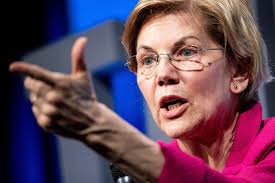
The Warren proposal would cost (by her estimate) $2.05 trillion per year for adding 26 million persons to the rolls, or $7,885 per person. Those numbers are reasonable and in accordance with the data and the issues. They represent a lower total health care bill, one that is consistent with the rest of the industrialized countries in the world.
Expenditures for health care and for education nearly always have a positive pay back, i.e., they produce more in tax revenues than they cost.
That conclusion flows logically from the observation that healthy educated persons are more productive than are unhealthy and uneducated persons. It would also follow that a healthier more highly educated workforce should be paid more than one that is less healthy and less educated. That observation argues for a natural lowering of the income inequality curve, a major factor behind the high costs of the present health care system.
The Warren proposal has a lot of merit. It would (or will) be a “hard sell” simply because voters and other residents do not have the facts and the data from which to reach reasonable conclusions about it. Opponents will certainly continue to “muddy the waters” with misinformation about it. Analysis, synthesis, and evaluation, however, are still the best pathway to enlightenment.
Finally, this narrative is purely for discussion from a top-of-the-head perspective. It has not been fact-checked for more exact data.





Rebecca
While I look at other options offered by the candidates, I believe that I have been leaning towards Medicare for all for all the reasons you have so brilliantly laid out.
Ron