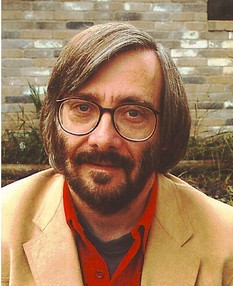
I claim to be a writer. I say I claim it, rather than actually being a writer. I do write things, that is true . But there is always this nagging suspicion that I am fooling myself into believing that I am a writer, and that I am really not one at all. Sort of like a dream state you don’t want to wake up from. But you do anyway, and then lie there trying to go back to sleep, trying to recover the lost dream. The lost dream.
There are lots of people who claim to be writers. Sometimes I do, myself. It’s on my resume that I am a writer. And a decidedly small number of people actually refer to me as a writer.
But there is still that suspicion that I am nothing more than a wannabe writer. I have been trying to put together a first novel for years now. It’s still not even close. Last year I began in earnest to assemble my autobiography. I put in a lot of time on it, at the expense of time on my novel, of course. And now I am faced with the obvious question of how one ever finishes an autobiography. Which question, of course, conveniently delays concern over how one finishes a first novel.
Before the Internet provided easy sources for publication, and easy self-publication, a lot of people used to judge that if they were ever published, then they could call themselves writers. But by now almost everybody and his brother has published something on the Internet. I am published, but I am still left wondering if I am, in fact, the writer I thought I was going to be. And for that matter, if I will ever be that writer.
Some writers (and speakers, and thinkers, and people in general) are more interesting than others. It’s a fact of life. I like to rate authors as to how much influence their writing has on me. Some I tune out rather quickly. Some use a few favored phrasings that I can’t help but find annoying. Some writers I like a lot. And there is this informal rating thing I do, which is kind of fun. It’s one of my quirky character traits that helps keep me aware that I am an individual, not just a carbon copy or cookie cutter replica of somebody else’s ideal or prototype.
When I have found some piece of writing I really like, I typically find several passages in it that I immediately think of as quotable. They are quotes I would dearly love to have written myself, and take note of for future reference, so I can maybe sprinkle them in and around my own words, making mine more interesting by association.
Kurt Vonnegut is an author I really enjoy reading. In fact, it was Vonnegut whose book, Wampeters, Foma and Granfalloons, gave me the realization that I tend to rate writers by the number of quotes I want to surreptitiously lift from their work in order to make my own writing seem more creative. The introduction to that book is only 13 pages long. Yet in those 13 pages I found four quotes I wanted to steal as seasoning for my own work. Four quotes in 13 pages. I later figured out that anything at or above three quotes in a dozen or so pages, meant that I was a devotee of the author in question. Three quotes in a dozen pages is now my hallmark criterion for judging a writer’s influence on me. Three is really good influence. Four is, well, that’s somebody like Kurt Vonnegut.
While it is true I am basically a thief, taking what I like from the best of everybody else’s hard work, it is also true that I am at least honest enough to admit that I couldn’t write anything that interesting myself, and had to use their words instead. I suppose that also means I am, to some extent, a lot closer than I would like to think I am, to being a carbon copy, cookie cutter replica of somebody else’s ideal or prototype.
A friend loaned me his copy of the Vonnegut book, which I had not yet read. I thought he loaned it to me, in part, because he saw a hint of similarity between my own style and Vonnegut’s. I would have thanked my friend for the association, but I was afraid I had misread his observations, and that no such similarity was ever perceived between my writing style and Vonnegut’s.
When I read the introduction and lifted those four quotes, I immediately had an admission to make. I made it to myself, at first. Then I went to my daughter with the admission that here, in this book, is the writer that I should have become and never did, and perhaps never will. Even if my friend did make the aforementioned connection, my reaction was probably not the motivational outcome he had foreseen when he loaned me the book.
I read Wampeters in three sittings, which for me, is another pretty good indicator of my appreciation for an author. My life has very few extended reading periods in its established routine. And aside from the rigidity of the established routine, interruptions to that routine are frequent and numerous. Interruptions include taking the dogs out.
I have always liked animals. House pets can produce an added chore or two, but they make up for it with loads of companionship and entertainment value. As I write this, we have two dogs.
All animals are territorial to some extent, and house pets are no exception. Our dogs are in the house more than they are out, sleeping inside at night. But when they are out in the back yard, they defend it with a vengeance. They once killed one of the neighbors’ puppies, which was small enough to get in under the fence and try to play with the big dogs next door.
Then there was the cat, which mistakenly jumped into the yard one time, and got grabbed by our 60-pound male dog, Caitsith. When I saw what was happening from the distant house, it was all I could do, running as fast as I can, to get there in the nick of time. Caitsith had the poor cat’s entire head in his mouth and was beginning to shake the animal from side to side. My presence, and my shouts, caused him to release the very dizzy feline, which stumbled away and out over the fence when it got its bearings again—clutching one fewer of its nine lives.
Caitsith is the son of our other dog, Peaches, whom I nicknamed, Growly Bitch. I usually can’t resist re-naming our pets with various nicknames to go along with their original monikers. Caitsith became "Big Dumb Dog," for example. He really is a blockhead compared to Peaches, and compared to most other dogs, too, for that matter. He once displayed utter surprise and confusion when he farted on his own tongue. The dumb ones can be at least as entertaining as the smart ones.
Dogs that mostly stay inside have to go outside periodically. Dogs like ours, which are known to climb over the fence and run free for a while, tend to draw the attention of dogcatchers. So the leader, Peaches, is usually walked on a leash, even in our back yard when they are taken outside for the required bodily maintenance breaks.
When you take dogs outside often, you sometimes find that the trip was a false alarm. Those times are usually characterized by a lot of standing around and sniffing the incoming breezes. The dogs do those things, too. But as non-productive as this might seem, it is at least preferable to some of the other things that can happen.
Sometimes when I am out on stand-and-sniff detail, a neighbors’ dog attracts our attention from beyond a board fence. The neighbors’ dog, Rocky, is a bit sharper than Caitsith, but not by much. Rocky aggressively barks at the narrow spaces between the boards in the fence. The larger spaces are just wide enough for him to get his nose about a half inch inside "our territory."
Peaches has actually been known to break one of the 1x6 boards in this fence, in an effort to get to Rocky. Before that board broke, she had gnawed and scratched a hole to about four inches in size, and had one time gotten hold of Rocky’s face, and darn near dragged him through that little hole.
The patch of grass along that fence has become the most vocally disputed and valuable piece of real estate in the neighborhood. And it’s probably a good thing, too, because the rest of our real estate doesn’t have much intrinsic value.
Even when Rocky is not present, the stand-and-sniff brigade can be somewhat entertaining, despite all the standing and sniffing.
Caitsith may not be the sharpest tool in the shed, but he does exhibit an undying devotion and outright need for his mother. Typically, when he isn’t sniffing the air, he has his nose up Peaches’ butt, or is following her around like a lost puppy. And at six years of age, he’s no puppy. Just highly dependent on good ol’ mom.
He is so attached to Peaches, that when she urinates, Caitsith is all over that spot in the yard like the proverbial white on rice. He’ll stick his nose right in the newly wetted grass, and his jaws will start working feverishly, teeth clicking away at about two clicks per second as he salivates over the delicacy. It happens almost every time.
A lot of Caitsith’s life is most appropriately measurable in seconds. His attention span, for example, is about 1.5 seconds. Which is probably one reason he clicks his teeth together twice every second—just to maintain the concentration. I have wondered just how nice it might be to have such a short attention span. Imagine having no worries that lasted more than a couple seconds unless you kept clicking your teeth together. Must be pretty rewarding in its own way. Imagine, as John Lennon might have, no problems lasting more than two seconds. Ignorance is bliss. Actually, ignorance has gotten a bad rap somewhere along the line. Of course it has its place, like all things.
No, you say? That can’t be right? Knowledge is always better than a condition of ignorance?
I don’t buy it, and I’ve got some examples to back it up. And I am not talking about things like whether all swans are white, or how many angels can stand on the head of a pin. My examples are from everyday experience, not things we will have to wait around to determine in some other lifetime.
1. With an apology, a second one, to the late John Lennon, I can easily speculate that I really don’t need to know how many little bumps there are on the textured ceiling of my living room. If I knew this, it would be knowledge that probably took time away from something having at least some degree of importance. For me, ignorance of this superfluous fact, is perfectly acceptable.
2. How much pain and suffering could I withstand before going insane or comatose? Does anybody really need to know that? Is anybody dumb enough to want to know that? Ignorance, perhaps laced with some witty speculation, or historical perspective on how much it took to drive someone else completely mad, is plenty good enough for me. I don’t need to know my limit.
3. If I live to a proverbial Ripe Old Age, I will probably do so without ever having the slightest knowledge of the mouth-watering aroma of Peaches’ urine. I actually prefer ignorance, and will gladly defer to Caitsith’s judgement on "the issue."
I am sure there are more reasons besides irrelevance, counter-productivity and distaste. But those examples should prove my point that ignorance can be the preferred condition to knowledge in certain circumstances. Now, I am also sure somebody will step up at this point, and suggest that with pheromone research, or some other scientific adventure story, there is a definite place for the knowledge of things like the flavor, texture and aroma of Peaches’ urine. That’s fine by me. By all means, if that’s what blows your skirt up, come on over and try to get in there ahead of Caitsith. For me, ignorance is the preferred condition.
I guess that brings us to the subject of science. Vonnegut’s book has a pretty good analysis of the limitations of science in his article, The Mysterious Madame Blavatsky. Back in the 1800s when Blavatsky lived, she was not so much compelled to be anti-science—in fact, according to Vonnegut, the converse is probably more true —that science was compelled to be anti-Blavatsky. A naturalized citizen originally from Russia, she was a world traveler and proponent of mystical and occult information.
The edifice of science, which even back then was beginning to assume an all-powerful control over the assumptions and beliefs of the populace, was stirred to rebuke her assertions that paranormal activities existed on levels to which the scientific community did not have access. The scientific community, as it is wont to do, reacted rather negatively.
Vonnegut’s assessment was that Blavatsky’s "most important contribution to American intellectual history is this: She encouraged a lot of Yankees to suspect that spooky aspects of foreign religions might not be the claptrap scientists said they were." Indeed.
Science still has a stranglehold on our Western minds. But there are things science can help us with, and other things it cannot touch, no matter how diligently some boneheads try to apply it. It, like you and me, has its limitations. I once read another very interesting book about how science rejects ideas outside the accepted norm, and encourages only ideas compatible with the existing edifice of scientific awareness. The case of the midwife toad, by Arthur Koestler, reveals a fascinating story about the politics involved in scientific inquiry. It is recommended reading.
Science has given us some indispensable knowledge. But it has also given us a lack of tolerance for certain ideas, like the spooky aspects of foreign religions. It has also given us definitions like the one for the Swan, which had to be amended considerably when the rare black ones were discovered. Science is not universally applicable. Nor is it the only path toward certainty. And it does make mistakes, particularly when it is applied in areas where it does not belong, or when its definitions are drawn too broadly. If ignorance has its place, so does science. And as far as I know, nobody has yet successfully used science to determine the number of angels that can coexist on the head of a pin.
Writers can be interesting, like a Kurt Vonnegut, with newly coined words such as Granfalloons, or not. Dogs can be smart or not. Ignorance can be rewarding in its own way, and science can be inappropriate and inapplicable. And with things in this world like entertainingly dumb dogs and spooky aspects to foreign religions, I do not need science, or any other edifice of established knowledge, to reassure me that I am a writer. I can seek that reassurance in the everyday moments of life, so long as I continue to write about them.
Ó 2005, Dan Cooper