A Patients' Perspective on life with the debilitating disease Chronic Fatigue Syndrome.
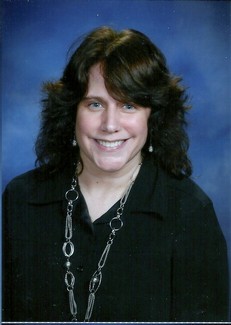
Living With Chronic Fatigue Syndrome By Beckie Butcher, Author of My Battle With Chronic Fatigue Syndrome. My name is Beckie Butcher. I was born and raised in Elgin, Illinois and am a 1982 graduate of Elgin High School. In 1997, I conferred an Associates Degree in Applied Science in Medical Laboratory Technology from a local community college and worked as a lab technician in several hospitals and laboratories. My interests are cooking, knitting and gardening. In 2007, I was enjoying my life which included work, church activities and entertaining friends when chronic fatigue syndrome interrupted my life. I literally saw clouds in front of my face (brain fog). It was almost as though I was having a stroke. My limbs felt like there were anchors tied to them and my muscles felt like someone was playing tug of war with them until the fibers broke. My joints felt like someone was stabbing them and my bones felt like someone was taking a hammer and shattering them into tiny pieces. I was too exhausted to form words much less hold a conversation. I also noticed I was more sensitive to light and sound. Television bothered me and normal indoor voices drove me crazy. I couldn’t stand it. I thought it was me until I heard somebody call it “sensory overload.” Unable to work, I was facing financial hardship and the possibility of losing my home which I had just purchased. I made an appointment with my primary care physician who was unable to find anything wrong. She ordered lab work and sent me to my neurologist the next day to make sure she hadn’t missed anything. He couldn’t find anything wrong, either. He said he would order a viral panel (Chronic Fatigue Syndrome is thought to be caused by Epstein-Barr Virus) but he wanted to wait until the previous lab work came back. I told him no, he had to order it then, because I knew something was terribly wrong. Besides, I knew what the results were going to be; normal. They always were with me and they always are when you are looking for CFS. That’s what makes it so hard to diagnose. Routine tests always come back normal. I was right, there was something terribly wrong; chronic fatigue syndrome, that’s what was wrong. Although I had an answer and could now be proactive regarding my health, I was still pretty shaken up. My entire world had been turned upside down and life as I knew it for 43 years was over. I remember lying on the couch flat on my back in excruciating pain hoping I wouldn’t live long. I felt worthless and became severely depressed. On top of that, people I loved and trusted the most turned their backs on me, unwilling to deal with me or my problems. I turned angry and bitter, becoming a dark, ugly person whom even I detested. I wondered why I was even here. I was no good to anybody. I wanted it all to stop; the excruciating pain, the extreme exhaustion, the sense of worthlessness, the financial burden, all of it. I didn’t care anymore. Although my true friends reassured me I still had a lot to offer and I was still loved, I didn’t see how or why. I seriously considered taking my own life at this point. I did, however, find some relief through an upper cervical chiropractic treatment, an adjustment in the neck which allows the body to heal itself known as the NUCCA method (National Upper Cervical Chiropractic Association). For more information about NUCCA, visit NUCCA.org. Most people were very kind and loving towards me. Most tried to understand my illness and were willing to work with me. Then again, some were downright cruel and heartless, accusing me of exaggerating and making it all up. Who could make this stuff up? Some laughed at me and didn’t believe I couldn’t walk ten paces without feeling faint; but it was true , I couldn’t. They didn’t believe me when I described how horrific the pain and exhaustion was. They didn’t try to understand it much less accept it, and I wasn’t accepted into their lives anymore, either. As terrible as this all may sound, I survived and I would like to share some ways you can help. Shop, make meals, help clean house, do laundry, etc, but if the patient says they’re strong enough to do something for themself, then let them do it. Letting patients do some things for themselves will give them a feeling of self worth and they might even feel better about themselves. For me, the worst part of having CFS was the loss of independence. It about killed my spirit. The sudden change from a strong, independent, self-sufficient woman to a totally dependent woman was more of a blow than I could handle. I would have much rather died than be the burden I was to everyone. Show love and support. Let us know we still have value. Low self esteem, at least for me, was a big issue. Since I couldn’t contribute to society or give of myself anymore, I had no self worth whatsoever nor did I feel like I had any value as a human being. We need to know we are valuable to you in spite of our situation. Like anybody who struggles with illness, we need love and reassurance also. Visit, call or send cards. Another hardship of CFS is isolation since we’re not able to get out much. Just a simple thinking of you card or a quick phone call makes my day. You don’t have to talk long, just a quick “hi, how are you, just wanted to let you know I’m thinking of you,” makes all the difference in the world. Respect the need to prioritize. There is nothing logical about CFS and there is no set pattern to it. I’ve been known to fall over in seconds, so be ready to cut plans short at the first sign of fatigue. Create new fun. Instead of going to dinner and a movie have a video night with snacks instead. This way if the patient suddenly becomes exhausted he or she may lie down if they have to. Last but not least, educate yourself. Solvecfs.org is a very informative website with wonderful resources for both patients and caregivers. One such resource is an online newsletter called Research 1st. It has all the up to date information on the war against CFS as well as links on how to help with the cause such as advocacy and donations. In addition to ways to help, there are also ways not to help. Don’t try and “fix” it. You can’t fix it, but you can be there to love and support us. Please don’t “diagnose” us; please don’t tell us, “It’s not that bad.” It IS that bad. Instead of helping, what you’re really doing is minimizing the seriousness of a very real and very painful disease. Remember, we have already been diagnosed by the experts. And please don’t offer medical advice. If the doctors can’t cure us, neither can you. Avoid making comments such as,” Well, you’re a lot better off than most people.” People walk in only one persons’ shoes and that’s their own, and until you’ve walked in somebody else’s, you don’t know that. There’s no way anybody can make that comparison without experiencing another persons’ pain. Although well meaning, it minimizes what the patient is going through, making them feel like their situation is less important than someone else’s. Besides, it doesn’t solve anything. We need to be validated in our own situation and in our own place. Another well meaning but cruel comment is, “Things could be a lot worse.” Re-read my symptoms. When you’re in that much pain, believe me, that’s the last thing you want or need to hear. Could it be worse? Maybe, but it could be a lot better, too. Don’t devalue someone’s pain until you’ve felt it yourself. Everybody experiences symptoms of chronic fatigue syndrome occasionally but not nearly as often or as severe as chronic fatigue syndrome patients. Remember, this is not just being “tired” all the time or having a case of the flu. It is a serious, debilitating autoimmune disease which attacks the body’s tissues, robbing people of their lives and their dignity. To those of you who suffer and who care for them, I hope this helps.
|




solvecfs.org. Have a great day.