The Myth of Atheistic Science
Benjamin F. Plybon
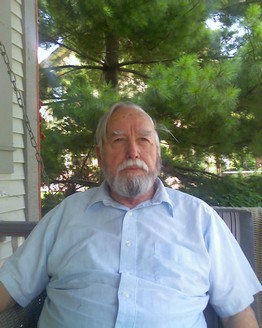
Emeritus Professor of Mathematics, Miami University
“... Western science grew out of Christian theology. It is probably not an accident that modern science grew explosively in Christian Europe and left the rest of the world behind. A thousand years of theological disputes nurtured the habit of analytical thinking that could be applied to the analysis of natural phenomena. On the other hand, the close historical relations between theology and science have caused conflicts between science and Christianity that do not exist between science and other religions ...”
Freeman Dyson, Physicist
There seems to be an underlying assumption by some people that all scientists are atheists, or should be. This is incorrect. It is certainly true that some scientists are atheists, or at least agnostics, but this is certainly not true of all scientists. It never has been. On the other hand, many Christians, past and present, have been scientists. It is commonly believed one can learn something about a writer or an artist by examination of their artistic works. Likewise, scientific examination of the world around us reveals something about the nature of God, the creator of our world. That was an important part of the thinking of men like Newton and Galileo and many others up to the present. In his book, Ideas and Opinions, Albert Einstein described his feeling about the view of the universe unfolding to him from his work. As many have noted, at heart Einstein was a religious man, believing in a religious aspect of science, inspiring a religious spirit in a scientist. In his own words:
“His [the scientist] religious feeling takes the form of a rapturous amazement at the harmony of natural law, which reveals an intelligence of such superiority that, compared with it, all the systematic thinking and acting of human beings is an utterly insignificant reflection. This feeling is the guiding principle of his work, in so far as he succeeds in keeping himself from the shackles of selfish desire. It is beyond question akin to that which has possessed the religious geniuses of all ages.”
Isaac Newton would say, “I agree, Albert, Amen”.
Both Sir Isaac Newton and Galileo believed in God and considered their work to be an investigation of his creation. Galileo was a devout Christian all of his life. He had some problems with the Catholic Church as an institution, and some members of the priesthood. Galileo had defied the Pope; not politically wise. But there is no evidence that he ever became an atheist or agnostic. According to experts on the matter, some time after his unfortunate encounter with the Church Galileo wrote,
“I have two sources of perpetual comfort - first, that in my writings there cannot be found the faintest shadow of irreverence towards the Holy Church; and second, the testimony of my own conscience, which only I and God in heaven thoroughly know. And He knows that in this cause in which I suffer, though many might have spoken with more learning, none, not even the ancient Fathers, have spoken with more piety or with greater zeal for the Church than I.”
He was clearly a believer to the day he died.
Newton was not an atheist, a believer in God the Creator of the universe. Newton did not accept the Christian Trinity doctrine: God is three persons, Father, Son and Holy Spirit. But he was neither atheist nor agnostic. In the concluding pages of his scientific masterpiece, the Principia, the Bible of Mathematical Physics, he made several notable statements about how his work influenced his belief in God.
This most beautiful system of the sun, planets, and comets, could only proceed from the counsel and dominion of an intelligent and powerful Being.
And from his true dominion it follows that the true God is a living, intelligent, and powerful Being; and, from his other perfections, that he is supreme, or most perfect. He is eternal and infinite, omnipotent and omniscient; that is, his duration reaches from eternity to eternity; his presence from infinity to infinity; he governs all things and knows all things that are or can be done.
Lower on the same page he states,
It is allowed by all that the Supreme God exists necessarily; and by the same necessity he exists always and everywhere.
Clearly, Newton had no doubts about the existence of God, and his work led him to believe in the greatness of the Creator. In learning about nature he was learning about this God that had made all things. He had a desire to know him better. According to his biographers, he probably spent more time studying theology and the Bible, and writing about theology, than he spent on science. He was an expert on the scriptures. If such brilliant scientists were devout believers why would anyone claim to be an atheist because of their high intelligence or their knowledge of science. That does not compute.
Four of the most important Natural Philosophers in the 16th and 17th centuries, Copernicus, Kepler, Galileo and Newton were deeply religious men, and that motivated much of their scientific work. In more recent years we have men like Nobel-laureate physicist Karl Compton who was an evangelical Christian. In the nineteenth century we have Michael Faraday, one of the truly great scientists, also a devout Christian. Some believe Albert Einstein was an atheist, but he was not. We know by words from his own mouth when questioned about his belief in God in 1934. He stated very firmly, “I am not an atheist.”
So why would anyone become an atheist? There are probably many reasons. Many are personal. The reason is not knowledge of science. Over the many years I have spent living in university communities, I have had many acquaintances who labeled themselves as atheists. I use the term with the meaning given to me by these individuals. These were people who denied the existence of God or gods of any kind. Belief in any God was considered to be “foolish”, weak-minded”, and “unscientific” to say the least. I prefer to use the term agnostic for people who say they don’t know whether God exists or not, but do not maintain that God definitely does not exist. The agnostic view is at least an honest one, because no one can say with absolute certainty that God does not exist. In my younger years I was in the agnostic camp, so I understand this attitude.
When I was young, agnosticism seemed to be the only rational choice for someone planning a life in science and mathematics. However, I never considered myself to be an atheist, and I never engaged in attacks on belief in God by others. I knew many fine, intelligent people who were Christians or Jews.
Although we have different theologies, most atheists I have known were fine people. Some were highly ethical, intelligent, well-educated people and fine company, so long as we didn’t discuss religion. These were people trying to live a good life, an honest and ethical life. But that is certainly not easy today, and probably never has been easy. That is why in society at large we have so much respect for people who accomplish the task, atheist or Christian. Most Christians believe that God desires us to live a moral and ethical life, and He sent Jesus to show us how to do that. God even provides help through the power of his Spirit. I know that from my own experience. I admire people who can live such a life without help from above. Such a life is hard to maintain alone.
Obviously, not all atheists are criminals, hoodlums or dunces, headed for Hell. As in any class of people, some atheists are dishonest, commit crimes, behave unkind or are unpleasant company. But, that is also true of some Christians. Unfortunately, some who claim to be Christians, believe in God and attend church regularly, but also behave in immoral and unethical ways also. Some become criminals and become lifers in penitentiaries. These sad confused people are persons who have forgotten who they are. Just as any other father would do, God sheds a tear when a child goes astray.
In the twentieth century, Christians and atheists battled over many things related to science. We have the theory of evolution of course, and the dispute over the age of the earth: 6000 years or 4.5 billion years? More recently we have big bang theories and the creation of the world to fight about. Sometimes atheists dig up the story of Galileo or Copernicus, trying to prove something about God and religion. But that is ancient history and has no relevance for the Christian church today. We all agree certain leaders in the Catholic church, in 1630, made a bad call in the case of Galileo. No Christian today would defend the actions of those men. Actually they were honorable men doing what they thought was right for the church at that time. We know better today.
The age of the earth debate is an interesting one. In the 17th century several thinkers offered estimates of the age of the earth based on Biblical information. In 1658, James Ussher, an Irish Archbishop, published his Christian answer to the age question. He maintained that the first day of creation was Sunday, October 23, 4004 BC. He also concluded Adam and Eve were ejected from the Garden of Eden on Monday, November 10, 4004 BC. Very few people today believe his conclusions were correct, and some may even regard them as foolish. But Bishop Ussher was no fool. This man was a respected scholar, Vice-Chancellor of Trinity College in Dublin, Ireland, and an expert on ancient history and the scriptures. His published work reveals a very intricate and scholarly study of material he used as a basis for his work. He did much more than simply add up the ages in the old Testament genealogies as some critics suppose; others had tried that method. Despite these facts few if any educated people today, Christian or atheist, believe the Earth is only about 6000 years old. We have ample evidence that the age of the earth is about 4.5 billion years.
At a scientific meeting in 1860, a famous battle took place between Thomas Huxley, a friend of Charles Darwin, representing science, and Bishop Wilberforce, the Bible defender. The newly published book, Darwin’s new theory of Evolution, was the topic of the day. After the principal speaker had finished, Bishop Wilberforce stood up to have his say in defense of the Biblical account in Genesis. His remarks were scathing. Thomas Huxley responded with an equally brilliant commentary and defense of his friend Darwin and his work. No winner was declared, but the members of the audience never forgot this occasion.
Most atheists seem to think of this as a battle between an atheist scientist and an uninformed Christian. But this was not the case. Bishop Wilberforce was reasonably knowledgeable about science, and Thomas Huxley was not an atheist. Huxley had friends in the Church among Clerics, and his own statements reveal a high regard for the Church. He was not a Christian of course. He described himself as an agnostic, a man with doubts about the claims of the Church, but he had no desire to destroy the Church.
In the summer of 1925, in Dayton, Tennessee, we had the famous Scopes trial. Atheists love to use this incident as an example of the errors of Christians. In this case we do have a long debate between Clarence Darrow, Scope’s attorney, and a Fundamentalist Christian, William Jennings Bryan, in a courtroom. Many regard Clarence Darrow as an atheist, but in fact he was an agnostic, according to various writers who have researched the trial. The statements made by Mr. Bryan do not represent mainstream Christian thinking either. He was very fundamentalist and expressed the views of a Christian minority. So this was not a battle between atheist and Christian as many believe, except in a very narrow sense of the meaning of Christian.
It is true that since that time a battle has continued, as an ongoing legal battle between certain Fundamentalist Christians who want Creation Science taught in the public schools and the ACLU lawyers who oppose this as a violation of the constitutional principle of separation of church and state. Thomas Jefferson and other founding fathers of our form of government fought vigorously to include separation of church and state as one of our legal principles in this new nation. ACLU attorneys are simply carrying on the battle. The ACLU attorneys are not a gang of atheists as some would have us believe, and the Fundamentalist Creationists do not represent the views of all Christians. So, this is not a case of atheist versus Christians. Science and religion play a role in this battle, also, but the main issue is not science versus religion. This is a legal battle that has centered on interpretation of the principle of separation of church and state.
Speaking as a Christian, I know the early chapters of Genesis are not science and never were. Most Christians I know agree with that fact. That ancient, unknown writer of Genesis, had no interest in science. The Old Testament Jews made no known contributions to science or mathematics as we understand these subjects today. They didn’t ask scientific questions. The science of the ancients known to us today came primarily from the Babylonians and Egyptians and later from the Greek world, not from Israel. In later centuries contributions to science and mathematics came from India and the Arab world, but still no contribution from the Jewish world. This is interesting in view of the fact that the world of the Jews has produced some of our best scientists in the past 500 years. Outstanding examples are Albert Einstein and Richard Feymann, but there have been many others. It seems clear that the author or authors of the Genesis creation story had no intention of providing a scientific answer to a scientific question.
A curious wrinkle has been added recently to this debate. A number of cosmologists have begun issuing pseudo-scientific theories claiming to show how the universe spontaneously appeared from nothing as a result of scientific laws, mixed with some magic. The object is to prove the universe was not created by God. Hence, God does not exist. The theories are unsound, based on unbelievable hypotheses; hence, bad science. The scientific principles and laws used in such work to explain the Creation had no meaning or relevance until after the Creation had happened. Do these theories prove all scientists are atheists? No, these simply prove some atheists are willing to prostitute their scientific talent to support/defend their religious beliefs. Yes, atheism is a religious belief system. To deny God exists is a religious belief. Not a fact.
So, atheism and science are completely independent belief systems. Some scientists are Christians and some are atheists. We have room for both in science and that should never affect our science. Newton believed in God but he made it very clear his belief in God and his science were kept in separate compartments. These beliefs coexisted, with no conflict. Newton stated clearly he did not need God as an hypothesis for any of his work. It has been suggested by some that maybe God needed Newton. The thought is interesting.
In the beginning, God said let there be Newton, and science was born…
(Copyright 2013 Benjamin F. Plybon. All rights reserved.)






My own book, The "Multiple You" Universe: Sacred Science for the 21st Century, should be out March/April, 2014. The dominant theme is that Consciousness is the creator of everything, likely pre-imminent to the Big Bang, and that because it is everywhere (including sub-atomic matter) we, too, are cocreators, and god, indwelling.(Not big "G" God), Sacred Science then becomes an important way of looking at how everything can best be known from both its sacred and scientific component parts. Anyway,good article. Rev Cassandra Martin, independent New Thought minister and author.
Ron