The reality of Sin
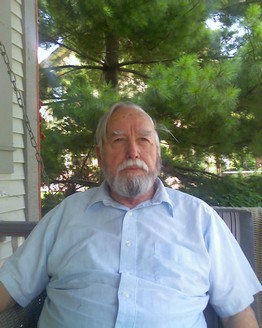
Benjamin F. Plybon
Christian pastors who are honest about the gospel they preach tell their congregations, we are all sinners. But many people, including Christians, do not believe that. Preachers in main line denominations avoid sermons about sin. Most people today do not want to talk about sin and resent being called sinners. That very fact tells me such people do not understand the meaning of sin; that is true for so many people who have read the Bible and attended church regularly for many years. Once upon a time, not too long ago, I attended church every Sunday with many people who refused to accept the very idea that they were sinners. They protest, “I’m a good person. Why do you call me a sinner?”
How sad, and contrary to the most fundamental Christian beliefs; beliefs based on the teachings of Jesus. We live daily surrounded by sin, ours and others; the cause of most of our problems. A wise writer once began his book with an astonishing announcement: “Life is difficult.” That is absolutely true about life for most humans, and our sin or the sin of others is the reason. The source is within all of us. That is why Jesus came into our midst. We need help from above with this problem with sin. He brought that help from above. Most of us do not want to sin but sin has great power over us. That is a part of our nature so one might say it is natural to sin. Another might say, “Sure, I sin. I’m only human. Everybody does it.” It is very human and everybody does it but that does not make it OK.
Sin is never defined precisely in the Bible, but most preachers teach sin as essentially law breaking. They tell us, we break God’s laws, the Ten Commandments, and that is sinful behavior. But sin is so much more than that. The term sin describes behaviors and attitudes that seem to be very much a part of the lives of every human being in our natural state. This may be scientific proof we descended from animal ancestors. Animals do what they need to do with no concern about the welfare of their neighbors. Some humans also behave that same way. Over and over we do things that are harmful to each other. We abuse each other, our children and even our pets. Sin is a very real part of the life of all of us.
Recently, the Pope astonished some of us by confessing he is a sinner just like the rest of us. These were the words of an honest man. Even the best of us are sinners and it is important to understand why. So, why? Christians are fond of claiming, “Jesus is the answer”, but it would be more accurate in this case to say, “Jesus gave us the answer.”
Sin is the opposite of love. That is what Jesus taught us. Christians claim Jesus was sinless. That is because he always loved those whose life he touched; he never harmed anyone, any time. On one occasion an expert in the law asked Jesus to teach us how we should live. He asked Jesus, “What is the greatest commandment?” His answer was taken from ancient teaching in the scriptures in Deuteronomy, chapter 6, and Leviticus, chapter 19. Summarized in our Bible in Luke 10:27, Jesus said this is the greatest commandment.
Love the Lord your God with all your heart and with all your soul and with all your strength and with all your mind; and Love your neighbor as yourself.
Jesus said, this is the most important Commandment; because it sums up all of the rest of the commandments and the law. Christians call that the Law of Love, foundation of all Christian behavior. All sin is a violation of this commandment.
At another time Jesus taught his disciples, on the evening before his death, they must love one another as he had loved them. That is a command for all Christians at all times. To be sinless one must live as Jesus taught his followers. You must begin with learning to Love your neighbor as yourself . To fail to do that is to sin. We never seem to be able to do that perfectly, so we are all sinners. We have so much difficulty trying to love every one as Jesus taught. Some believe it is impossible.
Most Christians claim to love God as Jesus told us to do. If you truly do that you will find yourself loving other human beings; not perfectly, but your love for others will grow as you grow and mature in your faith. Yet so many “God-loving” Christians today live lives filled with hate and prejudice, reaching out to harm, not love. Read what the beloved Apostle John taught his disciples:
1 John 4:19-21 We love because he first loved us. If anyone says, "I love God," yet hates his brother, he is a liar. For anyone who does not love his brother, whom he has seen, cannot love God, whom he has not seen. And he (Jesus) has given us this command: Whoever loves God must also love his brother.
So to be obedient to God as revealed in the life of Jesus, to truly be Christian, one must learn how to love others. The importance of the law of love was clearly paramount for the Apostle John. Another, more recent John, John Wesley, founding father of Methodism, taught us we should begin by refusing to harm or hurt anyone. We do not injure or harm anyone while loving others as Jesus taught us to do.
Sometimes we learn by examining opposites. The opposite of loving your neighbor is hurting and harming your neighbor. We do that all the time in many ways. That is sin. We don’t need a gun, knife or club to hurt and harm a neighbor. Only a few of us actually physically attack our neighbors and murder them, but we hurt one another in so many other ways.
A truly very vexing illustration of that sinful behavior is the growing use of our twenty-first century voting power to harm other people and their communities. This has been a growing problem since the right-wing conservative voting bloc was formed around 1980 by uniting Fundamentalist Christians with right-wing politicians. I do not believe Jesus is a member of that political party. One could fill many pages with descriptions of pain and suffering inflicted on innocent victims by passing harmful legislation in the last 30 years.
The most recent is the passage of laws in the State of Kansas that are clearly unjust and very prejudicial against our gay friends and neighbors. Jesus wept. Most of these voters claim to be Christians. Maybe so, but their sinful behavior is not Christian behavior. The intent is to eliminate homosexuality, abortion and other “sins” on the hit list. Take another look at the Holy Book, my friend. Sin cannot be eliminated by passing laws. That was the way of the Pharisee. Jesus rejected that practice. He labeled such people as hypocrites. He would likewise condemn the behavior of these Kansas voters. Jesus gave an interesting illustration of the proper way to deal with sinful people.
Jesus told his disciples, the Kingdom of God is like a field that had been sowed with wheat, but weeds, not good stuff, had grown up with the wheat, good stuff. His servants asked them, " Do you want us to go and pull up the weeds?' Jesus said no.
Matthew 13:29 " `No,' he answered, `because while you are pulling the weeds, you may root up the wheat with them. Let both grow together until the harvest. At that time I will tell the harvesters: First collect the weeds and tie them in bundles to be burned; then gather the wheat and bring it into my barn.' "
In the world we do have people doing very bad things, sinful people of all kinds mixed well with people we regard as good people. None of us are sinless. Jesus did say, when a group of men condemned a lady caught in adultery, a serious sin in his time,
"If any one of you is without sin, let him be the first to throw a stone at her."
The gathered men walked away without throwing one stone. If you live in Kansas and you are sinless then you may throw the first stone at your gay neighbor.
We can do too much damage to good people while trying to root out the bad. Separating the good from the bad when dealing with our neighbors must be left to God. We are not qualified to make such judgments. As sinners ourselves we have no God given right to harm our neighbor we regard as a sinner. Do not claim any religious right to harm another in any way. Saint Paul made it very clear that God also loves the sinners. Our sin may be different but we each have our own favorite sin. Homosexual acts and abortion may be sinful. The jury is still out on that. In the meantime the people with good-intentions do much sinning in their own way.
The evidence of the reality of sin is seen around us close by; in plain view. So much pain and suffering is caused by the sins of people trying to live well as good people. The Sins of “good” people are less obvious than stealing, killing or even adultery. But there are many other forms of sinning. We need to become aware of this reality of the world. We often cause pain and suffering by a statement, or even an attitude. Words can hurt, despite what some may say. To be ignored, as if one were not present, can be painful. In such cases the message to your neighbor is that they don’t exist in your world. That is sin.
So often we fail, or even refuse, to offer help to a neighbor experiencing pain or suffering. It is a fact of life that there is some suffering and pain in every life. We are surrounded by it. Sometimes we do not see, but so often we do see and choose to ignore it. God sees and does not ignore. The most loving people among us do see the pain and suffering and look for ways to help the suffering. These caring people also find that knowledge can be painful. There can be risk in helping your neighbor.
From time to time we are forced to look, see and hear. Our neighbor becomes a victim of cancer or a heart attack. A family member dies in a collision of vehicles on the highway. A tornado strikes a town, killing and injuring hundreds. Two hundred and forty die in a plane crash. We suffer as a result of hearing or seeing about tragedies. Some wonderful people around us do try to help any way they can, despite their own suffering. But far too many of us choose to look the other way.
We are all familiar with the huge disasters of war and epidemics, sometimes too horrible to comprehend. After World War II we discovered the incredible horror of the concentration camps and mass murder of millions, the Holocaust. The discovery that one large group of people would intentionally hurt and harm so many innocent victims in this way was hard to believe in 1945. The sight of the victims was a traumatic experience for strong men, our soldiers, who were among the first witnesses after the war ended. The news reports were so horrifying that some still refuse to believe this actually happened. But it did. Emaciated bodies and piles of dead bodies were there for all to see; terrible evidence of the extent of our sinfulness. It is important to realize the meaning of this. It is easy to blame one man, Hitler, for this horror but the individuals who carried out the Nazi plan were people not that different from you and I. We need to look and learn.
We condemn the people responsible for the Holocaust, as we should. But we need to understand the Holocaust was merely a demonstration of a painful fact about human beings. We have terrifying capacity to hurt and harm. To a lesser degree we see this every day, in the many ways we hurt neighbors in the community; family members, friends in our churches, those we encounter in our daily businesses, even those who serve and try to help us. Some of our hurting of others seems minor compared to a holocaust, but it is still sinning; proof of existence of this painful ability to hurt and the desire to hurt and harm; a part of human beings separated from God.
The prime example of this ability and capacity to hurt, even kill, was demonstrated by the life of Jesus. This may be the true message of the Cross. Horrible as the Holocaust was, the death of Jesus was equally horrible. By allowing others to crucify him, a very painful death, he showed everyone, everywhere, the capacity we have to sin in a manner unbelievable for most of us. The murder of Jesus is also too cruel for some to believe but it did happen. He was killed by men doing their duty as soldiers. Nazi guards at the concentration camps believed the same; they were just following orders. Good, God-fearing religious men requested the execution of Jesus, believing it was right and necessary.
How could religious men do such a thing, we ask? We think of the perpetrators as mean and horrible people, but they were not. It is hard to believe, but they were much like us. We need to understand and admit that is true . Jesus, in his own way, was teaching a lesson about us and the world in which we live. This good man hanging on a cross, suffering unto death at the hands of other good men, clearly revealed the reason we need saving by a Savior. Perhaps our salvation is found in the truth about us Jesus revealed to all by allowing good men to kill him in such a cruel, senseless manner.
Each and every one of us was born with a problem. Under the right set of circumstances we tend to strike out at others in many ways; we even murder. A good man drew a gun and killed a young man recently, because his music was too loud. We cannot cure the problem by just working to become better people. We need help from some source beyond and outside of us.
Most Christians can live every day of their life without committing murder, theft, rape or even physical assault of another. But there is one sin we cannot escape. That is the failure to completely and perfectly obey the law of love given by Jesus. We are never as kind and loving as Kingdom children would ideally be. We fail to help our neighbor struggling with deep troubles. We abuse our spouses and children. We cheat customers in business deals. As many wise ones have reminded us, we do visibly harm and hurt but also we hurt and harm by doing nothing. Sometimes all we need to do to help a neighbor carry his or her burden is to give a kind look, a friendly touch, or a thoughtful and comforting word. But we fail to even do that, far too often.
Let me hasten to caution with a sad fact confirmed by observation of real people. Merely joining a church, becoming a Christian, does not solve the problem of sin. For hundreds of years Christians have tried to live as Christians, as followers of Jesus. Yet, many continue with their sinful ways leaving a trail of pain and suffering among the victims. Such people are not living the life taught by the Jesus I follow. Most have failed because they continue to neglect the need for love. Saint Paul reminds us of this need.
1Corinthians 13:1-3 If I speak in the tongues of men and of angels, but have not love, I am only a resounding gong or a clanging cymbal. If I have the gift of prophecy and can fathom all mysteries and all knowledge, and if I have a faith that can move mountains, but have not love, I am nothing. If I give all I possess to the poor and surrender my body to the flames, but have not love, I gain nothing.
In a world filled with men and woman who could love God and neighbor as Jesus taught us to do, there would be no enemies and no wars. There might still be pain and suffering, but it would be endurable, as loving neighbors joined together to help and comfort one another, enabled by the power of the Holy Spirit to love. It would be almost heaven. Not quite heaven yet, but a preview of the world to come in the end of time.
Revelation 21:3-4 And I heard a loud voice from the throne saying, "Now the dwelling of God is with men, and he will live with them. They will be his people, and God himself will be with them and be their God. He will wipe every tear from their eyes. There will be no more death or mourning or crying or pain, for the old order of things has passed away."
While we are mortals living on this earth there will still be death and mourning. Automobile accidents will happen, disease will strike victims, there will be tornados and earthquakes. So there will be pain and suffering and tears. And God will shed a tear also while providing the strength to endure. How do I know? A brother of Martha and Mary, friends of Jesus, died. The Bible tells us what Jesus, God on earth, did.
John 11:35-36 Jesus wept. Then the Jews said, "See how he loved him!"
(Copyright 2014 Benjamin F. Plybon. All rights reserved.)