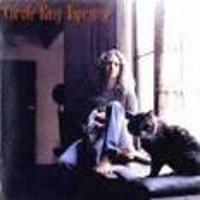
Time for a reminder. No matter your age, Carole King should be listened to.
Tapestry
1971--Willy Wonka and the Chocolate Factory was a hit movie, All In The Family began its long-running series on television, and Tapestry was released, finally bringing Carole King to the public's attention. She was twenty-nine years old and had already written or co-written twenty hits for other people. She had two small hits of her own, but until the release of Tapestry, her unique singing style seemed to be a music world secret. The album also showcased the talent she had been developing since the age of four--playing the piano. It stayed on Billboard charts for an amazing and well-deserved six years.
Tapestry starts with "I Feel The Earth Move," a newly-penned (at that time) song by Carole, and like most of her tunes, her voice carries and drives the music. In 1989 Martika had a minor hit with the song, showing how versatile all of Carole's music can be. "So Far Away" follows, and features a flute and James Taylor on acoustic guitar in a melancholy tune about being on the road.
"It's Too Late" is an obvious tribute to the end of a relationship and was co-written with Toni Stern. This one has outstanding conga drums and sax, and like most of her lyrics, is easy to relate to. It brought her a grammy for Record of the Year. In this same year Donny Hathaway and Roberta Flack had a hit with their own interpretation of "It's Too Late," and Gloria Estefan did her take on the song in 1995.
Next on the album is "Home Again," a short little song about road weariness written by Carole and once again featuring her friend, James Taylor, on acoustic guitar. "Beautiful" is a much more optimistic song, and is followed by "Way Over Yonder," an upbeat gospel tune.
"You've Got A Friend," huge partly thanks to James Taylor, is the longest song on the disc. Besides playing guitar on the album, Taylor had a hit with the song later in the same year. The tune is a personal, mellow tribute to friendship and loyalty. This well-known song brought her another Grammy, this time for Song of the Year.
"Where You Lead," co-written with Toni Stern, is a happy love song that was also done in the same year, 1971, by Barbra Streisand. Today it is the theme song for the popular television series "The Gilmore Girls," and is performed by Carole and her daughter, Louise. "Will You Still Love Me Tomorrow" is a song that was co-written with her first husband, Gerry Goffin, and was her first song to hit the charts when The Shirelles released it in 1961. Carole's version is much slower and heartfelt with J. Taylor and Joni Mitchell doing background vocals (liner notes say The Mitchell/Taylor boy/girl choir.) This song was done four other times in the years prior to and after Tapestry by Dusty Springfield, Laura Brannigan, Little Eva, and Roberta Flack.
"Smackwater Jack" is a fun little diddy that seems out of place with the rest of the music, but it is welcome in its originality. It may be the only attempt at a social statement on the whole record, but it is inoffensive and wonderfully different. The title song, "Tapestry," is next and features the folksy simplicity of just Carole on keyboards and vocally.
Once again Tapestry reaches back for a song co-penned with Goffin and Jerry Wexler in the 1960s. The album comes to a smooth and fitting end with "A Natural Woman." It is kept sincerely simple with only Carole and her piano and a string bass. While Carole keeps it personal, Aretha Franklin did a joyful gospel version. Other interpretations were done by Mary J. Bilge, Laura Nyro, Patti LaBelle, and Celine Dion.
Tapestry gave Carole a Grammy for Album of the Year, and remains one of the all-time soft rock albums. 1987 saw her inducted into the Songwriter's Hall of Fame, and along with Goffin, the Rock and Roll Hall of Fame in 1990. No lover of music should miss listening to this classic.
|


Regis
Always,
Deborah
You're right about her colossal greatness as a songwriter… And even as a performer. Well written and enjoyed.
Ron
Love ya!
Jane