An ongoing overview of humankind's efforts to reach and live on Mars.
Mars Odyssey 2030 – an introduction
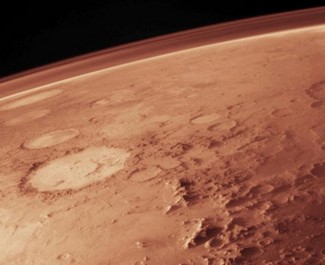
I write this with some trepidation. Why Mars and not the Moon? I may just put that out there and leave it for now. Also, this subject is so immense it will warrant further blogs – there’s no way it can be covered in a single piece. I have the following basic headings to set the ball rolling: About Mars, Getting to Mars, Martian Terrain, The Mars 2020 Rover, Life on Mars and Bizarre Mars [just for fun]. This blog will cover ‘About Mars’ and ‘Getting to Mars’ and include some excellent Mars Curiosity Rover video.
Rather than post the full article here I have a link to the web page below:
Here's a link to the complete first article:
http://claytongraham.com.au/mars/
and a link to the great Mars Curiosity video: https://youtu.be/FZYnIsLNz3c
A good, conservative view of our expected exploration of Mars in the near future based on facts provided by NASA sources. I wish you had gone a little further with speculation. But you will probably do that in future installments.
You mentioned the Moon, briefly, and then moved on. I remember asking people at the 1977 20/20 (20 years since Sputnik) conference in Huntsville about when and why we weren't actively going to Mars. But I have changed my mind since I wrote my novel, Alone?, in 2003. While Mars and the Moon are very interesting for advancing our knowledge of the solar system and may, perhaps be exploited, very carefully, for resources, I believe they will remain scientific outposts like Antarctica for a very long time where people will rotate in and out because conditions on both of these places are not conducive for human existence.
Gravity was my focus in graduate school in 1966. But there was little research at the time. Valeri Polyakov spent 438 days on the former Russian Mir space station. Still, the long-term effects of being weightless or impartial Earth gravity for so long have not been fully understood or evaluated.
While Elon Musk has grand plans for Mars colonization, I favor in space colonies in Earth orbit (equal amount of sun exposure properly screened for radiation) with artificial 1G gravity where people can live out their entire lives in space with near Earth conditions. From there with a zero gravity well compared to the one we have here on earth, we can move out into the solar system very readily and return.
The symbiotic pattern of evolution is everywhere and allows us a very different and fascinating window into the way symbiotic viruses work, since all viruses are symbiotic, including those involved in our human reproduction.






You mentioned the Moon, briefly, and then moved on. I remember asking people at the 1977 20/20 (20 years since Sputnik) conference in Huntsville about when and why we weren't actively going to Mars. But I have changed my mind since I wrote my novel, Alone?, in 2003. While Mars and the Moon are very interesting for advancing our knowledge of the solar system and may, perhaps be exploited, very carefully, for resources, I believe they will remain scientific outposts like Antarctica for a very long time where people will rotate in and out because conditions on both of these places are not conducive for human existence.
Gravity was my focus in graduate school in 1966. But there was little research at the time. Valeri Polyakov spent 438 days on the former Russian Mir space station. Still, the long-term effects of being weightless or impartial Earth gravity for so long have not been fully understood or evaluated.
While Elon Musk has grand plans for Mars colonization, I favor in space colonies in Earth orbit (equal amount of sun exposure properly screened for radiation) with artificial 1G gravity where people can live out their entire lives in space with near Earth conditions. From there with a zero gravity well compared to the one we have here on earth, we can move out into the solar system very readily and return.
Ron