
A Final Word or Two on Eric Mottram - for there are « things » left unsaid by his students, colleagues and friends and/or ennemies
A Final Word or Two on Eric Mottram - for there are « things » left unsaid by his students, colleagues and friends and/or ennemies
Eric Noël William MOTTRAM, poet, critic, editor and essayist at King’s College, University of London held the Chair in English and American Literature as an E-meritus when he passed away on 16 January 1995 at the age of 70. The Chair as a personal endowment was created for him in 1983. He was never my professor though - during 1952 to 1955 - he was a lecturer in English Literature (unknown to me then) at the University of Malaya in Singapore, the only university in the région. I had just then finished my school-leaving exams: Cambridge School and Higher School Certificates through self-study (under the British educational system, our exam papers were flown out to Cambridge University for evaluation), and I continued as an external student of the Inns of Court School of Law in London while teaching at primary and secondary schools in the Federation of Malaya. In 1954, I was a reporter in charge of Indian Affairs with the national English daily: the « Malay Mail » of the Straits Times Press Group.
In 1954/55, I had to go to London to keep my "dining terms" at Lincoln's Inn, and I sat for the Bar Finals in 1956 (though I was cheated of my diploma from practising Law: Eric was aware of this setback and served as my guarantor with recommandations for whatever job I sought.) It was then that the famous sinologist and later ex-Vice-Chancellor of the University of Hong Kong: Wang Gung-wu - handed Eric Mottram a copy of my poems and our first meeting took place. (Cf. my memorial poem for Eric published in Spring 1996 in « Radical Poetics/Inventory of Possibilities", , edited by Michael Hrebeniak.) Since then, Eric and I became very good friends and our correspondance right up to his passing makes up a véritable book of literary production. Excerpts were published in the festschrift for Eric in December 1994: "Alive in Parts of this Century: Eric Mottram at 70" by North & South Publishers, U.K., edited by Peterjon and Jasmine Skelt.
Eric was born in Wandsworth, London, and he continued schooling in Bath where he won a scholarship to Pembroke College, Cambridge, in 1943, but opted to serve in the Royal Navy as the Vice-Captain of a mine-sweeper in the North Sea and the Bay of Bengal. At the close of hostilities, he began his higher studies in English Tripos (Literature and Thought) obtaining in 1950 a Double-First in both parts of the tripos. He was awarded the Jebb Fellowship, and instead of going on to doing research with a view to securing a doctoral degree (at Cambridge a graduate was awarded a Master’s three years after), he studied economics. A year later, he accepted a posting in Zurich to teach English, and his career as a teacher was launched. Then followed: University of Malaya in Singapore (1952-55), University of Gröningen (as Professor: 1956-1960), University of London (Lecturer: 1961-1972; Reader: 1972-1983; Chair-Professor: 1983-90 and E-meritus till January 1995.)
In the meantime, he spent a year in the United States as the invitee of the American Council of Learned Societies for 1965; taught a course at Buffalo; returned to teach at Kent State University in 1968; and lectured at various other universities including Hyderabad, India. In 1990, I invited him as a guest of the Centre for Comparative Poïetics (which I founded) for a wide-ranging tour of lectures in Paris.
He edited the « Poetry Review », the official organ of the Poetry Society in England from 1971 to 1977 when he was relieved of his duties.
On the last two occasions he was in Paris, he urged me to get our correspondance published, and I feel honour-bound to make some sort of an effort - futile as it may look at my age devoid of an outlet: neither a literary agent nor a traditional publisher at my beck and call. The books I managed to get onto the market are nearly all paid for from my pocket with no returns of any kind. In fact, as a writer I have lost - also through litigation with Anthony Blond Ltd. in London - more than 200,000 euros at the least, so I’ll try to post up here as many letters as possible with appropriate corrections in the texts followed by explanatory comments since Eric’s handwriting requires an inter-stellar telescope to be deciphered.
Let me at the outset declare that my relationship with Eric was purely a literary one (John Whiting, an American student of his at the Institute of United States Studies in London which Eric co-founded, rushed over to Paris soon after Eric’s passing to ask me if I was one of his « cubs » - the first then I had heard of such a propension in our mutual friend and master), though he was wont to treat me as a younger brother - eight and a half year difference - in need of guidance, and rightly so, for as a young man I displayed a very special knack for getting into deep trouble with women who always made a monkey of me, not to mention the authorities all over the place who were hell-bent on breaking down a « recalcitrant », i.e., in their own short-sighted eyes. Oddly enough, ever since David Brown, a paraplygic who taught English at the Free University in Berlin, hoodwinked me into participating in his « cloak and dagger » business in the Russian sector (see my novel: « Ice in my Eyes… »: I still wonder who was his highly-placed interlocutor over the « Cambridge defectors » case ?), I’m nearly always sollicited by authorities to spy for them, and that’s the rub: if you don’t, can’t or won’t, you’ve had it, Chum !
This is what I know of Eric’s family. His father was a very highly-placed civil servant who was largely involved in putting into place the Social Security system in the U.K. and who married a lady from a working-class family in East London during or after WWI years. The couple had two sons and a daughter. I met them all at Eric’s Vicarage Gate book-cramped basement flat (not the father: the flat was situated within a stone's-throw from the Royal Kensington Palace) although he never bothered to introduce me to his sister. Wise man ! The elder brother was a marathon-runner who had a son I was introduced to, but I didn’t know that at some point he headed the Intelligence services in the Home Ministry as the Under-Secretary which accounts for many observations Eric made to put me on guard against so-called friends of mine, in particular an LGBTQ+ lawyer friend in Kuala Lumpur who later retired as an Appeal Court judge and works as a consultant there even now.
What I have to say here may come as a surprise even to his close associates. The Mottram family members - not the distaff side - were descended from a long line of aristocrats, dating from the Norman Conquest in 1066. They were « Lords of the Manor » and had their siège in Lancashire. Eric even unfurled a family Coat of Arms so that I could appreciate his « blue-blood » heritage, but I made little of the honour I was allowed by asserting the Bramo-Kshastriya status of my paternel grand-mother. Curious, he was hardly offended by my habitual boorishness. Let’s just say we were meant to be friends ! Until some time in the seventies while he was waiting to be « arraigned » before the Poetry Society’s ruling committee (from what I could gather, he was accused of publishing American Beat Poets in the issues he edited) when he underwent a traumatic experience: according to Eric, « memory erasures ». When I went to see him - after a twenty-two year absence, in 1989, after giving a paper at a University of Kent conference, he had absolutely no clue as to who I was. He thought I was a student of his from Singapore with a similar-sounding name: Nadesan ! Even up to the end, he kept saying « bits and pieces of the past » were coming back - that was because he made it a point of reading our correspondance bit by bit.
In my campaign to nominate Eric for the Nobel Prize in Literature, I was more than glad that Professor Leslie FIEDLER came forward with unstinting praise for him.
How during a time of War, the government cows the people into obedience...(Don’t buy « Blind Man’s Lantern » for the Vanity-Printer deliberately dislocated and tarnished the book.)
Translation of Eric Mottram's Twentythird Legal by T Wignesan
Excerpt from a review of EM's Selected Poems. 1989 by Simon Smith in "fragmente", Issue One, Spring 1990, Ed. Andrew Lawson and Anthony Mellors at Oxford, p. 39:
"…The police state enters these poems with great frequency, and its shadow becomes darker in later works like Interrogation Rooms and The Legal Poems. The oppression is seen as global not local. (…) The way we are pinned into responses and grindingly intolerable lives, Mottram reveals in chilling fashion with the "Twentythird Legal Poem"… (…) This is Mottram's bleak assessment of the situation facing us in Thatcherite Britain: his poetry is about the use and abuse of this kind of power. As he points out in "Elegy 4": "politics came throgh (sic) poets/ poet-statesmen the rule" (24). But the power networks have changed since Wyatt's time (a writer Mottram particularly admires). The poet is no longer one of Shelley's legislators; our poets are simply the most articulate of the dispossessed. This Selected (Poems) faces up to this readjustment in a way few others have dared."
TRANSLATION of « Twentythird Legal Poem »
by T. Wignesan
Le vingt-troisième légal
pendant la guerre le peuple devient obéissant de nouveau
plein de respect (et) de la confiance les enfants naïfs dans la foi
la gouvernance nécessaire…….la responsabilité perdue
des serviteurs loyaux………..des castrés adults
la gouvernance appropriée dans leurs esprits c'est l'urgence
Ils se sentent bien obligés à la ration bien dans le manquement bien
d'être restreint….l'anxiété permanente….reconnaissants
pour le chocolat addictif
………………………..nous n'avons pas besoin d'une guerre pour l'instant
uniquement des structures favorisant la mort
…………………………………………………………………..une gouvernance parfaite
qu'ils posent des questions inattendues
………………………………………………….alors nous pouvons continuer à vivre
(from The Legal Poems. Colne: Arrowspire Press, 1986, p. 19.
Excerpts from Eric Mottram's letters from America during 1965-66 (continued):
August 10, 1966: "
DearWignesan,
(The letter is given here in full.)…..I'm so sorry I put you to writing to enquire about the safety of your Burroughs bundle: everything arrived safely forwarded from New York Univ. while I was up in Buffalo. I just could not find the time towards the end of my time there for anything except teaching my two graduate courses and grading the hefty papers. Up there I found three editors who want the article [actually the first part, pp. 13 to 133, of William Burroughs: The Algebra of Need. London: Marion Boyars, 1977, 282pp.]: to appear in Audit, Salmagundi and as a separate thing. Your work in getting hold of it and the letters must have been irritating and I sincerely thank you for it all. One thing: I did send the Reich - did you get it? Since you don't say, I gather not: that's worrying because you know how They are about Reich. Incidentally, Brown has a second book out at last - Love's Body -not quite the brilliance of Life Against Death but pretty good and an original form. Otherwise I am hung up totally reading and thinking about Olson, as a result of hearing tapes of his discourses and seeing lecture notes of his seminars at Buffalo. Quite apart from my steady admiration for him as poet and Black Mountain organizer. (Incidentally I owe you one pound one and six for the postage - shall I pay you by check now or when I arrive?) Under the pressure of my courses up there, I felt energized and tackled a number of other projects in a way which astonished me - all sorts of things loose in my mind started to come through connected. Partly the decent conditions, the sunshine, the airconditioned office, and the excellent company recruited for the summer session - Fiedler, Barth, Richard Stern, Mudrick, Clive Hart, Arnold Stein, Basil Bunting, Tony Connor - etc - and Me. - it added up to work done and feelings used. Not one bad dream. Sorry about the tape recorder’s mikelessness – I never did get round to buying one. Your advice well taken, by the way : I always need it, appearances to the contrary. Your Michael Joseph experience is horrible : ok ! I never liked him and YOU tried to con me into doing so, and I went along so far, just to be nice and helpful. I knew , by the way, that he simply flattered me, and if you must know, I partly helped him because I thought it might indirectly help you – the bastard : he let us both down, you more than me. Your long letter of July 7 : I did not laugh at you and I never have or will in any such malicious sense which you imply. How little you know me. Hope your headaches have not recurred in anything like the grim form you describe. Do you think you need new glasses ?: might help. Sent off Civil Service recommendations : anything happen ? Olson is not a Negro - why did you think he was I wonder? :interesting. You are right about my position in London and the betrayals of everything you and I stand for: latest is M.L.Rosenthal's piece on Ginsberg - after years of talking to him about Allen and hearing my lecture on him at Kilve, he comes out with this classic shit in the NY Times Book Review. But I now have three of my best students teaching in universities in England - some hope and happiness here. And let me say, everywhere I have taught and seminared and lectured here, the response has been great, and the jobs offered very heartening. Especially at Buffalo. I loved having you write such a friendly letter, but don’t ever talk about debts owed from me – I look forward to seeing you again : enough said. It’s the best thing you ever wrote : by the way : fresh, penetrating, adult in the best sense, almost damn wise, open about all and in the end hopeful and generative. I mean re-birth signs. Out of breaking the old self. You must write your other work like this – the sentences give. But isn’t ironical. It’s probably because you have deep-seated somewhere a need to write ‘literature’ – i.e. something recognisably in a pre-existing idiom. [] I always thought so, really : and it is a problem everyone who cares for writing and wants to write has sometime or other. You’ve come through ?
(Obverse side of the air-letter : First fold :)……I shall not write again from here - I have three weeks to do everything in. So I am telling everyone no more letters from this end -unless imperative. I have unfinished business from Buffalo to get down to while the whole thing is fermenting, and a number of pieces to complete here. Whether I'll get to San Francisco as planned I doubt - not only the plane strike but sheer weight of things. I earned the money for the trip, so that's ok. On[e] thing I would like to do is to go and see Olson at Gloucester at the end of the month. Feel I need it.
…...So that's it. Let me know if there is anything urgent at all, nevertheless. Otherwise we'll get things out in September - sailing the seventh.
…..[Second fold :] Many thanks for all you have done.
The Malaysian Lit. Think-piece (Published in « The Journal of Commonwealth Literature », n° 2. University of Leeds- Heinemann Ltd., 1965, pp. 113-123) is useful. I think you were right to establish your bases and credentials with Wong Phui Nam before going on. I suppose it was not possible to be a bit more positive about something of a future for writers there – you do make it sound impossible and depressing. I don’t mean prescriptions, but at least directiveness of some kind. Also the political atmosphere and class clashes don’t get much of a hearing. Still, it’s as I say useful.
Yours sincerely, Eric. "
[From Eric Mottram c/o Wilentz, 17 West 8th Street, New York 10003. Letter addressed to T. Wignesan, Room 3, 7, Buckland Crescent, Swiss Cottage, London N.W.3]
© T. Wignesan - Paris, 2017 - August 5, 2023
|

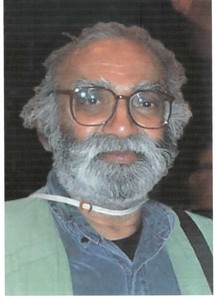


He was "arraigned" by the ruling committee of the Poetry Society on some charge that is not particularly clear, and it was while waiting to be interviewed that he underwent "memory erasures", according to EM: the "erasures" happened to include yours truly as well, for by that time we had not met again for a decade, and by the time we did in 1989, he had completely mistaken me for a student of his in Singapore. This is not "dementia". I wasn't his doctor, but I'd say that was some sort of "Alzeimer's" creeping in at some early stage perhaps.
If he were alive, I'd demand an apology from you for the. "faux pas" to be published in three of the foremost newspapers at your expense.
Have a Great Day, my engineering friend ! Best as always. TW
I'm glad you have lived long enough to begin posting the letters here where they may be seen by thousands. It was sad to see that Eric was unable to get to San Francisco in late 1966 when I arrived there to find the hippie renaissance forming before my very eyes with some of the greatest poetry of the 20th century and the lyrics songwriters wrote during those few short years to Woodstock.
Ron