Will the real William Shakespeare please stand up!
Part II
What’s in a name; The life and Times of William Shake-speare
By H.J. Cruz
“This much of this will make black white, foul fair, wrong right, base noble, old young, coward valiant…. (Henry IV)
Authors note; the problem with history, is that it’s more a patchwork quilt than fine woven tapestry. A good scientist knows, to go into any hypothesis with assumptions is folly. Rare is the historian who removes oneself from their treatise; human nature being our handicap in historical narrative. Therefore we must give history a wide birth, for it is the subtle repeated manipulation of history that clouds truth.
“And why rail on this commodity? But for because he hath not wooed me yet.”
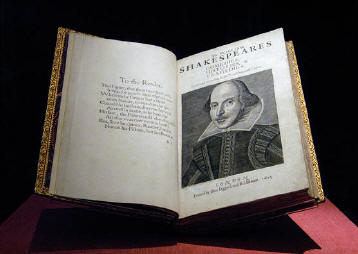
The works attributed to William Shakespeare are the most presented, and most often quoted plays in the world, far beyond any other playwright and poet. They are considered the pinnacle of English verse four hundred years after their publication in the Folio edition of 1623. We can often hear our parents unconsciously quote his lines with; “Dead as a door nail,” “laughing stock,” “eaten me out of house an home,” “wear my heart on my sleeve,” “apple of my eye,” “good riddance,” “neither rhyme nor reason,” and hundreds of others. The brilliance of the work is proven by its immortality.
“Indued with intelectual sense and souls”
It’s no secret that the cunning and clever scribe responsible was well saturated with the historical prose of the popular writers who came before him like Plutarch, Montaigne, Boccaccio, Chaucer ect.. Most poets write of personal experience and of what they’ve witnessed via other writers. But that is just the beginning, for Shakespearian works describe someone who not only had the insight of the courts, he was also well educated in court behaviors, and the vast education of the ages. The vocabulary holds in excess of 25k words whereas the bible only holds 6k, and he could champion words better than any adversary, with his metaphorical aphorisms, and witty multi dimensional characters from quacks to queens. The plays resonate with contemporary issues and idealism’s, as if the author was using history as a guise for capitalizing on current affairs, soliciting empathy, disharmony and at times treachery in a premeditated pattern. To what end one can only surmise.
“Honorificabilitudinitatibus” (honorableness) his longest word.
Before getting to the name, let’s take a glimpse of the Elizabethian times in which he lived. It was a relative time of peace, battles were more skirmishes than full scale wars. English pirateering was at its peak, sacking Spanish ships for South American gold with exploration of the America’s in its infancy. Land owners enjoyed minimal taxation and the queen was fighting England’s illiteracy with school construction in most major cities and towns while keeping the tower full of would be exhibitionists for the bloody guillotine. Book publishing became a lucrative trade and religious secularism was on the rise.
It was the English renaissance, time to shed its barbarous cloak, following in the footsteps of France and Italy before her. The masques (plays) were in vogue for noble and laymen alike, when the plagues were not infesting the masses.
Permanent theatres were being built around London that housed up to three thousand spectators; The Rose, the Globe and the exclusive Blackfriars, employing several hundred in each performance. There were horse handles, stage hands, garment seamers, jobbers, town criers, printers, artists, dramatist (writers), and of course the actors who struggled to rehearse up to five hundred lines a day amongst the chaos of line editing, backdrop works and wardrobe issues. While interpretation, vocal delivery and body positioning was always a challenge. A good theatrical company could have a new performance every two weeks, performing up to five acts in a full afternoon.
Shakespears plays would have been in direct competition with the works of Kyd, Marlowe and Greene. The contemporary cream of the crop, giving private mosques to the queen’s court in what ever manner or location she saw fit.
Public spectators were segregated by fee; the Nobles got the best and highest seats followed by bourgeoisie, and then the groundlings who paid a penny for the standing room. Often a rowdy stinking, turd tossing bunch, who became tame in the presence of mock kings who’s pig Latin would have not been understood if action and drama were not so eloquently expressed.
“I hate the Moor, and it thaught abroad that twixt my sheets he’s done my office!”
What’s in a name; The life and Times of William Shakespeare
What’s curious about Shakespeare is that for someone so notable and so quotable, he was not recognized by his contemporaries until the publication of the folio edition seven years after his death. In fact he’s rarely mentioned by anyone, and never published one iota of his work. The work still not catching on until mid eighteenth century, making it difficult for historians to bridge the long gap, so they fill in the voids with conjecture struggling to pry substance from the enigmatic bard. But this is what they believe to be true of him;
Born and baptized in Stratford in 1564, the son of John Shakespeare, a butcher or glover, or justice of the peace, or illiterate alderman who lost his title in 1576 and went in debt. William was an apprentice butcher who impregnated Anne Hathaway at eighteen and is forced to marry her in 1582, she gave birth to twins in 85 and a year later he leaves after being convicted of thievery. He is found to be a master dramatist and actor in London in the early 1590’s belching out works attributed to him, buys a stately home in Stratford in 97, retires there in 1610 after purchasing stakes in two theatres. Dies in 1616 at the ripe old age of 40. Not a great deal to go on, even his schooling is in question. But it would be logical to conclude that a man of that name did exist, was associated with the theatre at that time and could probably read if he was a performer. And most likely he was a good performer since his name was associated with a few early plays and mentioned in court records as well as by a few of his fellow actors in good standing.
“Graze on my lips and if the hills be dry, stray lower where the pleasant fountains lie.”
One thing that is certain at this time, most of the works of Willy S. were borrowed from other sources, in fact it is recorded that the dramatist Greene was outraged and thought plagiarism after viewing an early Shakespeare masque. We know that Hamlet was played by Kyd in 87, Romeo and Juliet most likely came from Arthur Brooks Tragical history in 87, Macbeth, Richard II, Henry the VIII and King Lear were all originally plays by Holligshead the decade prior. The classics; Julius Caesar, Anthony and Cleopatra, and Coriolanus are descended from Plutarch.
Yet even with this we see these works vastly improved. Acts were added to make a full afternoon of entertainment, mass editing was done to change scenes and add characters and the verbiage most certainly was changed for the better, to spice things up. Most actors added and deleted, knowing what would work with a critical audience for maximum effect. So it’s easy to say that all plays were works in progress and still are to this day. The works during those years were a collaborative chameleon of change, so it makes it difficult to point the finger in any one direction, except for the original inspiration behind the write and the chief contriver who laid the foundation, plot, characters and theme while giving the verbiage their trademark style.
“Thou elvish marked, abortive, rooting hog!”
Mystery enshrouds shakespears death to this day. Upon the writing of his will in March of 1616, he is said to be in perfect health yet dies one month later at the age of fourty. It is recorded that he fell ill after a drinking bout with good friends Jonson and Blake, yet some claim arsnic poisoning. The death certificate just lists him as a gent, no mention of his skill as a dramatist or actor, and his monument shows him holding a sack of grain, changed mid eighteenth century to a quill. His wills not discovered until a century later showing the scribble of an illiterate man, or one that is extremely ill. There is not one elegy written on his behalf by friend or foe at the time of his death, as if his passing went unnoticed.
His retirement in the prime of his life is also suspicious. There are rumours that he was forced into retirement or bought off. The folio edition is published within months of his wifes passing in 1623 and the sonnets attributed to him show up some fourty years after his death. I also thought it curious how many of the plays had originated after his retirement in 1610 and that of all the English monarchy written about in his work, why was Henry the VII skipped? Yet we find an elaborate portrayal of him written by Francis bacon.
“Wilt thou, whose will is large and spacious, not once vouchsafe to hide my will in thine”
Know the biggest question remains. If William Shakespeare was not the man behind the words ascribed to him, who was? And why conceal his identity? And what motive would he have in such a charade?
That’s the subject of our next essay when we put Lord Francis Bacon on the stand.
“As who would say; I am Sir Oracle and when I ope my lips let no dog bark!”
A few famous doubters of Shakespears authorship; Mark Twain, Ralph Waldo Emerson, Sigmund Freud, Walt Whitman.
Sir Walter Raleigh wrote the following lines in his book about Shakespeare;
“We know little of Shakespears potent and expressive language” “It is denied that we can find Shakespeare in his plays” “It is remarkable that the writings of a man of little education and little reading have an air of learning scarcely to be found in any other performances”




The discussion will continue because there are people more inclined to dissect authorship than to read.
I don't care much who the author was, but enjoy every verse of the works.
Nice historical going!
Georg