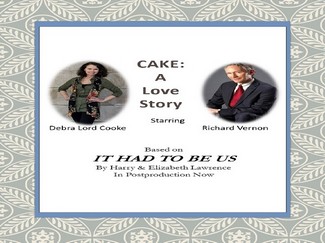
Well, it all started from one little chapter in our romantic memoir where Elizabeth buys a chocolate sundae cake for Harry to eat when he arrives in L.A. after a long, dangerous drive from Colorado. Then while writing the script, director Misha Zubarev thought the cake could be a unique visual way to tie the film sequences together. With that in mind, below is co-writer/director Vera Zubarev’s explanation for the cake as a metaphor.
First of all, as you wrote to me and Misha a few months ago, “the build ups of each sequence are very creative. And I love the way you intertwined the cake throughout”. This encouraged us to take this idea a step further to make the metaphor of Cake meaningful and pronounced.
So the movie revolves around the metaphor of the Cake, it starts and ends with it. A Cake is what bride and groom feed each other at the wedding. Why? Simply because it represents sweet love. But life is made of bitter-sweet ingredients and so is the cake in the movie.
The characters of the movie go through all stages – from sharing the sweetness of love, to selfishly struggling for a better piece for themselves, to eating the cake of bitter-sweet memories separately, to sharing the cake of love again but on a new level.
In accordance with this, the first chapter (the store & the party) we named, “A cake is not just a cake…” (the movie 13 Conversations About One Thing serves as a model for such sentence-based titles). In this sequence, we are exposed to all the baggage of their past. Invited to her daughter’s house for Christmas, Elizabeth runs into her ex-husband, Harry, at a supermarket, and they end up fighting over a cake. The fight is clearly not over the cake. It represents the miscommunication through the years, which led up to their divorce. At the Christmas party Elizabeth and Harry eat the cake which spurred the argument earlier in the scene. They eat it separately, remembering the bitter-sweet taste of their past. This is a bonding point, but it’s only the beginning.
The next chapter that tells us about them meeting in the hotel is called, “A cake might be bitter, but the aftertaste can still be sweet.” In this sequence we show them finally realizing the mistakes they made in the past.
The title for the balcony scene in which H proposes to E, bringing her the exact cake they struggled for in the beginning, is, “What’s in a cake?”
And for the final scene where they eat the cake together, feeding each other for the first time, we have a title, “Cake for love’s sake”.
So…. Misha and Vera finally convinced us – and we can hardly wait to see the final film!





So, I'm pleased that you're "convinced" that the title change is okay. I remember Herb Morrison telling me after returning from his consulting role on the movie, Hindenburg, that he was pleased by the way they portrayed the movie and him. He said they got the scene where he slugged the Nazi henchman who tried to grab him coming down the steps from the plane in Buffalo just the way it happened. And, he added, "That actor they got to play me was so handsome."
This was spoken from the mouth of one of the most handsome and well spoken 73-year-old gentleman that I've ever met. I was so pleased to be treasurer of our little community where he was president.
Ron