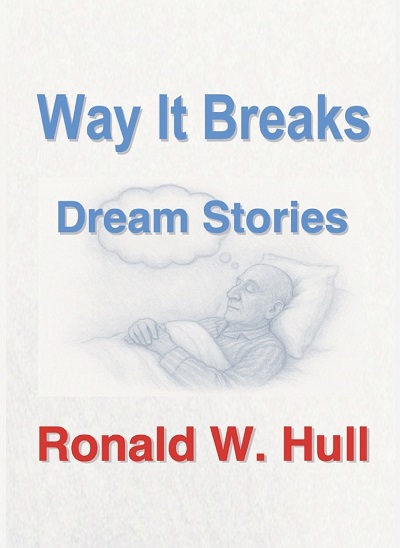
To paraphrase Pete Seger, Where have all the authors gone? Gone to graveyards or beyond. Some of them. Others too disabled mentally or physically to write anymore. It's a shame, we miss them on Authorsden.com, a premier website for authors to post their work, connect with readers, collaborate with others, and learn the craft of writing from other authors. For many, the author page has been considered their website on the Internet.
Most of us were introduced to reading at an early age. Some of us, like me, read only for our classes, because I found outdoor adventure in all seasons much more exciting than the solitary act of opening a book and reading it. But for many who were shy, alone, or otherwise isolated from others, books became a great way to escape being alone by reading about characters, adventures, and other lives not their own. Creativity is in all of us. We like to draw, most of us like to write, and while taking notes in class, doodle in the margins. Our minds on something other than what the teacher was saying. Stories in the making.
In 1952, when I was 9, we stopped listening to radio in the evenings and watched the very few television programs that were on the air with our new black and white television set and a new television station in my hometown. Two other stations were 100 miles away to the east and to the west. Even with a tall antenna, the pictures were sometimes quite snowy and the sound, garbled. But that left no time for reading in the evening. I made sure that I had finished any homework before the evening news started. There was no time for me to read after television came along.
Also, with a roll of 10¢ tickets, a local theater opened to all the grade school kids on Saturday afternoons with continuous news reels, cartoons and movies, like westerns with singing cowboys. Others may have not had the kind of opportunity to watch television, movies and be outdoors much of their free time, like my twin brother and I were. As a result, there are many books that I haven't read. By not having the benefit of reading all those classics, I don't write as well as long time mainstream published authors, benefiting greatly from their editors before publishing.
The personal computer, like the typewriter before, made it easy to type, edit, and print pages of what we wrote, starting in the 1980s. Many who had written in long hand on paper, were able to type those stories on paper or save them on their computers, like I did. Avoiding the paper and printing altogether.
Up until the late 1990s when the Internet became available to anyone with a computer and telephone modem or other Internet connection, there were two ways to publish. The first way was to send your manuscript on paper to a newsletter, anthology, newspaper, magazine, publishing company or other publishing source so that, if accepted and published, would be available widely to others. The result was often rejection, even after sending the manuscript to many publishing outlets, especially mainstream publishers. The only way that many could reach mainstream publishers of books was to acquire an agent. Agents were also very selective who they would accept because it was only through book sales that they made their livelihood.
The second was to use a vanity publisher like Vantage Press. For a fee, they would publish your book for you. But unless you could promote your book in some way so that others would buy it, the book rarely got into bookstores where mainstream publishers placed their published books.
But using the first way of getting published, unless you were a part of a group doing the publishing, or an editor, you faced editorial criticism and rejection of your manuscript. I was fortunate to belong to associations that accepted my articles throughout my working life. I also started two newsletters that I edited, published and distributed to groups. I wrote most of the articles and an occasional poem. My speeches at symposiums were published in proceedings of major organizations in their national and international meetings.
But others had other dreams. To become a poet like some of the greats they have read like Shakespeare. To write novels in many genres to make a living becoming a famous author. Going to New York City to become a playwright for Broadway. Or going to Los Angeles to write screenplays for the movies. Even going to Nashville to write songs. Unless you had something going for you that gave you a break, it was very difficult to break into these places with so much talent available and a few accepting manuscripts. One place that paid for writers was technical writing. But that could be boring for the creative.
The epitome of authoring is to write a successful book. Many dream of writing a book and never get to it. Many start writing a book and life gets in the way. I was like that except for English classes through college, and only one writing course in college. The thought of writing a book didn’t cross my mind until 1971. I thought that it would be interesting for me to write a book of my real encounters with hitchhikers, I titled, Tales of the Black Top Trails. I began writing it in long hand cursive. I probably had about 20 pages completed when life got in the way.
Like so many others, life gets in the way of writing your opus. You may have started it many times, but then, a child came along, you lost your job, you divorced, etc. Or you thought it wasn't good enough and just burned it or ripped it up and threw it in the trash bin. This is especially true of those who have gone through English or literature majors in college. They end up too critical of their own writing to be able to write books. I've known of several English professors who wanted to write a book but couldn't. Anyway, along the way, I lost those few pages of my first, never published or written, book.
Writing non-fiction books in specific academic subjects is a must for advancing higher education. Those that fail to do research and/or write books in their field of study, often don't get tenure. I was honored when my doctoral advisor asked me to write a monogram of a subject that I presented at a brown bag luncheon, AI, I wrote it, and it was published by the university press in 1972. By 1973, I had finished my dissertation, and it was published as well. But only seven copies were made. If I was to continue as a professor, I would have to begin writing textbooks, books of my research or do consulting in my field with articles to move ahead. I wrote several articles but always wrote poetry for fun.
By the end of the 1990s, many writers who had acquired personal computers joined the Internet, largely influenced by friends and family to communicate by a new way of letter writing – email. After starting to write my life story in 1992, slowly, typing with one finger on weekends and evenings after work. I was about halfway through the book in 1999 when another idea I had from those brown bag lunches in 1972 came to mind. My idea about what would happen if extraterrestrials arrived (not UFOs). In 1980, I attended the World Congress of the World Future Society in Toronto with a panel of four others that I formed. My presentation described what I called the kaleidoscope effect, perhaps, a way that extraterrestrials would be able to contact everyone on earth at nearly the same time.
In the meantime, Carl Sagan wrote Contact. I didn’t read the book, but I saw the movie. The itch to write fiction, science fiction, couldn't be denied. So, I wrote The Kaleidoscope Effect, packing 6000 years into 65 pages. I was asked to write a sequel by my online publisher, so I did. Like so many other authors, I looked for a way to publish it without having to beat a path to New York City to find an appropriate agent to help me get my little book published. I found an online vanity press, that would publish my novel for a fee. Not only publish it but promote it. After two and three months my sales dropped off, and I was dropped from the lineup. But I found another online publisher who liked the book and published it for me again. This time in POD (print on demand) paperback quality. Once again, for lack of my promotion, my sales dropped, the publisher ran through his startup money and the website failed.
Likewise, many authors with manuscripts sitting around after attempts to find an agent failed, got online and started finding online sites that would publish their work. Mostly for a fee, like mine. Those startups, also like mine, who didn't charge a fee and expected to recoup their cost through sales, failed, many of them. Some of the small presses that had been successful in certain genres had survived years without the Internet. But with all of the Internet options, failed to grow and flourish.
My POD publisher asked me to join Authorsden (AD) in 2002. Suddenly, I was amid many poets, short story writers, novelists and even screenwriters. The site was free. It was easy to post works. Everyone had their favorite work they wanted to present to all the other authors and the many readers that remained in the wings but added to the number of times the work was read and kept track of by AD. A very good service.
In the beginning, there was a poetry contest that drew much interest with great prizes. I, unfortunately, was working and only had time to join the site on Sundays to post a poem and comment on what others had written. Soon, I was gathering followers, many. And starting to make collaborations over novels that I was writing and others were writing. Somewhere serializing chapters from their books and I followed suit. Many were creating books of their poetry. It had always been my understanding that poetry books had to come from poet laureates or famous writers that also wrote poetry.
Many were posting their books that were bought and paid for by vanity presses that were overcharging for services they never received, like editing and promotion. When I returned to my original publisher for my books, Angela Hoy was the author of a weekly Internet newsletter, WritersWeekly.com. She has been a champion against scams, unfulfilled author promises, and overcharging. Since that beginning, I have used her book selling website, BookLocker.com. Pricing is clear, and you get what you pay for, efficiently. The portal for authors is very useful. From the last that I've known, she doesn't publish poetry books.
Although I've written much poetry since I was a teenager and have published poems in newsletters and on my website for many years, unless I was a famous poet, I see no point in having a poetry book. Many authors of poetry here on AD thought if they published a book of their poetry it would sell and they would become well-known. Probably the best purpose for a poetry book is a keepsake for the family. Poetry books don't sell unless you are a poet laureate, a famous figure, or teach poetry and require your students to buy your poetry book. I don't know of any poetry teachers who would do that to their students. But there was a famous movie a few years ago, The Dead Poets Society, that brought attention to poetry but was more about coming-of-age than poetry. Many AD poets came from the scam website, poetry.com. I even received an award from them until I realized what they really were, just making money from the gullible.
In 1999 when ebooks came online, they sold. But around 2002 when POD paperbacks were available, they sold. One could always get a hardcover book printed, but the prices of hardcover books were quite high for the reading public. When Amazon started offering a portal for free publishing of books, ebooks came back into fashion again. Talking books followed. Blogs promoting books proliferated.
It’s a fact that promotion sells books. Authors often left AD for greener pastures at other sites. Many of those sites have closed. But when authors found that they could sell their books through Facebook, many of the authors were able to move to that platform and successfully promote their books.
The success of a book depends on several factors: promotion works, but the content of the books must be good, or readers will sour on other books by the author. Connection with something famous works. It may be an incident in the news, a celebrity, a politician, or a crook. But if it's someone who is recognizable to the public eye, many will buy it out of curiosity. Occasionally, there is a book that just reaches readers and through word-of-mouth, followed by public promotion, can become a best seller.
I don't recall any best-selling authors on AD. But there may be a few. AD is more for the author that needs exposure for his/her work and possible collaboration with other authors. I have found that navigating the site and posting to be very straightforward and well done and maintained on the site. And, most important, the SEO (search engine optimization) of our work on AD. To translate, when we have our work on AD and we search for it, the website is so well known by search engines that all we have to do is enter our author name and the title of our work, and we will see it almost immediately on the first page, and generally at the top of the list.
So, back to our initial question. Where have all the authors gone? Probably first and foremost, is that most indie authors never become successful. Publishing your work is a money pit when no one buys it. When AD. became a paid membership site about 2004, I acquired a life membership. It has served me well. But for those who didn't, and had to renew their membership every year, they began to see that they weren't gaining much by being there and left.
Many writers have an emotional or even some mental disorder (like some of the great writers) that makes their writings sporadic, and even their ability to continue the discipline of writing until they have reach reached success. Others have family situations that take them away from writing. I am grateful for those who stuck around, wrote and posted their work for a long time. There are fewer each year. Covid was probably the biggest hit, because it ended so many lives. And others, their willingness to write and post.
But we can't eliminate aging. I didn't retire until 2011. But many like me dragged up old manuscripts or started writing earnestly at retirement age. Assuming an average age of 65 when they joined in 2005, by 2025 they would have reached 85. Very few people at 85 have the energy to write like some of the octogenarians that still are here and posting regularly. Finally, I know that many have died. I hope what they wrote left a legacy for them that will carry on, especially for their families to enjoy.
Copyright 2026 © Ronald W. Hull
8/29/26