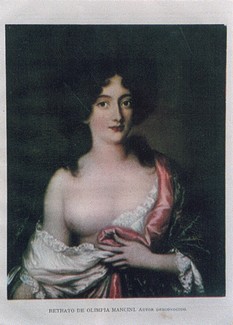
Books between years 78-80.
The books I had in my library
Knowing Manuel had the gusto and smell to choose authors and works that would enrich me I let him advise me and rather soon I chose some book between the ones he recommended to me. Manuel was subscribed to ABC and El País newspapers, to weekly reviews Cambio 16, Tiempo, Sábado Gráfico, Interviú and Hola. As a general rule he first had a view of ABC front page, image and headlines, sometimes he didn’t wait too much to have a view of ABC obituaries pages. I used to read El País consciously, national and international news. Before, I had ensured ABC didn’t speak about sables noise. Manuel’s house had four libraries and I had my own in my room. When we first spoke about literature we mentioned immediately Federico García Lorca, for it had been in the house where Lorca had lived in Madrid the place where I had been working at a marketing company when I was fifteen years old. He knew I liked to have books essential in a library and that I used to select what I was going to read. We have had several conversations on literature and being both Spaniards we were obligated to mention the two literary works by Spanish authors, by large the two most translated into other languages and most known in other countries: The ingenious gentleman Don Quijote de la Mancha and The forge of a rebel, Miguel de Cervantes and Arturo Barea. I told Manuel Arturo Barea’s son of the same name had been my Literature teacher at Pedro Calderón de la Barca’s Institute. Both works would suggest some kind of congenial spirit towards Spain and Spanish people by all these that have had the opportunity of reading them, especially by Hispanists. Their dispassionate view about us will take them to see us like Quixotics and Republican soldiers, fallen angels.
I had read a lot since very young. When I was nine I read many plays by Eugene O’Neill and by Luigi Pirandello, some of Shakespeare’s tragedies, the anonymous El Lazarillo de Tormes and El Buscón by Francisco de Quevedo, some Exemplary Novels by Cervantes and up to Don Quixote’s chapter 28. Apart these I had also read William Faulkner, Rabindranath Tagore, Hermann Hesse, George Bernard Shaw and Henryk Sienkiewicz from the Nobel Prize Winners Collected Works, also Homer, some poems by Lorca, Nikolái Gógol. This is what I kept in mind between nine and eleven years old. My reading had not been academical, had not been methodical, but it had been an extraordinary enrichment. I have been selecting authors and titles throughout all my life and it has given me a certain knowledge about things concrete. Manuel suggested to me to go deep on it to get a good knowledge about the really important. I had studied Literature on my own beginning with a History of Literature, by which I could retain the essential about ancient and old literary works; I tried to get a good basis about Greeks and Romans, plenty both of learnings to retain, but failed at that time; summaries of some epic literary works like Beowulf, Os Lusíadas and The Aeneid; books and monographies about the History of Spain; the Humanists,Thomas Moro’s Utopia and Erasmus of Rotterdam’s Praise of Folly, that would take me so higher I would know how I should do things, that is, wisely; the Renaissance, that is like coming back once and again to the same Ideal Republic we people of good will have dreamed of always since we made clear to ourselves the great benefits of a world ruled by Harmony. I needed to have a good account of learnings on the Spanish Gold’s Century: Cervantes, Lope de Vega, Quevedo, Calderón de la Barca, Góngora, Baltasar Gracián, Santa Teresa de Jesús, San Juan de la Cruz and Fray Luis de León; there were literary jewels between some works edited in XVII and XVIII centuries; Neoclacisism breach with Baroque and Rococo; Romanticism distracted my attention with something like morbid curiosity; no doubt I was waiting for Illustration and French Revolution: Rousseau and Voltaire mainly, the French Revolution which lasts still like an example of an encouraged people rebelling against arrogance, Old Regime’s in this event. I may have guessed it was going to be so, but Manuel finished by telling me that French Revolution had been the start of an old Prophecy that continued and made itself bigger with Russian Revolution. As for Realism and another XIX and XX century literary movements he knew I would have a big time reading and rereading books he recommended to me that would enrich me so much I will for ever be grateful to him for having read such ones. Old crime novels were my favourites at that time, anyway.
I had taken from my parents and brothers The Communist Manifest, Nothing and so be, by Oriana Fallaci, I confess I have lived, by Pablo Neruda, and very intentionally of course, I had taken too two books, one about the Portuguese PIDE and the Chilenian DINA, fascists secret services. By that time the dome of the Argentinian Triple A (AAA) was supposedly ubicated at a very well known place like Puerta de Hierro in Madrid. Seeing Manuel the books I had brought he suggested me to read history monographies on French and Russian Revolutions. He told me Marx’s doctoral thesis was very interesting, contained several interpretations about meteors. Oriana Fallaci’s book was memorable, he said. I wanted to reread it, knowing it had illuminated me some way: Seeing myself beside a commando on a bridge the instant the king’s official car and his retinue are arriving and the shooting we do to kill them all. From Pablo Neruda you will learn to love a life in plenitude, and many important names of authors and titles, he told me. I do especially remember Leonard Woolf’s A Village in the Jungle and Jorge Amado’s Gabriela, clove and cinnamon, I said. Some day before long I shall read both, some titles are really essential or really important, I finished by saying. I am sure you will enjoy Jorge Luis Borges. You can learn a lot with him. He is a master of essays, poetry, short stories and tales. So things were, thanks to Manuel, to buy three copies at least of Marx’s doctoral thesis, one for my cousins Monse and Félix, biochemical she and nuclear physician he, although I did not think about my ingenuity, one for me and another to give away to someone. To have a sage view of what meant for world’s history French and Russian Revolutions. To read a master works, knowing someone you consider a sage friend says it will be revealing.
I followed Manuel’s recommendations and for a time I combined my lectures of Plato with short stories, tales, essays and poetry by Borges with the rereading of Nothing and so be by Oriana Fallaci. We usually went to Alonso Martínez’s bookshops area to provide us with books. I had been just ten days in London and we three in Turner Bookshop knew I would come back to England shortly. Manuel had chosen some books for me, one about Leonor of Aquitaine, to whom he had told me was a queen loved by minstrels and troubadours and had a great influence on the people. Jesús López handed me several books from Universal History by Asimov: The shaping of England, The shaping of France, The Greeks, The Egyptians, The Near East, The land of Canaan, The Roman Republic, The Roman Empire and High Middle Ages. Besides I took two monographies about The French Revolution and The Russian Revolution. We took so many books we needed a big size bag to carry them on, but we managed. Manuel had taken several books too and at first sight I knew they have been especially selected for me and I felt grateful. It was a big day. I put the books on my shelves library and I knew I had a treasure. Manuel came to my room to see how I had done and to bring to me one book more: A book written by Borges on which I would find out something magical. What I did find out was a new view of how things are as for the essential, that is, for Revolution, the view of someone colossal, since a tale in the book Borges tells us about a sages group who can understand each other and send telepathic messages among them wherever they are in the world.
I bought all Jorge Luis Borges books and alternating it with some of Shakespeare’s tragedies and Oscar Wilde’s tales, essays and poetry, I learned from the Argentinian writer why leaving something enriching always. In a short time I read Fictions, The Aleph, Discussion, Other Inquisitions, A Universal History of Infamy, History of Eternity, Medieval German Literature, Brodie’s Report, The Book of Sand, Evaristo Carriego, Man on Pink Corner, The Maker, Elogy of the Shadow and The Gold of the Tigers. In fact when I had read them all already, I had yet to read The Book of Imaginary Beings, also by Borges, so when I went to Ramsgate I brought it with me being unable of waiting my return. I had been at Bell College of Saffron Walden for the autumn term of 1979. During this period I can remember I reread, this time in English, The Diary of a Madman, by Nikolái Gógol. In lessons we followed a book in intermediate level on which two brothers working delivering goods with a lorry one day they find out a corpse of a girl into the lorry, and in the afternoons we listened a recorded transcription of a novel entitled The Man Who Escaped, but I could not get the story entire, although I remember it was the book most of teachers used to give lessons to intermediate students. I read too some of Gógol’s tales, Ivanhoe by Walter Scott, The Private Memoirs and Confessions of a Justified Sinner by James Hogg, I will spit on your grave by Boris Vian, Tortilla Flat by John Steinbeck and Edgar Allan Poe’s and Nathaniel Hawthorne’s tales. In Ramsgate I had therefore the book by Borges and I had taken with me also both Poe’s and Hawthorne’s. I bought Oscar Wilde’s and John Steinbeck’s editions of selected works.
I learned a lot of vocabulary from Aldous Huxley. I bought all the books by Huxley in paperback, 17 in total. I retained The Death of Ivan Ilich and The Kreutzer Sonata by Leo Tolstoy to read some day and a vision of Alessandro Magnasco, Francisco de Goya and Juan Gris. It turned out we had a Magnasco in the dining-room. I selected some books to read while being in Madrid: The Prophet by Kahlil Gibran, Don Juan’s Teachings by Carlos Castaneda, The Persecution and Assassination of Jean Paul Marat and Speech about Background and Development of Endless Vietnam’s War by Peter Weiss, Haschisch by Walter Benjamin, and two books by Spanish writers from the 1898 generation, Bohemian Lights by Ramón María del Valle-Inclán and Pío Baroja’s trilogy The Struggle for Life: The Search, Bad Weed and Red Dawn.
Speaking with Manuel about French Literature he told me he knew I would be delighted reading Gargantua and Pantagruel by François Rabelais. Victor Hugo had been a writer of great importance. One of his favourites French writers was Marcel Proust. Paris had been a city of writers and painters where many different Literary and Art movements had had its manifestations. There had always been literary movements’ circles and one of these was a communist circle lead by Simone de Beauvoir, Jean-Paul Sartre and Henry Miller especially, whose intention was the rebellion of the French people against established power and so it happened in May 68, although Capitalism found a way to suffocate les enragés. By that time I read Hiroshima mon amour by Marguerite Duras, Le Front Populaire, an essay published by Que sais-je?, L’étranger, by Albert Camus and Le petit prince, by Antoine de Saint-Exupéry. Manuel mentioned Au plaisir de Dieux, by Jean d’Ormesson for reasons to do with deliriums from an abyss.
On English Literature I had been well supplied since Manuel said to me that MI5 and MI6 were infested of soviet secret service agents, that is, a strainer. He mentioned several writers I should read to: Graham Greene, Evelyn Waugh, William Somerset Maugham, John Le Carré (David Cornwell) and some others. Of course I read their books and captured the intention with which Manuel had told me about MI5 and MI6. I bought Beowulf, The Canterbury Tales, by Geoffrey Chaucer, and Somerset Maugham’s Collected Short Stories. I especially remember his tales The Hairless Mexican and The Traitor. From Greene I had an edition with both The Third Man and The Fallen Idol and I had read The Quiet American already. During my brief staying in Malvern Wells, Worcestershire, we followed in the classroom the original Of Mice and Men, by John Steinbeck, from whom I had already read Tortilla Flat, The Red Pony and The Pearl, and I had seen already too the films The Grapes of Wrath and East of Eden, based on two of Steinbeck’s novels.
Staying in Madrid at Manuel’s I became suddenly interested in Albert Einstein’s Special and General Relativity Theory and I read Thus spoke Zarthustra by Friedrich Nietzsche. There was a reason why I read shit-eater fascist psychiatrist Juan Antonio Vallejo-Nágera. I had asked Manuel why should I read a shit-eater’s book, that he was son of a shit-eater too, a psychiatrist officer in Franco’s army dealing with war prisoners. Isn’t he shit? I asked him. I know I am not doing something silly, I know it may be profitable to you, he replied. I am so completely sure Manuel had already read the most essential books I was not taken by surprise to see him read SAS, by Gérard de Villiers. Son Altesse Sérénissime le Prince Malko Linge.
|




Thanks for the enlightenment!
Ron